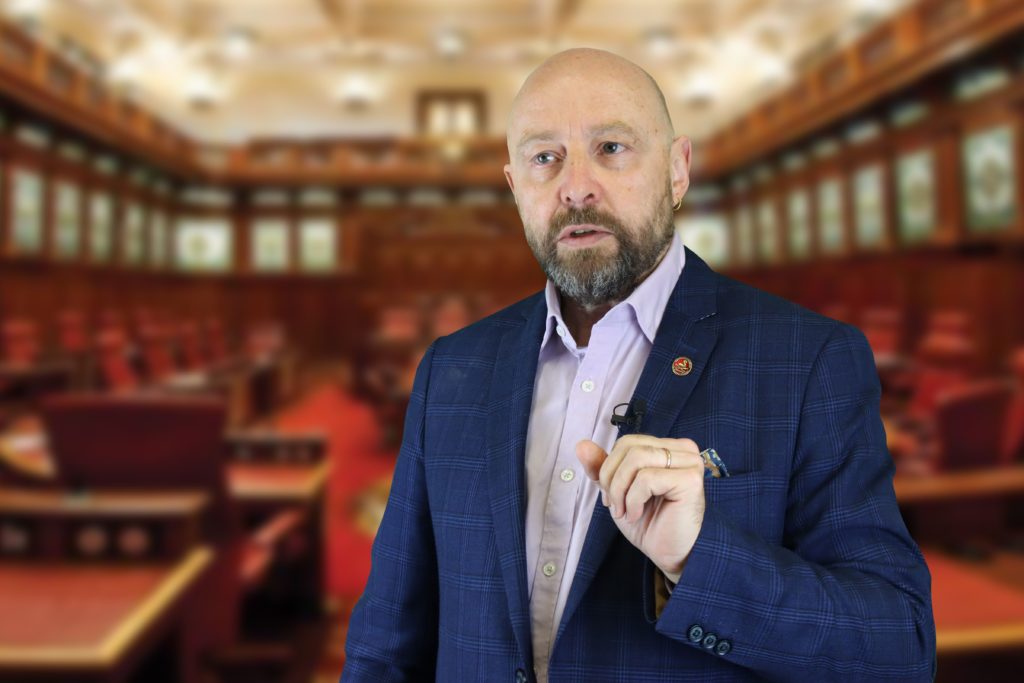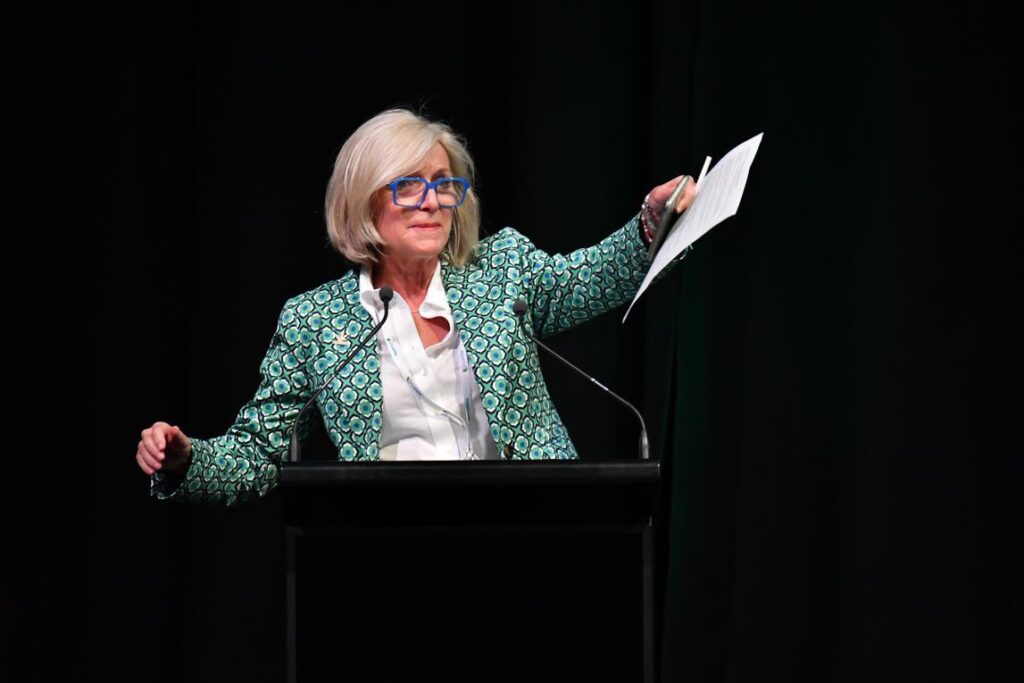
Politician and campaigner Fiona Patten argues that treasury's search for economic growth should have included cannabis from the outset.
While the industry is buzzing about the TGA's open invitation to consult on the future of medicinal cannabis, the sector was absent from another significant consultation held in Canberra this week.
Treasurer Jim Chalmers declared nothing was off the table at his economic reform roundtable — yet cannabis was conspicuously absent from the agenda, and that was a missed opportunity with consequences beyond the obvious joke.
Cannabis could contribute roughly A$30 billion to the national economy, a figure that would be welcome across the political spectrum.
Most proposals presented to treasury will have come from the same established sectors, drawing on familiar financial models and conventional policy mechanisms. The suggestions that have surfaced so far are either timid or politically unviable at present.
Now is the time to take a clear-eyed look, consult the experts, and treat cannabis as an opportunity rather than a liability. The tired stereotype does not hold up — cannabis in Australia has genuine potential to improve productivity, attract investment and generate substantial economic expansion.
A handful of modest regulatory adjustments could grow the medicinal cannabis industry, increase research and development spending, and support the hundreds of thousands of Australians already using it therapeutically. It could strengthen local industries and position Australia as an advanced manufacturer and exporter of high-quality medicine.
When medicinal cannabis was legislated in 2016, expectations ran high. Growth strategies drawn up by state governments projected a sizeable industry and a meaningful revenue stream. Australia was well positioned to produce world-class medicine for growing domestic and international demand.
Instead, the majority of medicinal cannabis dispensed in Australia today is still imported.
The industry needs support and sensible regulation that safeguards patients while enabling research and development. Governments must cut red tape to help build a sustainable crop and the medical manufacturing sector that would grow alongside it. Australia already has world-class horticulture, a strong pharmaceutical base and the right climate.
Following Canada's lead, a domestic-first approach to medicinal cannabis could give the economy a genuine green boost.
According to the Australian Cannabis Cultivators Guild, such a policy could generate around 5,800 jobs — many of them in regional Australia — and build a self-sufficient industry ready for global export.
Domestic production also allows for rigorous quality oversight, ensuring patients receive safe, high-quality products in a way that imported products, which often face less equivalent scrutiny, do not consistently guarantee.
The Penington Institute has valued Australia's medicinal cannabis market at $1 billion, up from just $30 million in 2019. Prioritising local growers could add a further $350 million to that figure in short order.
A single small legislative change — one that would cost nothing to implement — could stimulate essential research and development in medicinal cannabis and open the door to billions in export revenue.
Australia records 45,000 endometriosis hospitalisations each year. Promising clinical trials of a new cannabis-based treatment for the condition are getting underway, but researchers are struggling to recruit participants because, under current laws, patients must agree not to drive for the duration of the trial.
“Now is the time to inhale deeply, listen to experts and see cannabis as an opportunity not a problem.”
fiona patten
This is simply not feasible for most people, who rely on driving for work, family and healthcare. Permitting patients to drive when it is safe to do so — as they are already permitted to do while taking far stronger pain medications such as opioids — would allow these trials and many others to proceed in Australia, with the potential to benefit millions of people locally and internationally.
That one modest change, bringing Australia into line with most other countries, could have a real impact on productivity and growth.
Minor reforms to workplace health and safety rules could also cut sick days and lift productivity. Under outdated occupational health and safety policies, patients are stopping their cannabis medication in order to work. Updating those policies to recognise prescribed medicinal cannabis would mean fewer absences and people better able to function in their daily and professional lives.
Regulating adult-use cannabis has proven to be a reliable revenue source in the many countries and jurisdictions that have done it, with increased tax receipts and the freeing up of police resources to address organised crime and violence. Colorado is a clear example: in 2022–23, the state directed US$284.5 million into education, housing and hospital budgets through adult-use cannabis taxes.
Penington has produced a series of reports on cannabis in Australia, finding that the illicit market was worth around $5 billion in 2019 and that Australian adults consumed approximately 441 tonnes of cannabis. Spread across 2.6 million adult consumers, that amounts to a modest 136 grams per person per year. Not only does this leave significant revenue in the hands of organised crime, but Australia also spends $2.6 billion annually in an unsuccessful effort to suppress it.
Penington examined other jurisdictions to project what a regulated Australian market might produce. In Canada — roughly 1.5 times Australia's size — it found that over three years from 2018 to 2021, "Canadian cannabis businesses invested C$29 billion in real estate, infrastructure and technology, added C$43.5 billion to Canada's GDP and sustained an average of 98,000 full-time equivalent jobs per year."
That period also generated over C$15.1 billion in federal and provincial tax revenue.
Applying a rough discount of one third to the Canadian figures yields an estimate of $10 billion in tax revenue and an additional $30 billion added to Australia's GDP.
The recent ALP state conference passed a resolution calling for recreational cannabis legalisation, including state-owned distribution infrastructure, with revenue directed toward mental health, Indigenous health and workers' compensation.
Public support for this reform is clear, and the treasurer's own party appears to back it.
With a forecast deficit of $42 billion, no credible option should be dismissed. Medicinal cannabis reform is within easy reach, and an additional $10 billion from adult-use regulation would go a long way toward funding housing construction and hiring teachers and nurses.