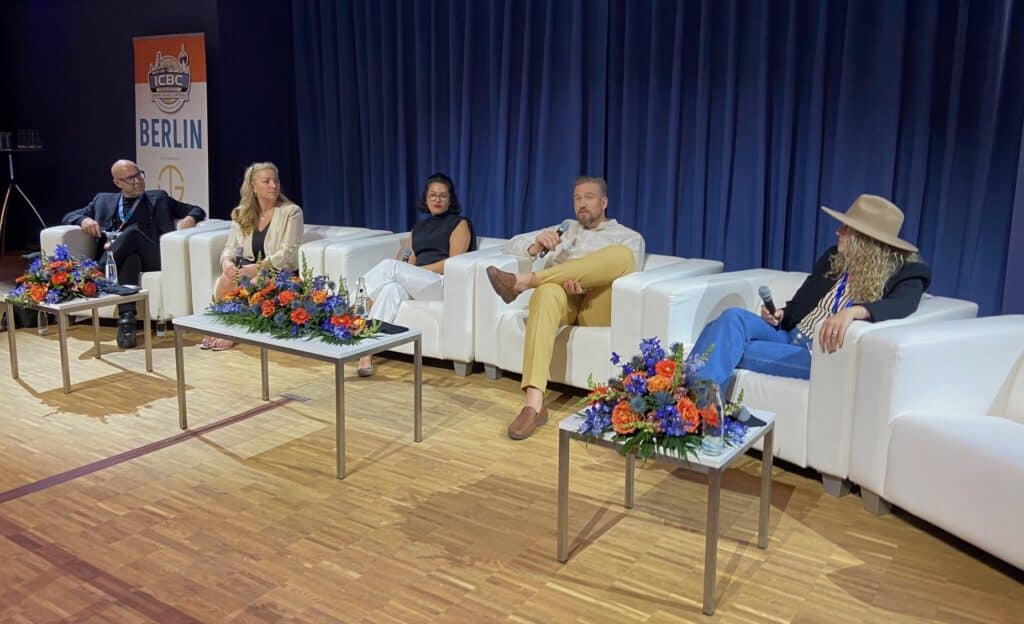
Cannabis brands gain little from celebrity endorsements, hampered by strict advertising rules, questions of authenticity, and an industry still struggling to define itself, speakers at ICBC in Berlin said last week.
New Holland Group founder and president Jamie Pearson told delegates that attaching a celebrity's name to a cannabis product offers no real advantage in a regulatory environment where brands cannot tap into that celebrity's social media reach. Nor, she added, does star power make up for an inferior product.
"People don't care. You could have Barack Obama selling weed, if the weed's no good, they're not gonna buy it," Pearson told delegates.
"Part of that is because you can't market it [in the US]. Part of the celebrity attraction if you're a brand is that you can harness their followers, or you can harness their following. "But when you're hamstrung on what's happening with your marketing efforts, it kind of hamstrings the celebrity."
Although recreational cannabis is now legal across 23 US states, many jurisdictions still impose tight restrictions on how cannabis products can be advertised.
Pearson argued that celebrity tie-ups also cannot paper over a deeper problem: the cannabis sector has yet to settle on what it actually is.
"We still have a little bit of an identity crisis in cannabis. Are we consumer packaged goods, are we medicine, are we a social lubricant? We're all of those things. Wait, no, we're agriculture. We haven't figured out yet how to take the industry and help the analyst [understand] what we are.
"So throwing a celebrity at it is just another one of those 'well, maybe this will work'. It's a workaround."
Pearson pointed to her experience working with cannabis campaigner and actor Jim Belushi, who has spoken publicly about creating his TV show Growing Belushi as a way to sidestep US advertising restrictions.
She said: "We [North American edibles manufacturer Bhang Inc] had a Blues Brothers line of chocolate bars and we couldn't promote them, but Jim could. [He] couldn't promote them like, 'go buy this chocolate bar'. He could go on his television show and say, 'I use this chocolate bar every single night, I love it, it's the best-tasting thing'. "But then to get the consumer who's watching that program to have a clickable link, which is what you typically need to convert the vision to a purchase, you can't have that. It doesn't exist. "So right now, I'm just telling you, don't do it."
CTrust CEO and founding member Giadha A. DeCarcer acknowledged that celebrities could be useful when launching a new brand, provided they genuinely align with its values, but said that long-term loyalty ultimately comes down to product quality and the customer experience.
She said: "From a launch perspective and a go-to-market perspective, as long as that celebrity is authentic and authentically aligns with the product and what your product stands for, then that would be powerful.
"But when you go into market retention and maintaining your position and that repeat customer, it really is gonna come back to the basics, the experience of that consumer and the quality of your product."
Oceanic Releaf founder Taylor Giovannini said Canada's current cannabis advertising laws mean brands can only make effective use of a celebrity's profile if that person holds an ownership stake in the company.
She added: "In theory of course everyone would think that a celebrity would work, but like everyone said… we can't actually do it properly. So we're just throwing it at the wall and it's not sticking.
"I'm influenced every day by celebrities, but not [with] cannabis. I believe it's possible, but the first thing that needs to happen is the regulations really need to round out and hopefully Canada gets there."
HempGroup International CEO and co-founder Stefan Röhrl also said celebrity backing is no shortcut to success without genuine authenticity behind it.
"It's not just putting a big name on it," he said. "You have to have the right strategy… it has to be a true story."