Martin Lane, co-founder of this publication, reflects on twelve months in which the medicinal cannabis sector proved tough enough to weather serious pressure, even as expansion largely stalled.
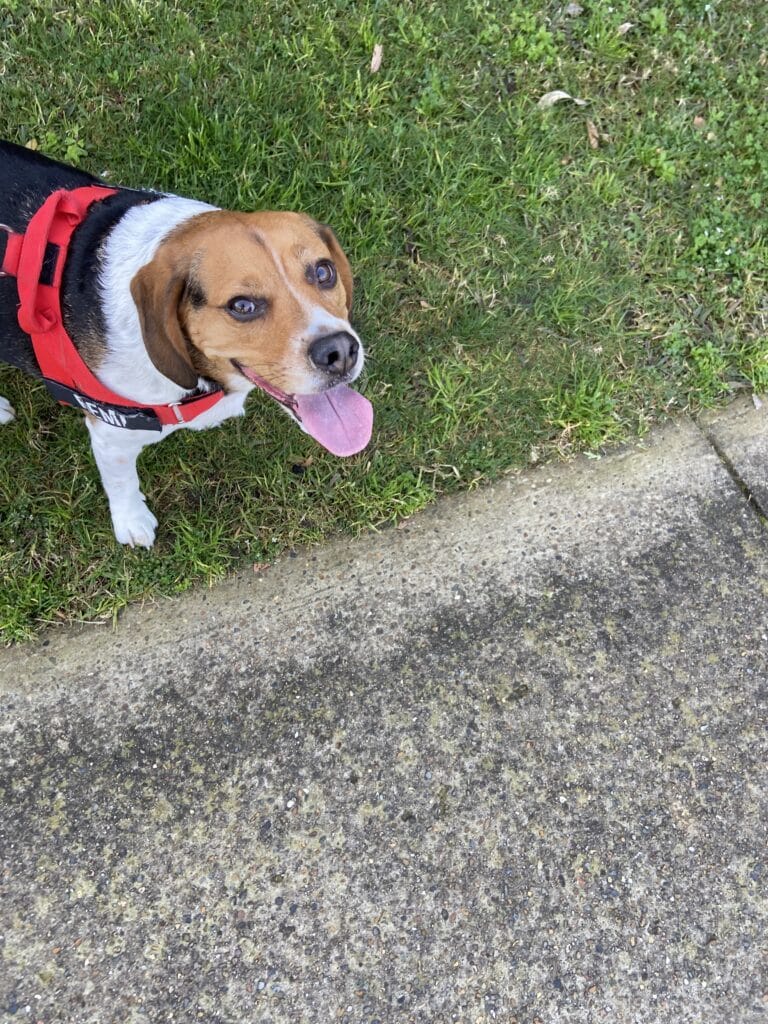
I've recently taken on dog-sitting duties for my son and daughter-in-law's Beaglier. This is a breed that originated in Australia during the 1990s, a cross between a Beagle and a Cavalier King Charles Spaniel, typically living somewhere between 12 and 15 years.
That puts Remi, who just celebrated his sixth birthday last month, squarely into middle age.
Gone is the bundle of restless energy who once bounced from one adventure to the next, endlessly curious and baffled whenever another dog wasn't in the mood to play.
Nowadays he'd rather stretch out on the couch beside a human than go looking for canine company. He's easier to manage in some respects, though he's grown noticeably more cautious around authority figures — in his world, that means the Doberman next door.
Which, in a fairly indirect way, gets me to the subject of this website's own sixth anniversary. Google's AI summary tells me a six-year-old dog is roughly equivalent to a 40- to 45-year-old human, which might go some way to explaining why we, too, seem to be going through a bit of a midlife wobble. (I'll concede the metaphor is being stretched rather thin here.)
Even with some encouraging developments over the past year, the sector we cover has very much the feel of an industry stuck marking time.
Back in December, the Penington Institute noted that growth had slowed considerably in the first six months of 2025 as regulators tightened oversight and prescribing habits shifted.
The second half of the year was no better, Penington's follow-up found, and it's hard to imagine the Therapeutic Goods Administration's continuing review of medicinal cannabis has done anything but weigh on trading conditions since.
The ‘father of modern management’, Peter Drucker, might have said “the best way to predict the future is to create it”, but he never worked in the cannabis industry.
Several of the largest players have posted results confirming the slowdown, while doctors' willingness to prescribe has taken a hit amid ongoing criticism from medical bodies.
Our own figures tell a similar story — one of stagnation rather than outright decline. Since launching a paid membership option in 2021, we'd enjoyed steady growth every year until now, when subscriber numbers have flattened for the first time.
There are several plausible reasons behind that — consolidation across the sector, staff turnover, tighter discretionary budgets, and, dare I say it, a shortage of upbeat headlines lately.
Either way, it lines up with a broader impression that the industry has reached something of a fork in the road.
Whenever I sit down to write this anniversary piece, I tend to revisit what I wrote in previous years before settling on this year's angle.
Despite obvious challenges, I've generally managed to find some sign of forward progress for the industry and slip in a note of optimism — even if the headlines didn't always give that impression…
Three years in: tantrums and tiaras
Four years in: what's the point?
Five years in — where do we go from here?
This time round, the headline was the first thing to land.
Speaking with industry figures whose job involves business development, it's evident the TGA's review has made forward planning enormously difficult, if not impossible.
With outcomes ranging from full rescheduling and registration requirements through to minor adjustments around the margins, nobody currently has a clear picture of what patient access will look like from 2027 onward.
Any business built around high-THC products, for instance, would be wise to start contingency planning now rather than later. But planning around what, exactly? Plenty of discussions are happening behind closed doors with the regulator, yet the outcome remains anyone's guess.

Management theorist Peter Drucker is often credited with saying "the best way to predict the future is to create it," but he clearly never had to navigate the cannabis sector.
One thing that remains within the industry's power is its ability to pull together, push back against unfair criticism, and keep spotlighting genuine patient stories.
A real highlight this year was partnering with Medicinal Cannabis Industry Australia (MCIA) and the Australian Medicinal Cannabis Association (AMCA) on a joint content series that aired on the Ticker streaming platform and YouTube.
The series gave a voice to those closest to patient care, who spoke with conviction about the medicine's place in Australia's healthcare system and the real therapeutic value it delivers to hundreds of thousands of Australians.
MCIA and AMCA joining forces to create Medicinal Cannabis Council Australia stood out as another strong instance of the sector collaborating for a shared goal.
And the calibre of many submissions made to the TGA should help dispel any notion that this is an industry indifferent to patients and focused purely on quick profits.
Both MCIA/AMCA, in their combined submission, and Cannabis Council Australia acknowledged that reform is needed and outlined practical steps to lift product standards and strengthen the evidence base while safeguarding access for patients who rely on it.
There have also been efforts from Medical Cannabis Australia and Medical Cannabis Research Australia, which have found fresh ways to bring the industry together, build networks, share expertise and boost prescriber confidence.
Which brings me back to Remi, curled up at my feet, rarely straying far from wherever his next meal might come from. He may be content within his comfortable little world, but he's lost that bond with other animals of his kind that all creatures need.
If this past year has shown us anything, it's that collaborating toward common goals matters more than ever. Fail to do so, and standing still could quickly turn into sliding backwards.
- If you haven't yet signed up for our premium membership but would like to support independent journalism covering this sector, you can do so .