Overhauling cannabis laws in New South Wales is not just necessary but the "only rational course of action," a parliamentary report has concluded, as pressure mounted on the state government to move away from its strict prohibitionist stance.
After two days of hearings in August to examine the social impact of the state's cannabis regulatory framework, the premier and finance committee tabled a 148-page report late last week.
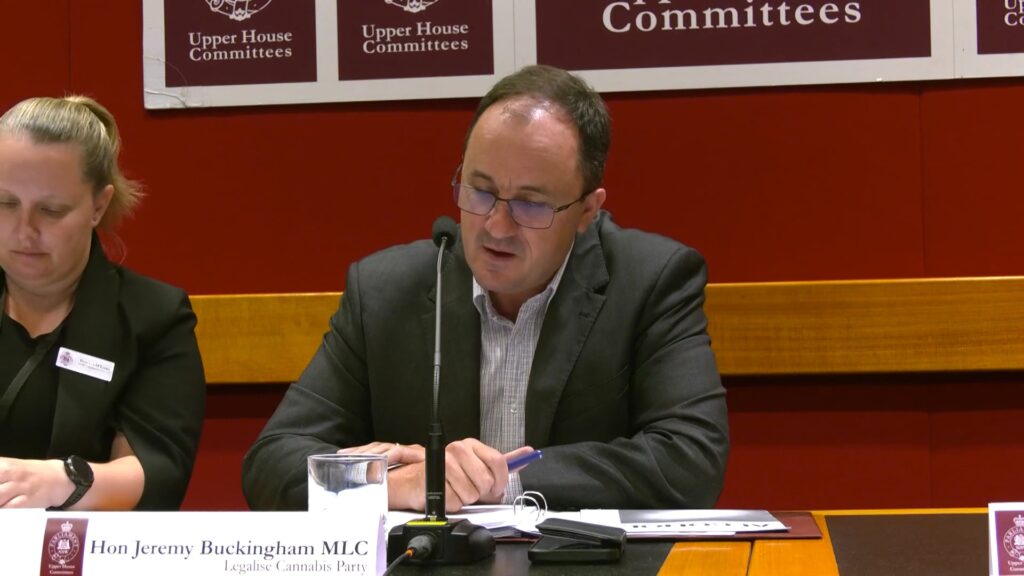
Committee chairman and Legalise Cannabis MP Jeremy Buckingham wrote in the report that members had been "persuaded that the current penal approach to cannabis is unduly punitive".
While acknowledging that NSW Premier Chris Minns' position meant decriminalisation was not currently on the agenda, Buckingham said that should not prevent the government from acting on the inequality, economic costs and "significant harm" caused by existing policy.
"The committee strongly believes that this must not deter the government from pursuing a rational, staged and evidence-based policy that addresses the growing need for legal and regulated cannabis markets," Buckingham wrote.
"The majority of committee members are persuaded that at least initial reforms should be considered by government."
The committee includes three members of the ruling Labor Party alongside two Liberal Party MPs. A dissenting statement from the Coalition members argued that no recommendations should be made until the inquiry had heard from all relevant stakeholders, including NSW Police.
Recommendations put to the government included cutting the maximum penalty for cannabis possession from two years to three months, or making it a fine-only offence, amending rules so that cannabis 'gifting' is treated as possession rather than supply, and creating a medical legal defence for drivers who return a positive THC test.
The report's release coincided with policymakers, health professionals, regulators and law enforcement officers gathering in regional NSW for the long-awaited drug summit.
Cannabis Council Australia (CCA) is among those attending and, through a series of workshops, will push for driving law reform while also highlighting the obstacles facing medicinal cannabis patients, particularly those living in rural and regional areas.
"Driving reform is about restoring dignity and the basic right to participate fully in society, especially for patients who have already faced incredible hurdles to find effective treatment," CCA industry and government engagement lead Matthew McCrone said.
An Alternaleaf patient will also share her experience at the summit, explaining that while medicinal cannabis has "given me my life back", the driving laws "still keep me behind closed doors".
Although the premier and finance committee report focused primarily on the treatment of recreational users and the penalties they face, it concluded that further examination was needed into the barriers preventing adequate access to medicinal cannabis.
It found that elevated prices and limited availability in regional areas were pushing patients with genuine medical needs toward the illicit market.
Drug-driving rules were identified as a further barrier, with patients described as being "unfairly criminalised" under the current framework.
The committee also found that medical access schemes were likely being used to "facilitate both medicinal and recreational use, leading to an arbitrary distinction between those who lawfully possess cannabis and those who do so in breach of the law".