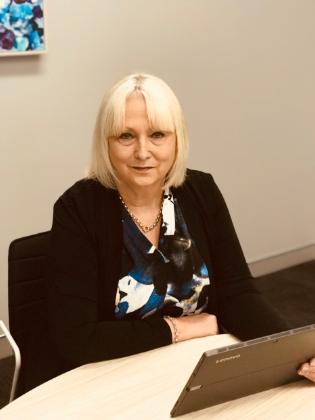
Carol Ireland, co-founder of the Medical Cannabis Council (MCC), has raised doubts about the need for another industry body, cautioning that it could weaken unified lobbying power and create confusion at government level.
Ireland characterized the establishment of the Australian Medicinal Cannabis Association (AMCA) as "not ideal".
AMCA launched last week, featuring cannabis advocate Lucy Haslam as chair, Gail Wiseman as general manager, scientist and lawyer Teresa Nicoletti serving as company secretary, and registered nurse Rita Martin as deputy chair.
Wiseman and Nicoletti both previously held positions on the MCC board before departing in April.
"At a lobbying level if you're after a strong representation of the industry you want one voice, not three," Ireland said in an interview. "Just when we've tried to say the MCIA and MCC will speak with one voice and move towards a closer collaboration, another voice enters the picture. I don't think that is ideal and I don't think the Government thinks it is ideal.
"It's disappointing but it is what it is. You can't do much about it but it would just have been better to have worked with the existing groups to strengthen those organisations.
"But we are focused on our collaboration with the MCIA and have some good things coming out of that. The Government was very positive about what we were doing and the fact there wasn't multiple industry associations."
Peter Crock, who leads the MCIA, expressed concern that numerous advocacy organizations could create a cluttered message.
He stressed, however, that friction with other industry bodies would be unproductive.
"There is probably no bad publicity when you're trying to get on the radar but it can get confusing if there's too much noise all at once," he said. "But I don't see this as us versus them. There is no point becoming antagonistic that's for sure.
"I'm a huge supporter of Lucy Haslam, she is one of the most effective activists in the space and she has done an amazing job in raising the profile.
“I don’t see it as us versus them. There is no point being antagonistic.”
mcia chAIRMAN Peter crock
"It's a new and emerging industry and players will pop up. But in terms of the MCIA and MCC, we are coming together more, we have a role to play and we are focused on that."
Haslam acknowledged that her initial reaction was skepticism about whether room existed for another industry organization.
"But [...] it's not like we've just suddenly appeared," she said in an interview. "We're all people who've been working really tirelessly since 2014 to initiate the conversation in the first place, to change the law in 2016, to initiate some of the Senate inquiries that we've had into barriers, into patient access, and to be part of the conversation about rescheduling.
"AMCA is really just a formalization of what has already been happening. I don't see that we're essentially new, we're just putting a formal association and all that governance around what we're doing and hopefully that will carry some weight with it."

Crock suggested that each organization shares the same core goals while keeping patient interests central.
"These guys have clearly put some effort into how they think they need to tackle this area. In terms of their activism and trying to enlighten decision makers, that's where they are maybe taking a slightly different approach. But I wouldn't say their objectives will be different. We all want to get products available for Australian patients, it's just the paths we are on to get that level of awareness with regulators and medicos may be different.
"We want to see product available for patients that is cost effective and efficacious. We are coming at it from different angles but for the same ultimate outcomes."
Crock indicated that the MCIA will work in tandem with the MCC to "stick to our own knitting" and direct efforts toward building an industry grounded in "the right behaviours with the right quality standards".
"We are focused on getting an efficient industry together, and focused on standards that mean we have a professional industry that is meeting requirements and producing the highest quality product for patients."
Ireland noted that collaborative work with the MCIA has already begun producing tangible gains, with several joint projects already developing.