
Two major trade associations representing the medicinal cannabis industry are pressing companies to improve their regulatory compliance practices, cautioning that failure to do so could damage relationships with stakeholders and draw scrutiny from the Therapeutic Goods Administration (TGA).
The push reflects growing concern about operators bending advertising rules to gain competitive advantage, even as the TGA struggles to monitor the market effectively.
In recent commentary, Mills Oakley partner and Australian Medicinal Cannabis Association (AMCA) co-founder Dr Teresa Nicoletti described challenges her legal practice faces. She noted that companies it represents "often question our advice when they see others operating in a more liberal or overtly unlawful way".
Nicoletti warned that the casual approach of some operators can foster non-compliance throughout the sector. She observed that competitors feel "disadvantaged by the uneven playing field and perceive that a disregard of the advertising regime is not a serious concern".
"The apparent lack of any serious sanctions for quite obvious and egregious non-compliance does not help," Nicoletti added.
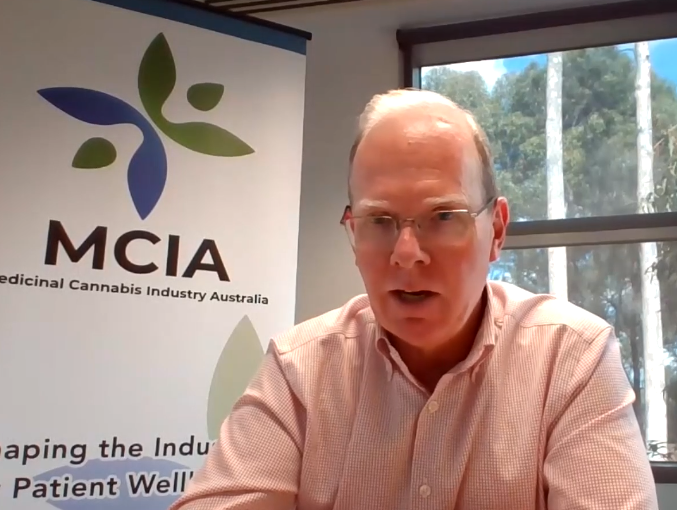
In a separate statement, Medicinal Cannabis Industry Australia (MCIA) chair Peter Crock stressed the importance of the industry building and maintaining trust across all stakeholders—from growers and manufacturers to healthcare professionals, patients, and regulators.
He said: "The industry needs to demonstrate a culture of doing things the right way, ethically, with integrity, and in full compliance with the law. This will continue to build the trust and confidence of all the communities with which MCIA members engage."
Nicoletti identified specific compliance problems, including online platforms that circumvent traditional doctor-patient relationships, retail advertising of medicinal cannabis services, educational content that functions primarily as marketing, and claims about company superiority over competitors.
Mills Oakley plans to continue backing AMCA in challenging business practices that subordinate advertising law compliance to "commercial priorities".
While AMCA has faced criticism for taking this enforcement stance, Nicoletti found it reassuring that most stakeholders support the association's approach. She stated: "it is comforting that most strongly support its stance and believe that associations should not be afraid to call out members and non-members who flagrantly breach the rules".
Crock provided an example of a company website featuring a pop-up offering patients access to low-dose CBD based on four eligibility criteria, one of which allows patients to avoid consulting a doctor.
He asked: "Is it legal? Maybe, but would you see other medicines prescribed by doctors in this way?"
In 2019, MCIA partnered with Source Certain, an Australian technology firm with expertise in supply chain integrity, to help develop the association's code of conduct.
Source Certain managing director Cameron Scadding cautioned: "It is important that all stakeholders recognise that trust is hard earned and that collectively we need to hold each other to account to ensure we don't misstep. The behaviour of a few can unravel the hard work done to date."
He continued: "There is little doubt that some of the business models that have been developed challenge the integrity of the sector. Especially those that treat patients more as consumers – they may be technically compliant, but they walk a pretty fine line."

Tegan Scates, founder of cannabis marketing agency High on Hemp, argued that regulatory attention and industry pressure should focus on unlicensed operators instead.
She said in an interview: "While legal cannabis companies' educational efforts are being put under the microscope, unregulated operators are heavily targeting potential patients with misinformation and products – with little to no consequences.
"They are not being held accountable for their actions even though many of them are operating in plain sight."
Scates observed that the legal industry has been rendered "voiceless" by the TGA's restrictive advertising standards, while unlicensed competitors operate with minimal oversight and capitalize on that advantage.
"The TGA's resources need to be utilised to fight the real wild west we are witnessing, not wasted on internal competitive industry pettiness," she added.
- Should the sector strengthen its self-regulation efforts? Share your thoughts in the comments below, or email ma****@**********om.au.