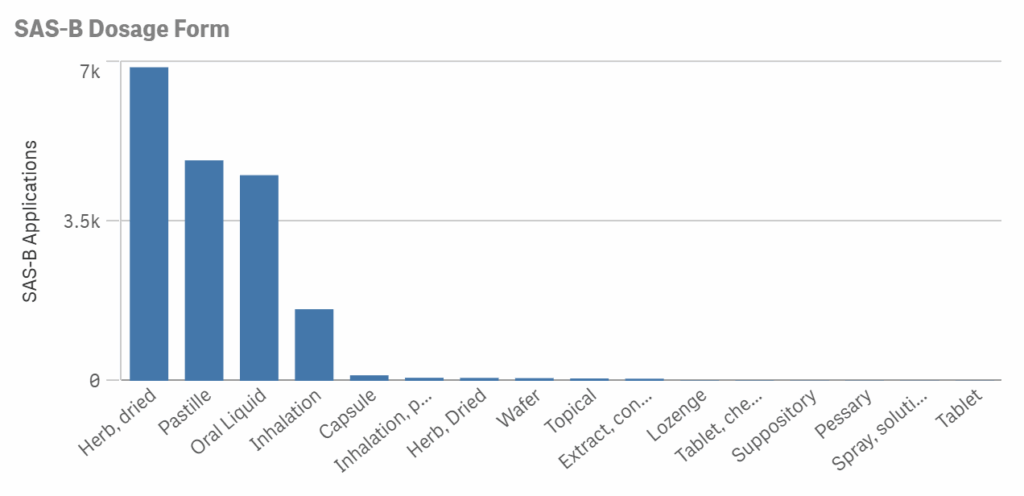
The Therapeutic Goods Administration approved 18,720 medicinal cannabis applications under the Special Access Scheme (SAS-B) in July, a modest increase from the 18,205 approved in June.
July's figure came in nearly 5% above the same month in 2024, bringing the 2025 running total to more than 132,000 — roughly a quarter ahead of where things stood at the same point last year.
Dried flower held its position as the most commonly prescribed dosage form at 38% of approvals, unchanged from June. Oil accounted for 32%, a slight dip from 33% the prior month.
Pastilles continued to claim a growing portion of the mix — with 3,950 approvals in July — pushing their share of successful SAS-B applications to 21.1%, up from 19.8% in June.
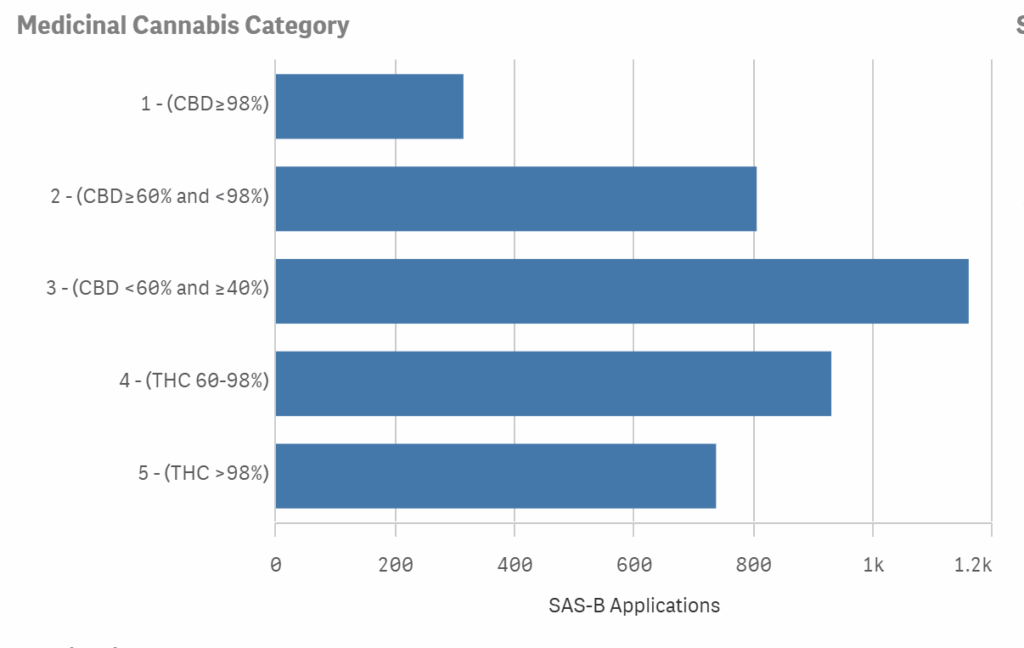
Among pastille approvals by product type, category 3 medicines led with 29%, followed by category 4 at 24%, category 2 at 20%, and category 5 at 19%. Pure CBD products, classified as category 1, accounted for the remaining 8%.
Chronic pain was the leading indication for pastille approvals at 44%, with anxiety second at 32% and sleep disorders third at 16%.
Other conditions covered by pastille approvals included attention deficit disorders (2%), PTSD (2%), depression (1%), and cancer pain (1%).
Looking across all dosage forms, chronic pain accounted for 46% of total approvals, one percentage point higher than in June. Anxiety held at 30%, sleep disorders remained steady at 11%, and insomnia stayed at 3% — all consistent with the previous month's proportions.
Victoria's share of national approvals jumped to 47%, compared with 40% in June. Queensland's share fell from 37% to 32%, while New South Wales remained broadly in line with June at 15%.
The prescriber count changed little, edging up from 892 in June to 894 in July.