Medicinal cannabis approvals through the Special Access Scheme rose sharply in 2025, though the rate of growth moderated compared with the prior year.
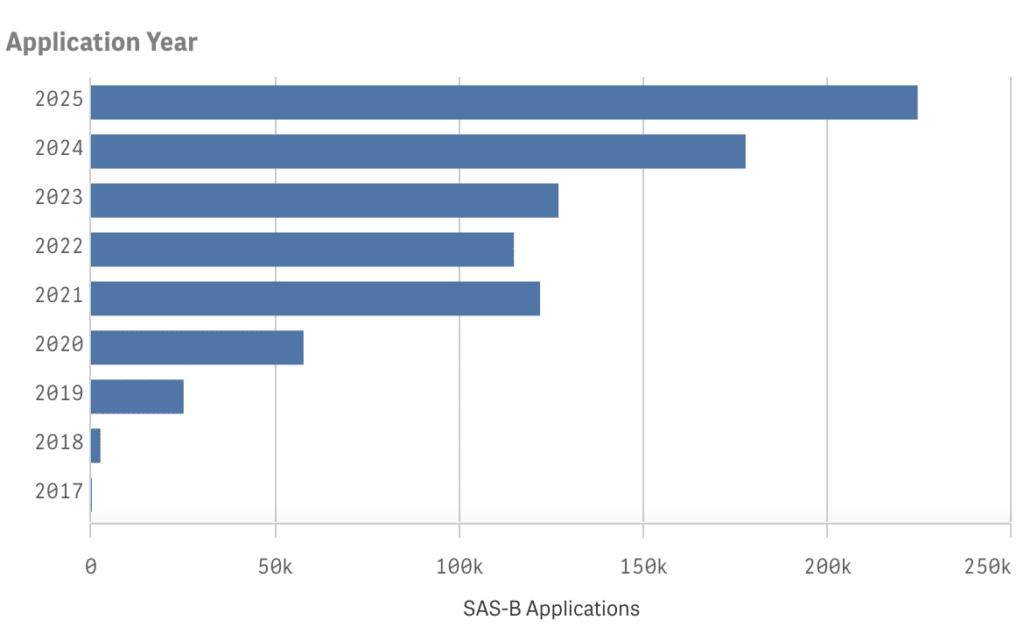
Data from the Therapeutic Goods Administration (TGA) showed 224,462 SAS-B approvals were granted during 2025, a 26% increase on 2024 (177,737) and nearly 77% above 2023 (126,942), with prescribing patterns suggesting the market is beginning to mature.
Although approvals rose by more than 46,000 year-on-year, the growth rate fell back from the nearly 40% increase recorded in 2024.
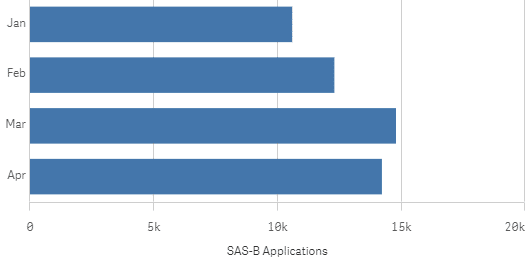
December's 16,000 approvals were the lowest monthly figure for the year.
Successful SAS applications came from 2,493 medical practitioners in 2025, the smallest number since 2020, when 2,247 practitioners submitted approved applications.
That figure has moved around in the years since, climbing to 2,777 in 2021, then retreating to 2,686 in 2022 and 2,552 in 2023. The 2024 total came in at 2,602 practitioners.
Approvals by category
THC medicines held their position as the most approved product type in 2025, according to the TGA's SAS-B dashboard, though growth spread more evenly across product categories than in earlier years.
Category five medicines — those with less than 2% CBD — accounted for 113,762 approvals, nearly 20,000 more than in 2024. Even so, their share of total approvals dipped from 52.8% to 50.7%.
Medicines in category three, which combine CBD and THC in a balanced formulation, recorded the strongest proportional increase, climbing from 26,663 approvals in 2024 to 40,121 in 2025 and lifting their share from 15% to almost 18%.
Category four medicines — those containing between 2% and 40% CBD — also advanced, representing 5.2% of approvals in 2025 against 2.3% the year before.
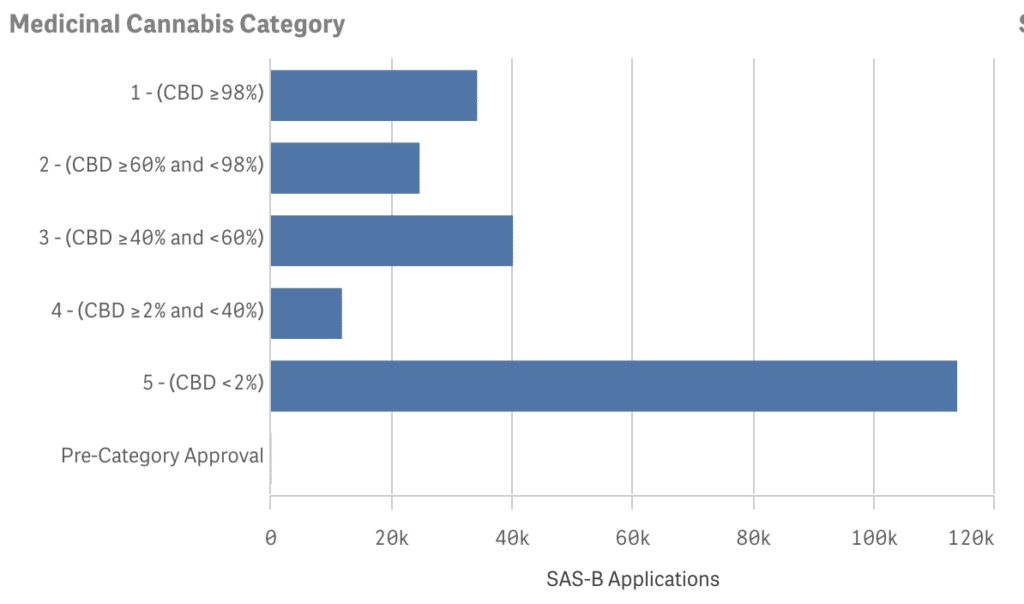
Category one products, which contain at least 98% CBD, fell to 15.2% of approvals from 18.7% in 2024, while category two products — those with more than 60% CBD — held relatively steady.
Gender and age data
The gender breakdown among patients remained stable, with men accounting for 60% of approvals over the past two years and women making up the remaining 40%.
Prescribing continued to be concentrated among working-age adults. Patients between 18 and 44 accounted for just over 60% of approvals in both years, while the 45 to 64 age group held at roughly 31%.
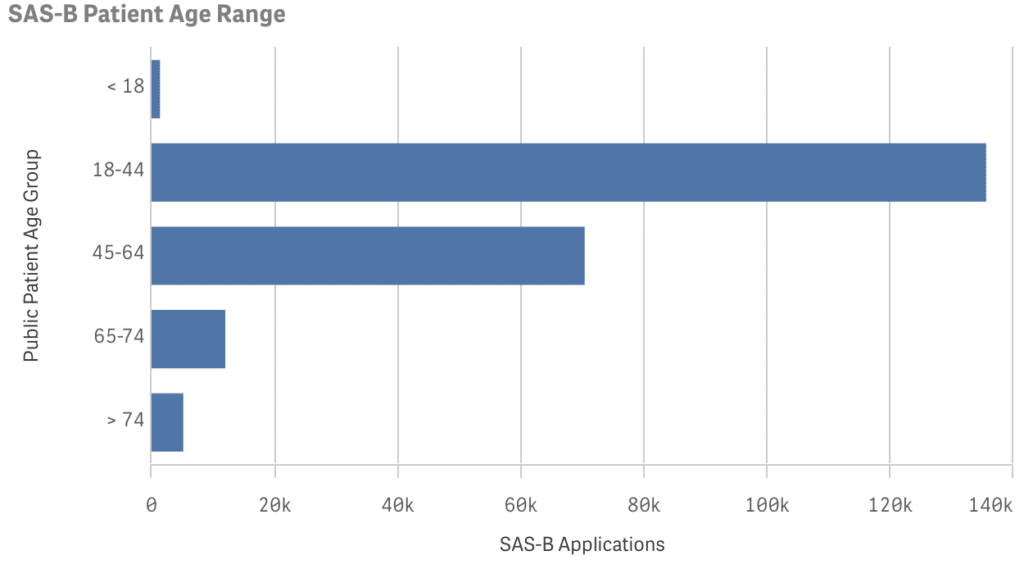
More than 11,900 Australians aged 65 to 74 received medicinal cannabis prescriptions in 2025, up from about 9,800 the year before, though that group's share of total approvals stayed essentially flat at 5.3%.
Patients aged over 75 recorded a modest drop in absolute approvals, with their share of total prescriptions falling from 3% in 2024 to around 2.3%.
Under-18s continued to account for a marginal slice of approvals, below 1% of the total and broadly consistent with the previous year.
Indications
Chronic pain held its position as the most common reason for prescribing in 2025, accounting for just over 43% of total approvals.
That was a modest gain from 41% in 2024, reversing a gradual decline that had played out over the two years prior.
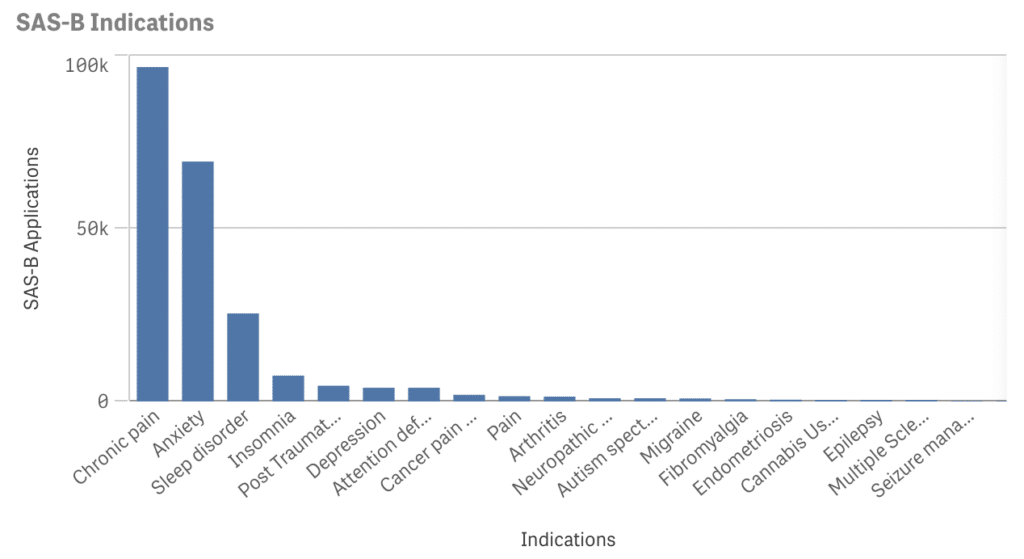
Anxiety was the second most common indication, accounting for around 31% of approvals, a slight retreat from 33% in 2024 and 32% in 2023.
Prescribing for sleep conditions continued to grow, with 32,928 applications approved for insomnia and related disorders, representing close to 15% of approvals. That compared with 12.2% in 2024 and 8.5% in 2023.
Depression, by contrast, accounted for a smaller share of approvals in 2025, falling from around 3.3% in 2024 to approximately 1.8%.
Dosage forms
The most pronounced shift in prescribing behaviour during 2025 occurred in dosage form selection.
Flower overtook oil to become the most commonly prescribed format, accounting for around 39% of approvals, a slight decline from just over 40% in 2024. Oil dropped to around 30%, from 42.5% the year before.
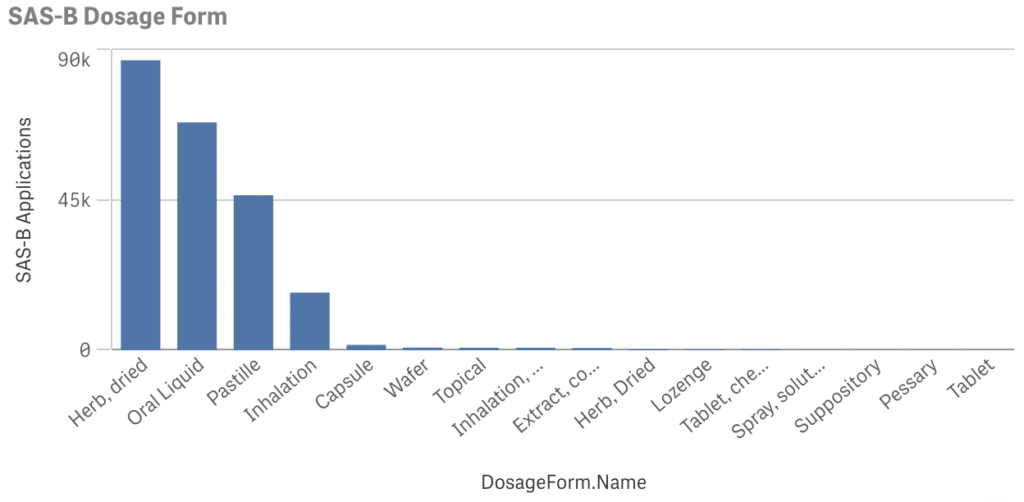
Pastilles, which entered the market in 2023, posted the strongest growth of any dosage form, with their share rising from 4.8% in 2024 to more than 20% in 2025. In November they moved ahead of oil for the first time.
Inhalation products continued to make up a modest portion of approvals in 2025 at just under 8%, little changed from the prior year.
Dosage form by gender
Among men, flower remained the most commonly prescribed dosage form in 2025, accounting for just over 42% of approvals, down from 45% the year before.
Oral liquid products also continued to lose ground among male patients, with oil accounting for just over 27% of approvals for men in 2025, compared with 38% in 2024 and 46.6% in 2023.
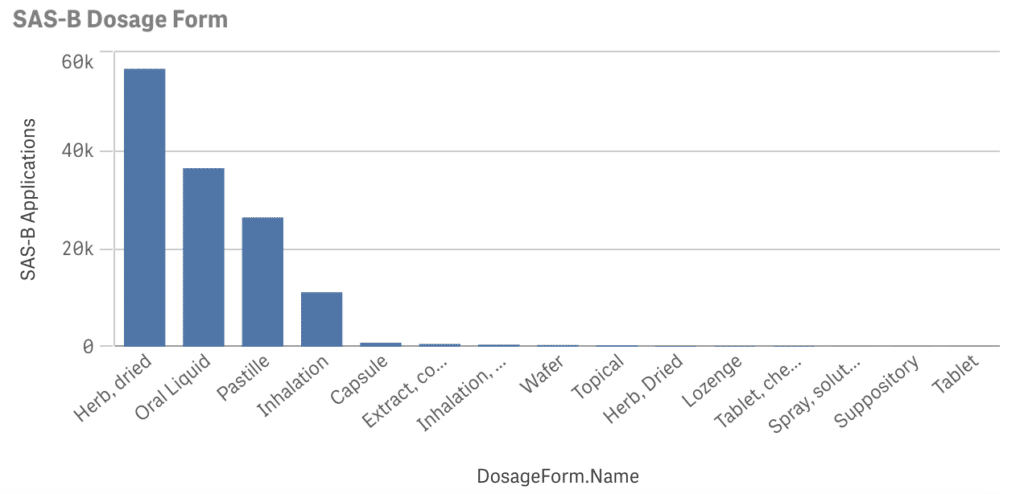
Pastilles saw the sharpest swing, representing almost 20% of approvals among men, up from less than 5% in 2024.
Inhalation products held a modest share among men at around 8%, unchanged from 2024.
Women continued to be prescribed oral cannabis medicines more often than flower, though the gap narrowed further in 2025.
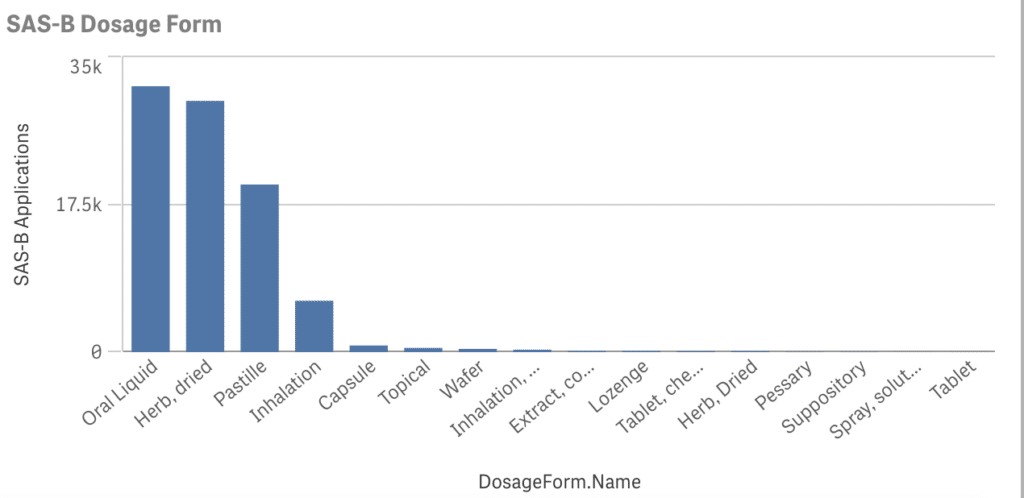
Across all age groups, oral liquid products accounted for just over 35% of approvals for women, down from 49% in 2024, while flower held broadly steady at just over 33% compared with around 34% a year earlier.
Pastilles proved marginally more popular among women than men, capturing just over 22% of approvals in 2025, up from 5% the previous year.
Indication by gender
In 2025, just under 45% of men prescribed medicinal cannabis presented with chronic pain, a slight increase from a little over 42% the year before.
Anxiety was the second most common indication among men, accounting for just under 29% of approvals, down from around 32% in 2024.
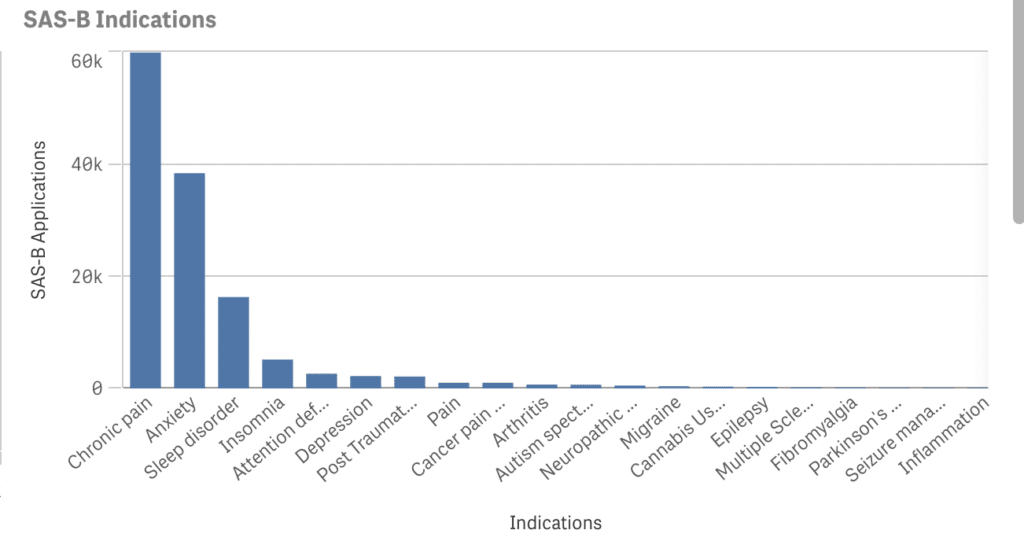
Sleep disorder prescribing, including insomnia, continued to increase among men, accounting for just over 16% of approvals in 2025 versus 13.6% the previous year.
Among women, fewer appeared to be prescribed for chronic pain, though the proportion edged up modestly to just over 40% in 2025.
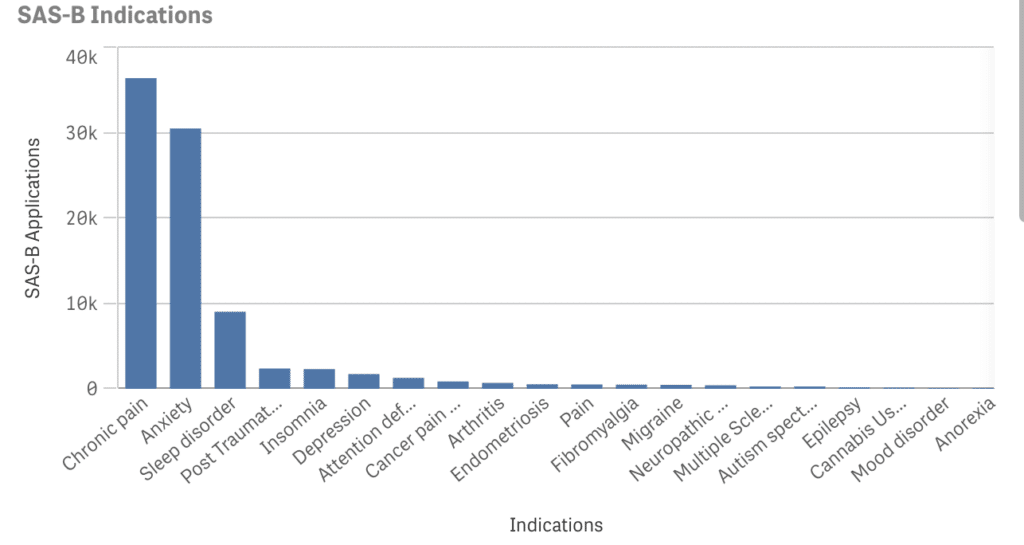
Women were more likely than men to present with anxiety symptoms, with the condition accounting for around 34% of approvals, broadly in line with the previous year.
Prescribing location
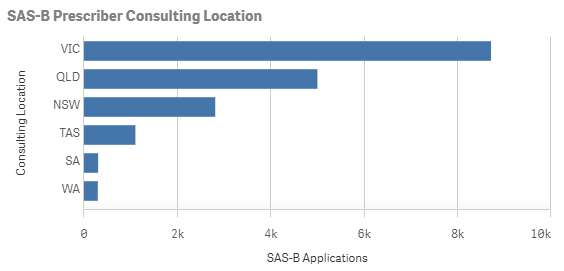
Victoria was the leading prescribing state in 2025, accounting for 42% of approvals (94,940), down slightly from 44% in 2024 but above the 40% recorded in 2023.
Queensland accounted for 33.5% of approvals, up from 31.6% in 2024, though still well short of its 2022 peak when it generated 51% of total approvals.
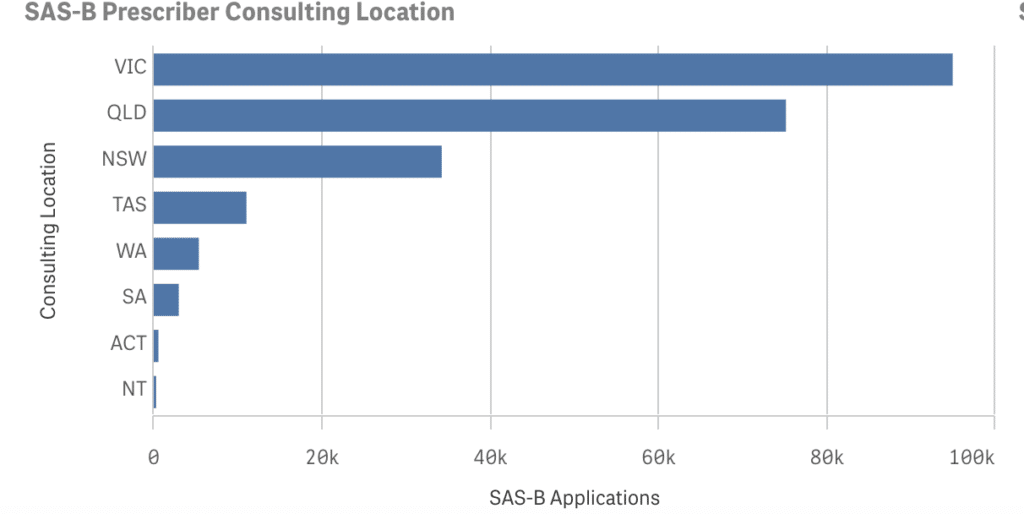
New South Wales saw its share decline, slipping to just over 15% in 2025 from almost 20% in 2024.
Tasmania recorded the fastest growth from a small base, with its share of approvals climbing to almost 5% in 2025 from less than 1% the year before.
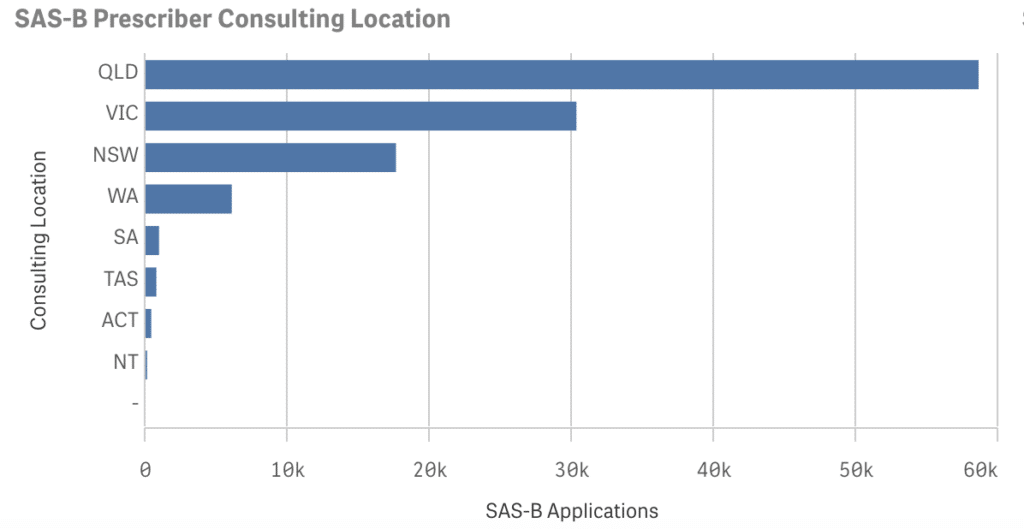
Western Australia and South Australia remained minor contributors, accounting for around 2.4% and 1.3% of approvals respectively, while the Australian Capital Territory and Northern Territory together made up less than 0.5% of the total.