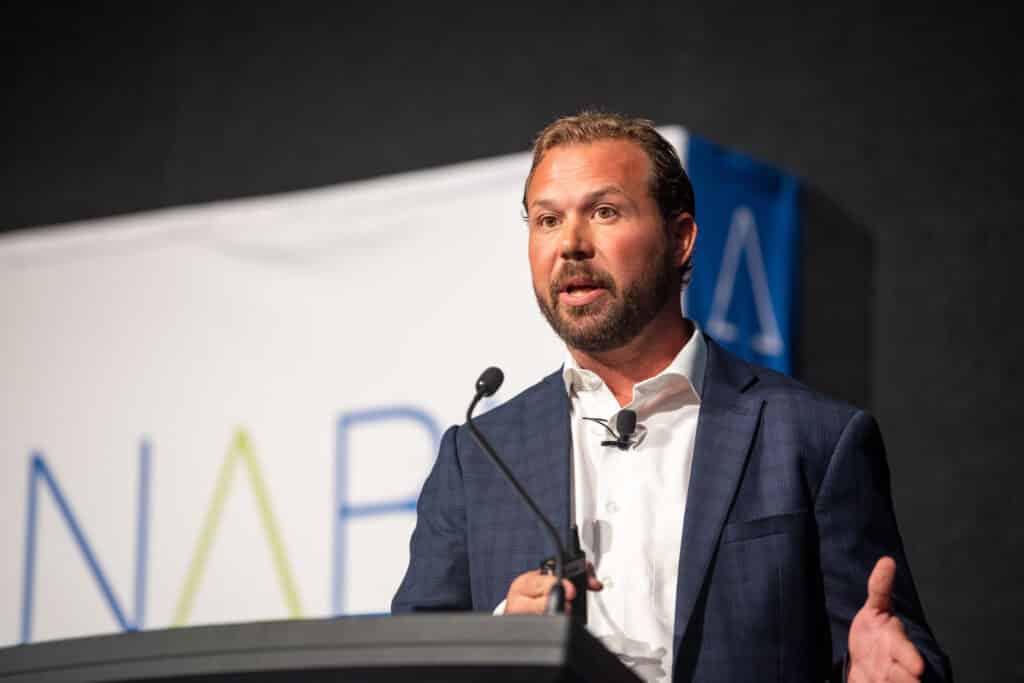
A prominent cannabinoid scientist has called on the cannabis sector to explore the full therapeutic range of the plant and to adopt a more rigorous scientific approach as it works toward developing effective medicines.
Hunter Land, vice president of research and development at US-based Biopharmaceutical Research Company, said too many people are "stuck in the past" and wrongly categorise cannabis and its therapeutic value based on the appearance of the plant.
He also rejected the word "strain" in the context of cannabis — arguing it has no recognised place in botanical science — and described full spectrum and broad spectrum as "ambiguous" phrases that give patients the impression they are receiving "mystery soup".
"Does anyone have a favourite strain of apple or tomato? I don't. I think it strange," he said.
Land, who became GW Pharma's first full-time R&D staffer and played a key role in the development of Epidyolex and Sativex, told delegates at the ACannabis conference in Melbourne that the industry's fixation on THC and CBD had run its course.
"We need to look into these other cannabinoids," he said. "We've been beating this course of THC and CBD forever and the countless different ratios. There are 148 other cannabinoids. Who is going to be the first to look into these and get some human data?"
He pointed to a clear "opportunity" for those willing to act first, noting that GW Pharma pioneered Epidyolex and eventually sold for US$7.2 billion.
"There is a rewarding avenue for patients and for companies to study this appropriately and to look into some of these other cannabinoids," he said.
“I don’t see a future where healthcare providers are going to say ‘oh yes, this patient needs four grams of bubba kush’.”
hunter land, vice president, biopharmaceutical research company
Greater precision is also needed when it comes to identifying the ingredients in cannabis medications and the conditions they are intended to treat, he said.
While accepting "isolate" as a workable term, Land said broad spectrum and full spectrum are unhelpful and imprecise, despite their use by the Therapeutic Goods Administration (TGA).
"Isolate makes sense, but full spectrum and broad spectrum are ambiguous terms. One contains THC and this 'other stuff', so it's a mystery soup. The other has no THC, but it's still a mystery soup.
"Think about how many compounds we've got. We've got about 150 different cannabinoids. And the only distinction we're drawing is THC or no THC, and the varying ratios of all these other components.
"I would encourage people to be very specific about what's in your particular medicine… or what you're researching, and understand how those constituents can play an important role in treating patients."
The industry also needs to target more precisely defined indications rather than grouping conditions under sweeping categories.
Saying cannabis treats pain is far too broad, Land said.
"Is it osteoporosis of the knee, is it fibromyalgia? If we can look more closely into the specifics then we'll be able to better treat patients, and that's what we all want, right?
"We don't want patients to fail treatment because we're not dosing them correctly."
On the question of "strains", Land said the word brings to mind "Covid-19 and E.coli" rather than cannabis.
"Cannabis has had a tough time and I don't think associating it with terms that are not linked to accepted botany is helpful," the former Canopy Growth scientific director said in his presentation, adding that strains are simply "branding".
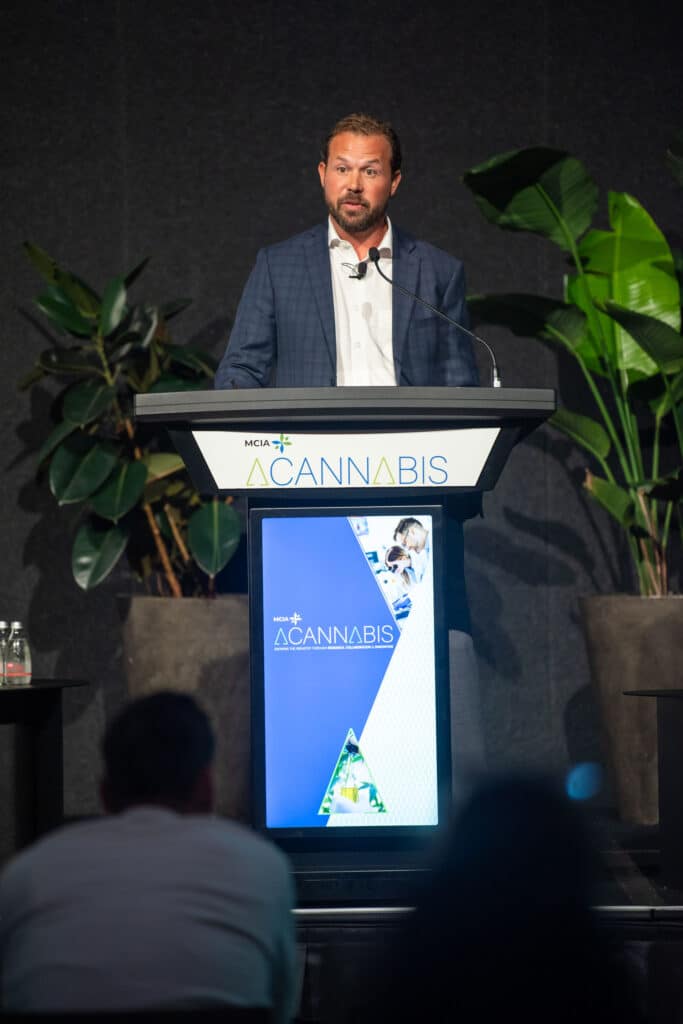
"I don't see a future where healthcare providers are going to say, 'oh yes, this patient needs four grams of bubba kush'. That's not what healthcare practitioners are used to. It's certainly not what my grandma is used to. She is used to being told 'this is your dose, this is your medicine, this is what you should take and how you should take it',"
"Broadly, that is not where the industry currently is. I would like to see it move that way if we really want to help patients with unmet medical needs and deliver it in a safe manner."
Even the way the industry thinks about the plant itself needs to shift if meaningful progress is to be made, he added.
Years of extensive cross-breeding mean that judging the therapeutic value of cannabis based on physical appearance is no longer a reliable approach.
"Looking at a plant and determining this short, fat plant is good for sleep and this tall skinny one is good for pain… we can't judge a plant by how it looks," he said.
"We've got technology now where we can look at the chemical constituents and get some idea of how these plants should be used and what is meaningful in their content."