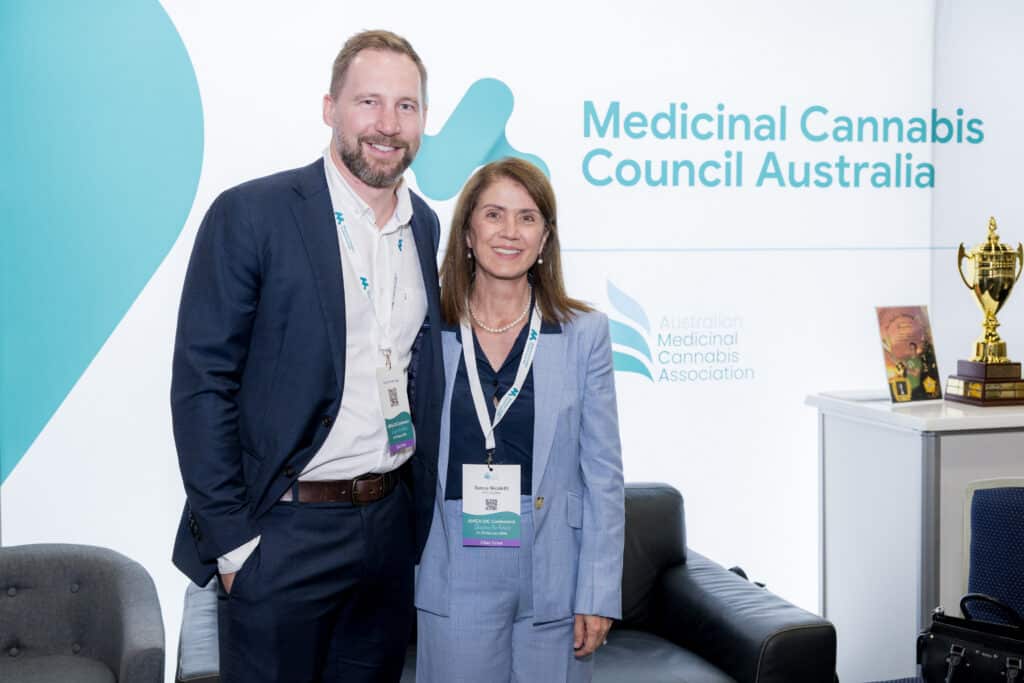
The medicinal cannabis industry faces a defining moment and must come together to show the broader public the significant benefits it is providing to patients nationwide, according to the incoming chair of Medicinal Cannabis Industry Australia.
As MCIA and the Australian Medicinal Cannabis Association (AMCA) announced plans to explore a merger, Kristin Viccars cautioned that regulators will intervene if the industry does not put its own affairs in order.
The sector must also "turn the tide on negative publicity", he said — an outcome achievable through coordinated industry-wide effort and by presenting a unified, authoritative voice to policymakers in Canberra.
Speaking in an interview roughly 24 hours before the merger talks became public, Viccars said the industry cannot allow the actions of a small number of bad actors to overshadow the contributions of the majority.
With greater "unity, compliance and leadership", the industry could grow to nearly a third beyond its current size, he added.
"Let me be frank, our biggest issue is fragmentation," Viccars said. "As an industry we've often failed to speak with one voice and that lack of coordination is holding us back.
"The regulators are stretched and if we don't lift internal standards and drive self-regulation, they will, and most likely in ways that may not reflect the best interests of patients or the industry.
"Regulators have an outsized appreciation of risk – until they don't. It's up to us to demonstrate that any risk – perceived or otherwise – pales in comparison to the actual benefits for patients.
"We must hold ourselves accountable. Compliance issues and lack of transparency around conflict and self-interest are hurting the industry's reputation.
"That said, the potential is still enormous. With greater unity, compliance and leadership, the Australian market could easily be 20 to 30% larger than it is today.
"We know patients are benefiting, we know innovation is happening. But getting our house in order, communicating the patient and economic benefits more effectively is key."
Viccars said it was "clear to everyone" that deeper collaboration is "not just desirable, but essential", adding that the "fragmentation of having different industry associations is creating gaps for some of the bad actors to thrive".
If the industry associations and other stakeholders can align and develop solutions to the challenges confronting the sector, "it could be a turning point for the industry", he said.
Among the initiatives currently underway is the development of an industry-wide code of conduct.
The most influential industry associations draw "strength in numbers" from such a coordinated approach and are better placed to ensure the "right things are being done", Viccars said.
"Our goal is to co-create industry solutions where there's alignment and ensure we present a unified front on the issues that matter most," he said.
"The regulators and policy makers have made it clear that a unified voice increases impact and improves outcomes.
"We've already seen the benefit of joint MCIA and AMCA meetings where we've had shared messaging, common priorities and aligned solutions. Ultimately that's how we're going to get things done.
"Collaborating in the way we are is helping to support the unified voice and vision and that is something both industry associations share."
Beyond pushing on issues such as reform advocacy, workplace drug testing, and embedding the endocannabinoid system in medical education and GP training, Viccars said countering the negative headlines that have damaged the industry's standing is equally critical.
"In many industries, the few unsatisfactory actors get disproportionate airtime, and this must be addressed," he said. "We need to shift the narrative to focus on the majority of good actors which make up the medical cannabis industry in Australia.
"They are the ones delivering positive patient outcomes on a daily basis."
Even if an AMCA and MCIA merger is completed, a second industry body — Cannabis Council Australia — will continue operating in Canberra.
Viccars, however, pointed to the possibility of closer ties with the Montu-backed organisation.
MCIA has already met with CCA chief executive Lisa Penlington, with Viccars noting the two organisations "share an appetite for collaboration".
"I think there's an appetite and understanding that collaboration is fundamentally important to achieving a unified voice and we're certainly open to having conversations about what we're working on individually," he said.
"Where that leads, I don't know, but Lisa has a wealth of experience and collaboration can only be a good thing.
"If we're sharing resources on common goals around the big issues, that's ultimately where progress and action live."