The goal is simple to state, but far harder to execute — and it's one that doctors and pharmacists are firmly behind.
"What is in the market at the moment is essentially a recreational product that has active compounds, and medicinal properties, which is being sold under the banner of medicinal cannabis," Spring Sciences Australia chief executive Dr Steve Newbery says.
The company's intent, he explains, is to "change that narrative".
"We want to produce a product that is as close to a standard the pharmaceutical industry would accept and, therefore, a product that doctors and pharmacists can have complete confidence in, in terms of prescribing and dispensing to patients. That is our aim and it underpins everything we do."
In an industry that is, at least for the foreseeable future, supposed to be entirely devoted to producing medicine, such a goal should be the baseline rather than the exception.
Yet producing consistently high-quality product from plant matter has always been difficult. One of the most persistent problems in medical cannabis cultivation is delivering a product that is uniform enough in quality and potency to generate the same therapeutic outcome for patients across successive batches.
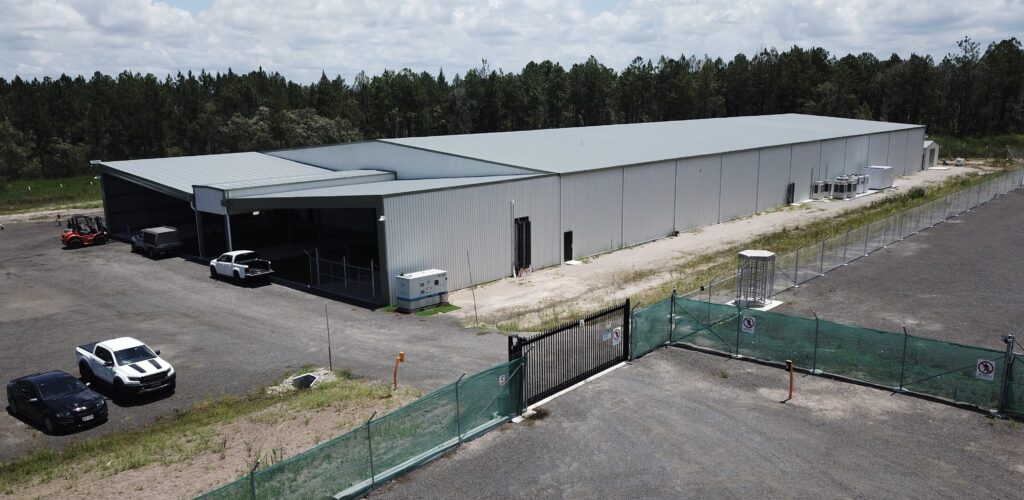
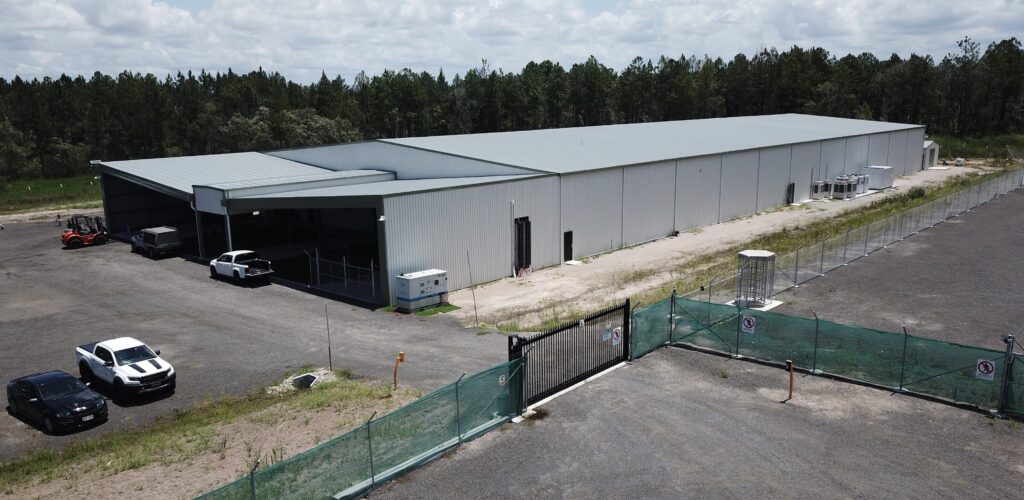
At its indoor, climate-controlled cultivation facility in Caboolture — situated roughly halfway between Brisbane and the Sunshine Coast — Spring Sciences is working to address those problems head-on.
The company is doing so not only through the skill of its cultivation team, but with the assistance of artificial intelligence and automated production technologies.
The growing process is managed by specialist agriculture software, Argus Titan 900, a system that governs every aspect of the cultivation cycle and, through a multi-screen mission control room, presents data on every output variable at every stage of production.

Without diminishing the expertise of its cultivation team, the AI system could prove central to Spring Sciences' ambition to produce genuinely pharmaceutical-grade medicine.
"If there is one thing we will not compromise on it is the quality of the product," Newbery stresses. "It underpins our entire business model."
Prescriber engagement
Before the facility was switched on, Spring Sciences consulted prescribers and pharmacists to understand what the medical profession needed, and how practitioners viewed the current state of the market.
What emerged was a picture of uncertainty, confusion, and discomfort around prescribing medicinal cannabis.
"They told us they had a product that they really didn't understand, or what it did," Newbery recalls. "There wasn't the depth of research normally associated with a pharmaceutical product that allows them to prescribe with confidence, for a specific ailment.
"There were several issues; the multitude of cultivars, the various chemistries, the fact that 22% THC doesn't always mean 22%, which impacts precision dosing. What you normally equate with a medicine just hasn't been there.
"And then you hear people say 'oh, we've got 400 different cultivars'. Why? Doctors are saying they don't know what to prescribe and that they just need four or five with a range of THC and other cannabinoid compounds that work synergistically to create distinctive and effective benefits, commonly referred to as the entourage effect. They want to know it's of a consistent quality and to understand its efficacy.
"If you've got 400 cultivars, it's just an absolute shotgun blast and that's not what the market wants or needs.
"The question I kept asking everybody is 'what do we grow and why?' And no-one could answer that."
Answers may now be emerging from within the Spring Sciences business itself.
Alongside gathering doctor sentiment, the Queensland-based cultivator is working with clinics and specialist cannabis consultants to collect data on which chemical compositions have produced successful outcomes for specific conditions.
That data will substantially influence what the cultivation team grows and lay the groundwork for potentially developing next-generation cannabinoid drugs.
"There's a lot of research taking place with, for example, first responder and veteran affairs groups who are targeting particular ailments," Newbery says. "If we can be party to that data, it will flow into our operations and answer that question of 'what do we grow and why?'
"While The AI engine is being targeted to optimise the efficiency of the facility and to produce premium quality yield, plugging in efficacy data, and what doctors are prescribing, will help us understand what ratios of active compounds are necessary to target a specific ailment."
The first responder and veteran cohort is of particular interest to Spring Sciences, partly because of personal experiences shared by members of the team.
Newbery indicated that one in seven (14%) of more than 600,000 people who have served in the Australian Defence Forces (ADF) have suffered from some form of mental health issue in the past 12 months and 39% of 80,000 first responders require medicinal cannabis for a variety of anxiety-related conditions. It is a patient cohort that needs servicing.
Add to that the estimated 43% (8.5 million) Australians aged 16–85 who are estimated to have experienced a mental disorder at some time in their life, with 20% (3.2 million) having experienced mental disorders in the previous 12 months, and the case for a pharmaceutical-grade product becomes difficult to dispute.
"Those numbers alone show there is a vast potential patient base we can tap into," Newbery says. "We believe that the pharmaceutical market is the pre-eminent market for us."
State-of-the-art facility
The fully automated 3,000sqm GMP-certified facility includes a 480sqm micropropagation section with tissue culture capabilities, five grow rooms each capable of holding 3,500 plants, a post-harvest processing area, and a dedicated GMP zone for extraction, distillation, storage and packaging.
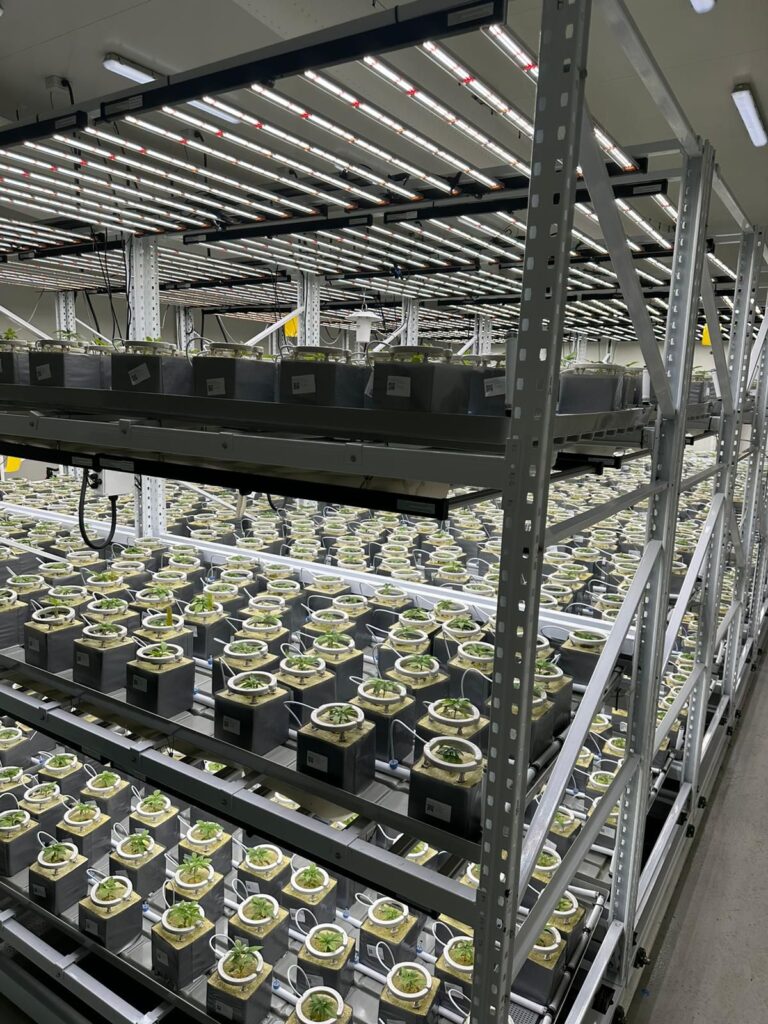
At full capacity, the initiation room can support 30,000 plant embryos, with capacity to root 10,000 early-stage clones and acclimatise 3,500 plants.
Micropropagation is "central to the strategy", Newbery says, with the six-week cycle delivering "agile production", starting with five distinct strains defined by their CBD, THC and terpene profiles.
"Our goal is to expand this genetic library to over 100 genotypes – we currently have 30 – and develop in-house hybrid cultivars, with specific prescription-backed efficacies," he adds.
At present, the company has capacity to produce 10 tonnes of non-irradiated dried flower, a figure that could double as the facility grows alongside the market.
"We have the ability to go from tissue culture to commercial harvest in six months, so if there are dramatic shifts on the flower side of the market we can quickly respond," Newbery says. "However, if doctors continue to evolve their understanding of cannabis as a medicine, they're not going to get sucked into these dramatic swings in market requirements by recreational users.
"Regardless, if we are producing a premium quality product with a strong entourage effect, which covers a multitude of bases, then it will cover both the pharmaceutical and recreational markets.
"And our view is that if we develop an ongoing reputation for quality flower, we will pivot fairly seamlessly if and when adult use becomes legal."
High yields
Among the more striking aspects of the facility are the yields that the technology and cultivation methods make possible.
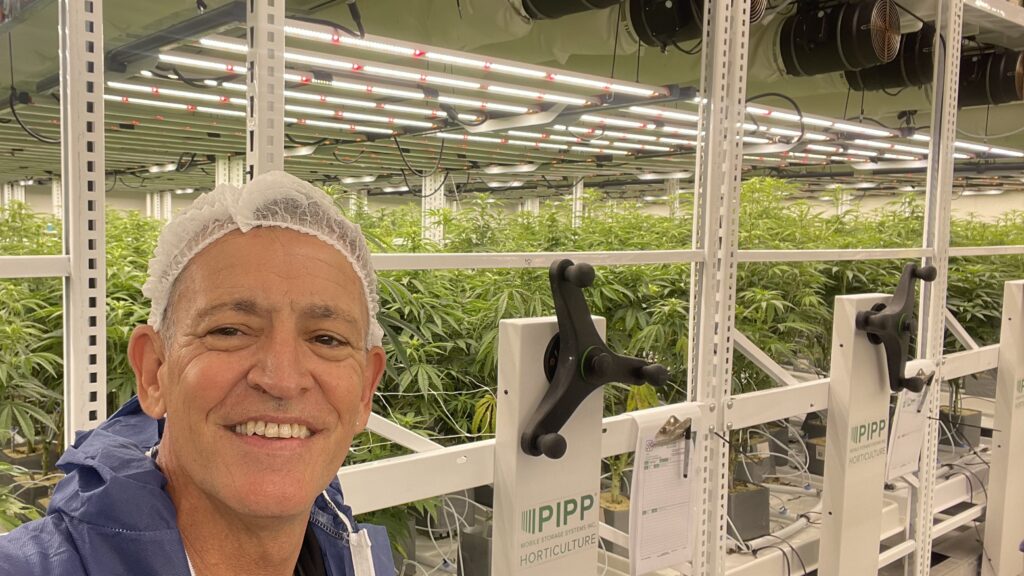
The multi-tiered racking design across each grow room accommodates 3,500 plants supported by LED lighting, climate-controlled heating, ventilation and air conditioning, fertigation systems, and sensors to fine-tune growing conditions.
"Yield of dry flower per square metre of cultivation space is a key metric, and our team is targeting anywhere between 1,100 and 1,500g," reveals Newbery. "A lot of people have said that's totally unrealistic, no-one in the industry is within cooee of that. But our sister company in the US is now achieving 1500g/m2 and our first harvest was just under 800/m2, the base figure used for our financial modelling. So we are off to a good start.
"It shows the capabilities of the facility. Technology has advanced, and our understanding of how to best utilise that technology has advanced, and that is translating into higher yields."
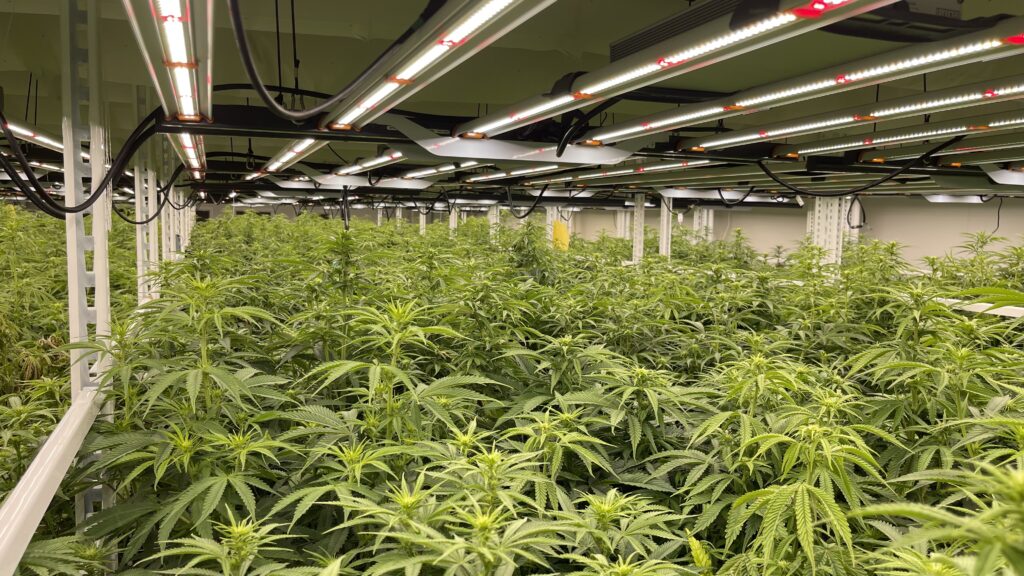
Those higher yields will lower operational costs and, ultimately, allow Spring Sciences to produce high-quality medicine for patients across all price points, Newbery says.
He makes clear that the quality of the product will be the same regardless of price. What will reduce the cost of certain products will be non-medical factors such as "bag appeal" and the general appearance of the medicine.
"Everyone should be entitled to premium quality medicine, and that is what they will get from us," he says. "Just because people are on a pension, or come from a lower socioeconomic background, does not mean they should accept inferior product for a medicine that is underpinning their health. We won't produce substandard buds and I believe, as the industry evolves, low-to-medium quality product will fall by the wayside."
Newbery is also firm in his view that inhalation as a route of administration — dried flower in particular — is far from appropriate in a medical context.
With that in mind, Spring Sciences is finalising agreements with "like-minded global entities" that will allow its flower products to be faithfully replicated "in whatever form we want without the vagaries of flower".
"I've always believed that Australia is a nation of non-smokers, so why do we give them a product which they have to inhale?" he says. "It's nonsensical to expect someone in their 70s or 80s who might be suffering from a high degree of arthritis to grind flower.
"We recently announced the important partnership with Verve Dynamics South Africa, world leaders in phytoextracts. Verve's propriety extraction and drug compounding technology can extract the components of a flower with very specific chemistry, and re-formulate it into a medicine that can be taken with precision. This is a very exciting development for us and means we will be able to provide the chemistry of the flower in more precise and easy-to-administer forms."
Outdoor cultivation
Pointing to broader expansion plans, Spring Sciences is also planning a series of satellite outdoor grows to supply product for extraction alongside its indoor facility. Newbery reveals that one proposal to develop a 100-acre site in New South Wales was rejected by authorities "simply because I think they were terrified by the size of the facility we were looking to build".
Smaller satellite grows of around 20 acres are now planned in Queensland, though Newbery concedes it will be at least a two-year process given the time required to navigate licensing and permits.
In the meantime, Spring Sciences remains focused on getting the most out of its indoor facility. Doing so will lift yields and cut costs, Newbery says.
"Quality and cost competitiveness. That is a powerful combination."