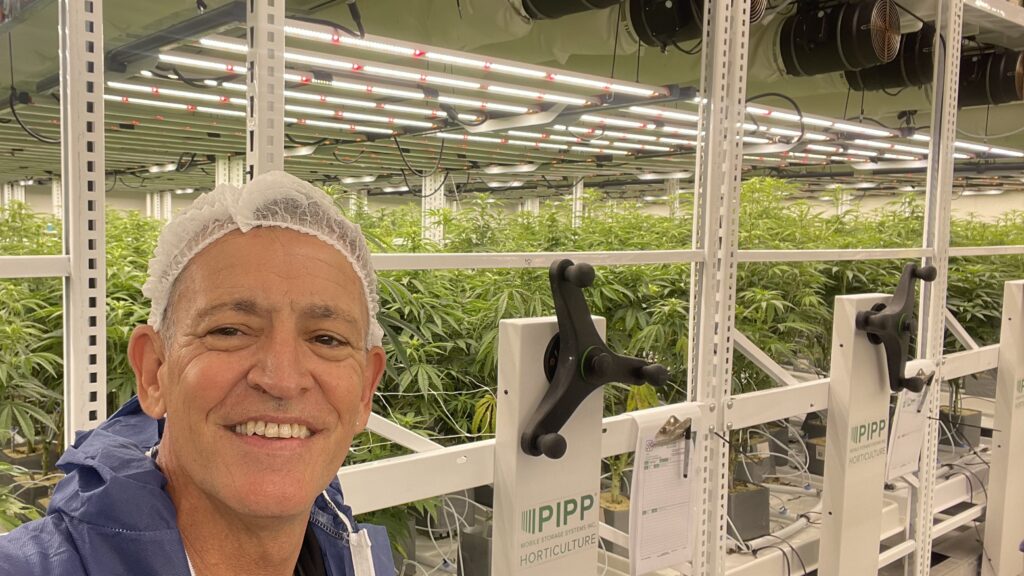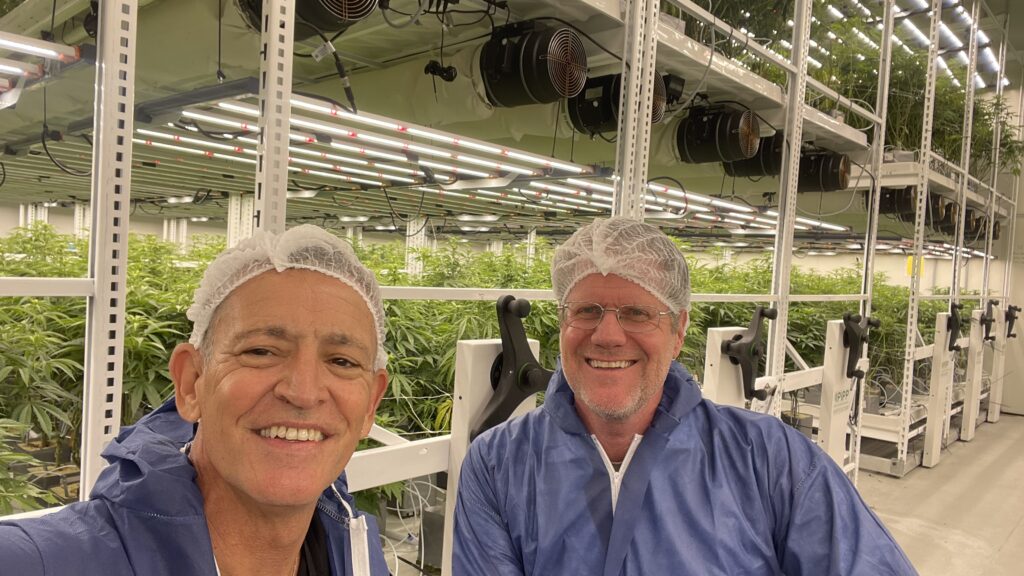
The origins of Australia's newest cannabis cultivator, Spring Sciences Australia, could hardly be more fitting given the industry's nickname and the promises of wealth that have long surrounded it.
The phrase 'Green Rush' entered cannabis vocabulary around 2012, borrowing its name from the Gold Rush of the 19th century. In both cases, there was widespread belief — at least until 2020, when reality began to set in — that fortunes were there for the taking.
It seems almost inevitable, then, that the idea Dr Steve Newbery and Sheldon Kirkpatrick had for entering the medicinal cannabis sector traces its beginnings to gold mines in east Africa.
"Sheldon and I built a gold mine in Tanzania, and as part of the licensing process, we had to submit a closure plan, designed to support the workforce and surrounding community once the mine closes," Newbery explains. "We looked at what industries could achieve that and concluded that agriculture was the way forward."
The question was: what to grow?
At that time, Canada's cannabis industry was taking off. The Green Rush was gathering pace — not purely around recreational use, but also around growing recognition of the plant's medicinal potential. Newbery and Kirkpatrick were paying attention. But their plans didn't progress far.
"We made representations to the minister for agriculture and the minster for health, and in many respects it was of more value than the gold mine," Newbery recalls. "But such are the vagaries of African politics, it kind of went nowhere."
The pair shelved their cannabis ambitions until a former associate, Robert Gerhard, reached out to discuss — by coincidence — a business venture centred on cannabis.
"I laughed when he told us he was investing in the cannabis sector," Newbery says. "We exchanged stories and it went from there."
Gerhard had put money into a Michigan-based cultivator called Driven Grow, which was looking to expand. After being introduced to Andrew Driver, Driven Grow's chief executive and founder, Newbery and Kirkpatrick visited the facility, assessed what was working and what wasn't, and drew up plans to bring the Michigan model to Australia.
Spring Sciences Australia was born.
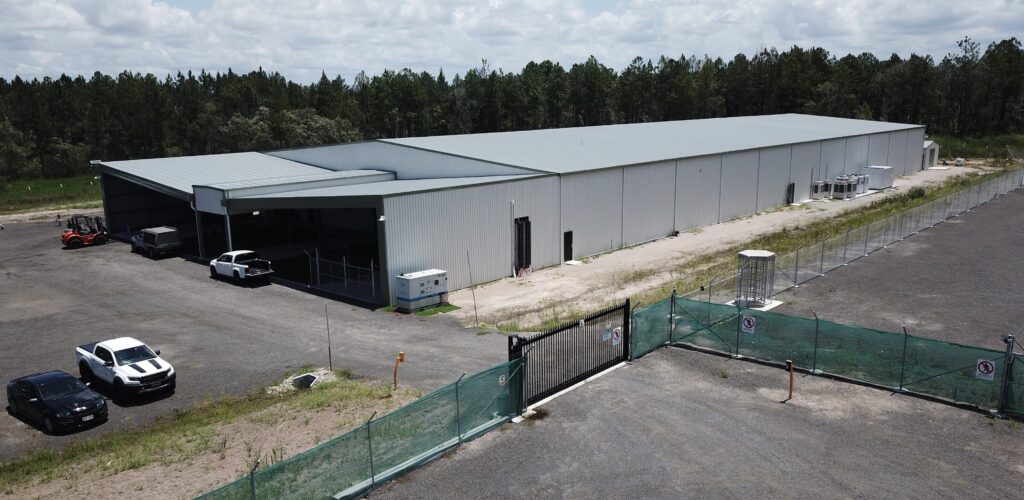
That was 2019. Today, a fully automated, climate-controlled indoor facility capable of producing 10 tonnes of dry flower sits off a country road near Caboolture, roughly midway between Brisbane and the Sunshine Coast.
Yet the journey to commercial production serves as a sharp reminder of how difficult it is to establish a medicinal cannabis cultivation business. Floods, Covid, and the Office of Drug Control (ODC) — where even minor changes to previously approved plans can sit in a queue for months — all contributed to delays in getting the operation to the point of selling crops.
The drawn-out timeline has not gone unnoticed by the management team or its roughly 50 shareholders, who include the founders themselves alongside friends and family. As with many cannabis companies before it, Spring Sciences' schedule blew out by nearly two years.
"It was a constant battle with the ODC, and some of the shareholders who were with us from the beginning occasionally raised questions over how long it was taking, and that's understandable," Newbery says. "But we've actually been very lucky in the sense that our shareholders are successful people in their own right. They understand the dynamics of business, many of them are medicinal cannabis patients, or have relatives who are, and are committed to the success of the industry.
"We've spent quite a bit of time keeping people informed on our progress. We adopted many of the practices that you would associate with an ASX-listed company. We put out quarterly reports and Sheldon was always on top of our financial reporting. We basically run ourselves like a professionally listed company."
That disciplined approach carries several advantages, he adds. It will position the company well if it ever opts to go public, and it signals a level of competence that builds shareholder confidence and may make investors more willing to participate in future capital raises.
"We've been very successful in getting repeat investments sometimes two, three or four times," Newbery says.
In total, Spring Sciences has spent over A$10m in capital expenditure on the project, Kirkpatrick reveals, a figure expected to exceed $12m once all five grow rooms are fully operational.
"There's no doubt we had some high-stress periods, but we took our principals from the junior mining industry where you say what you're going to do, raise the money, and do it," he says. "Our shareholder base has grown incrementally over that period, and as we've built confidence, people have realised that what we're doing makes a lot of sense."
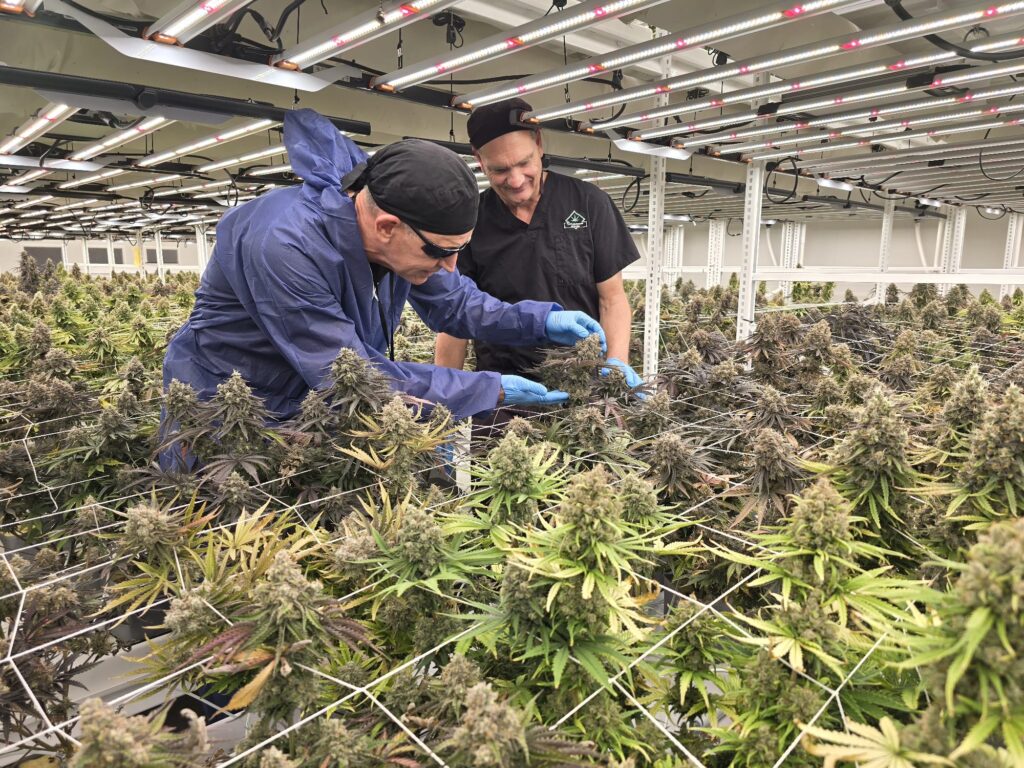
The company's success won't benefit only management and outside investors as production scales up. Most of the workforce has a direct financial stake, with many having invested "significantly". The company also runs an equity plan tied to employees' base salaries and vested over three years.
"Every day they come to work they're earning equity and sharing in the value uplift and success of the company," Newbery says. "It's part of a longer-term wealth creation scheme for the employees and is an important part of our recruitment strategy."
Beyond attracting staff, it also aids retention — another "critical goal", he adds.
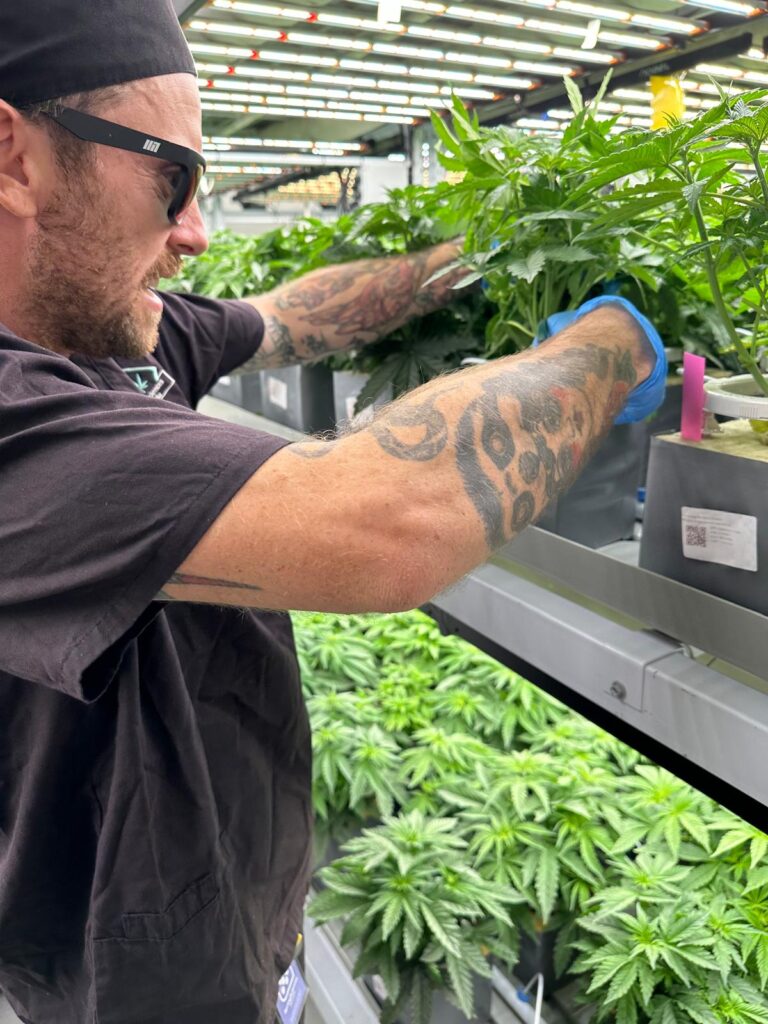
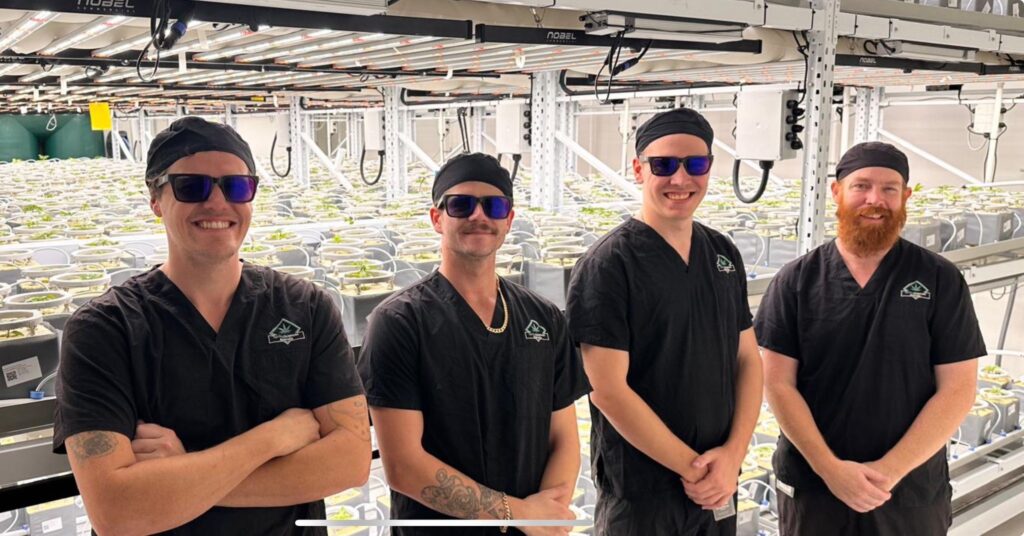
Among the key personnel are head of cultivation Josh Waldron, head of tissue culture Dr Lennon Matchett-Oates, and general manager Tony Saw, all of whom have played a central role in bringing the company to the threshold of commercial production.
"They're smart people and understand what we're doing and why," Newbery says.
That clarity of purpose wasn't always present, even among the senior leadership of Newbery, Kirkpatrick, and Saw.
While Spring Sciences was developing its high-tech but deliberately compact indoor facility — shaped by their Michigan visit — others across the medicinal cannabis sector were pursuing vast greenhouse projects with capital requirements to match. At times, doubts surfaced about whether Spring Sciences had chosen the right path.
"When we saw friends looking to build massive facilities with $70m or $80m capital requirements, we seriously questioned what we were doing, and whether we had the right approach," Newbery admits. "Having said that, we fundamentally knew it was a successful business model in the very competitive US market. So we stuck to our guns and continued to refine the facility. And as we did, one by one those other projects either didn't get off the ground or fell by the wayside."
Spring Sciences' business model has also evolved. Early plans centred on developing the company's own product line under its own brand, using "the best flower in Australia and at least on a par with the best international flower".
Marketing specialists were brought in as the team began thinking about gaining traction with doctors and securing a foothold in the market.
As the Australian industry matured, however, it became clear that a different direction could yield better results.
"When we started to look at the economics of our facility and our ability to drive down production costs to the point where we were more than competitive against a greenhouse, we realised that the time and resources necessary to develop a brand really didn't fit for us," Newbery says. "Domestic players who had spent a lot of time and energy and money in developing their brand were struggling against foreign players. They needed our products if they were going to compete.
"So we went from a company planning to go from seed through to products on the shelf to a firm which is aiming to be the best cultivator in Australia, producing world-class bud, and working with people who already have established brands."
That shift changed the company's position immediately, with other players in the supply chain actively seeking out the cultivator.
"As a consequence of that strategy shift, we were approached by our peers because they no longer saw us as a competitive threat," Newbery says. "We've subsequently struck agreements which will allow us to not only develop our own cultivars, but take other people's cultivars and grow them to a higher specification which allows them to be more competitive in the market."
The arrangement also addresses something that has tripped up domestic players: consistent, high-quality supply.
"You can spend months or years building a brand around a particular cultivar and suddenly it's not there," Newbery says. "Or it may arrive and is sub-standard. When that happens, they've got absolutely nowhere to go and they're dealing with brand reputation damage.
"By working together with these firms it's a win-win for everybody. They're making good money and building their brand with consistent, premium product and we're getting reliable cash flow at a good price."
Commercial production in Caboolture is now within reach.