Businesses that depend on imported products and compounding pharmacists are being cautioned to proceed carefully after the health regulator issued clarifications to the rules governing medicinal cannabis standards.
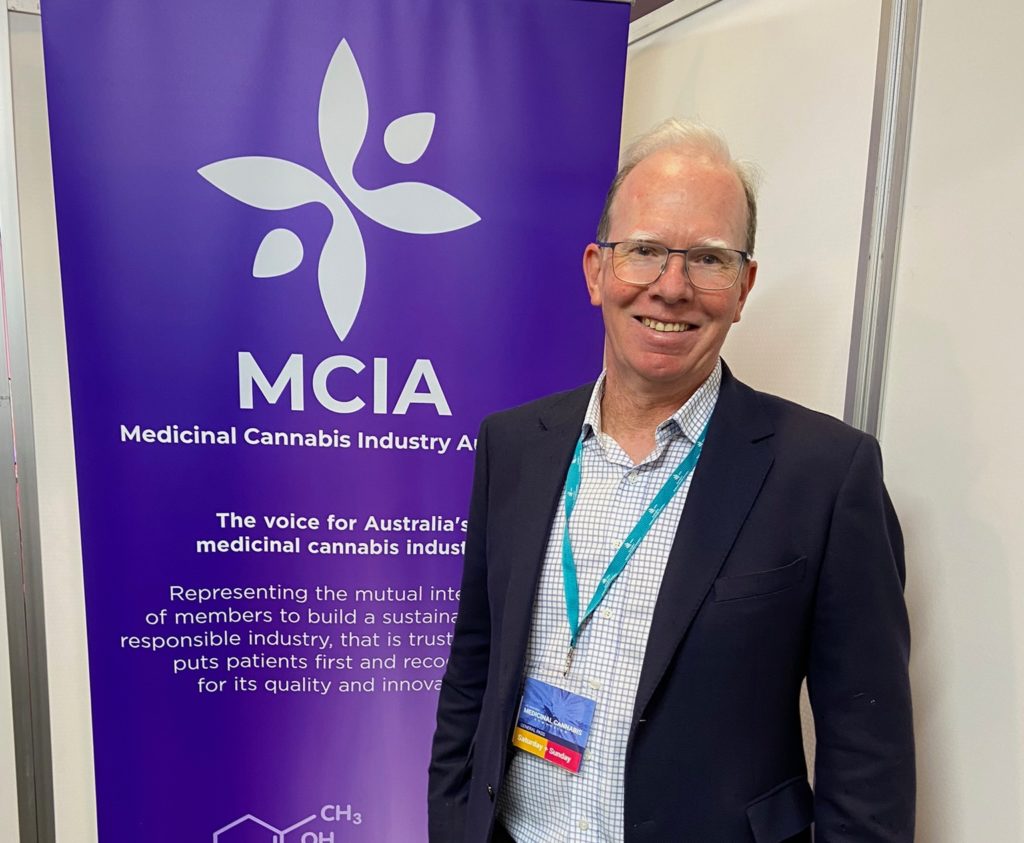
Medicinal Cannabis Industry Australia (MCIA) chair Peter Crock said the Therapeutic Goods Administration (TGA) has made its position clear: it will act firmly against any companies that attempt to circumvent reforms taking effect next July.
"It's not dissimilar to the advertising position where people thought the TGA had no teeth and weren't pursuing companies," he said. "The TGA showed in due course that when they caught up with someone, they caught up with them with significant consequences.
"If companies are found not to have met their requirements as a sponsor, then the full weight of the law will land on them. That's the TGA position."
Following industry consultations and an internal review, the TGA published "clarifications" to TGO 93.
The most significant update concerns section 13, which addresses "manufacturing quality".
The order states that manufacturing regulations "[do] not apply to plant material or oil extracted directly from the plant for use as a starting material in the manufacture of another medicinal cannabis product".
In its clarification this week, the TGA emphasised that the "exemption from holding GMP evidence for starting material only applies where the starting material is used for further manufacturing at a facility with approved GMP".
When asked for further clarification on how this applies to compounders, the TGA reiterated that its core intention is to "ensure the quality and safety of products supplied to Australia and to provide consistency for both imported and domestically supplied products".
Addressing compounders directly, the TGA said in a statement: "The impact of these changes depends on the licensing status of the compounder and the licensing status of the manufacturer of the ingredients.
"If the compounder has a TGA licence, an Australian manufacturer of the plant material or oil who supplies the product to the compounder does not require a TGA manufacturing licence. If the compounder has a TGA exemption – for example a pharmacist operating under certain conditions – the plant material or oil must come from an Australian site with a TGA manufacturing licence."
The TGA further stated: "From 2023, imported medicinal cannabis products that are used as ingredients by compounders, who have a TGA exemption, must be manufactured with appropriate GMP approvals as set out in the updated TGO 93.
"The updated TGO 93 introduces GMP requirements for imported ingredients so there is now consistency with domestically produced starting requirements.
"The exemption in the regulations would not apply if the ingredients were supplied to a compounder who did not have a TGA manufacturing licence."
Crock emphasised that it is each company's responsibility to understand its own obligations. As with the advertising regulations, "ignorance will be no defence".
"It's an area for people to tread with care because while it's easy to say starting material can be exempt, it's a classic case of 'it depends'," he said.
"The TGA is not saying you can't bring in non-GMP material, but if you do, you'd better have your house in order when it comes to getting that product released and available for patients.
"They will prosecute someone who tries to bring in material and greenwash it, or GMP-wash it, and release it as a GMP product.
"One of the nuances is that not all starting material can be turned into a GMP product, and starting material can be at any point along the continuum of a manufacturing process.
"There are some importers who think they can import, give it to a GMP manufacturer and magically turn it into a GMP product."
That, however, is not a designated GMP pathway, he said, which could lead to prosecution if the correct steps are not followed.
"There are no definitive answers because it depends on so many factors," he said.
He added that the TGA was "looking carefully" at the compounding issue.
"They are concerned about compounders who are bulk manufacturing as that was never the intention," he said.
Crock acknowledged the complexity of the regulations and revealed MCIA advised the TGA not to provide examples of compliant or non-compliant conduct, given the number of variables involved.
"It would be a 2,000-word essay to cover all permutations and combinations, so that's why the TGA has been less expansive," he said. "We said 'don't give examples' because it would only be one scenario when there are so many.
"That's why it's up to the sponsor to know their obligations."
The full list of TGA clarifications relating to the TGO 93 orders:
- corrects an error in the 'table of specified tests'
- clarifies requirements around child-resistant packaging
- makes clear that labelling requirements apply to goods that are finished products only
- adds the New Zealand GMP standard as an equivalent GMP standard for the manufacture of medicinal cannabis
- clarifies that the exemption from holding GMP evidence for starting material only applies where that starting material is used for further manufacturing at a facility with approved GMP
- confirms that the relevant acceptance criteria for microbiological quality apply to both oral dosage and inhalant forms.
In a note to stakeholders, the TGA's medicinal cannabis reforms team said: "We encourage you to carefully consider each part of TGO 93, noting that sections 13 (GMP requirements), 14 (child-resistant packaging), 15 (labels) and 16 (microbiological attributes) will apply to all medicinal cannabis products released for supply on or after July 1, 2023.
"Imported medicinal cannabis released for supply after that date cannot be supplied in Australia if the local sponsor does not hold one of the types of evidence listed in section 13(3) of TGO 93."
The updated version is available on the Federal Register of Legislation website.