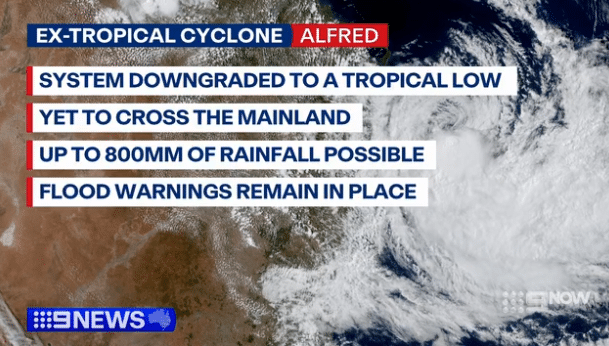
Most medicinal cannabis companies came through ex-Tropical Cyclone Alfred's assault on Queensland last weekend with limited damage, though Spring Sciences lost some product at its Caboolture facility and CanView flagged potential medicine delivery delays.
Brisbane recorded its heaviest rainfall since Cyclone Wanda in 1974, with fierce winds and torrential downpours battering the region, yet serious problems across the industry were few.
Spring Sciences faced the most significant challenges, with its Caboolture facility — situated roughly halfway between Brisbane and the Sunshine Coast — experiencing a complete power outage and "multiple power trips".
Spring Sciences chief executive Dr Steve Newbery said the facility held up well, despite being among the worst-affected areas.
"We only suffered one period of loss of power and then multiple power trips and alarms, but generally we ran on back-up generators very well when required," he said. "Fortunately, we did a double harvest last week and managed to get the harvest through dry and into the cure stage. This meant there was less strain on the genes.
"We lost some fresh frozen product and trim, but generally we do not see any disruption in production, save for staff away dealing with personal issues and having to catch up on plant husbandry activities from the past week."
"All in all, we are in good shape."
Distribution platform CanView advised that cyclone-related weather and its aftermath were causing delays at its distribution centres and putting pressure on customer support teams.
“As a result, some deliveries may be delayed and customer support may be temporarily unavailable,” the business posted on LinkedIn. “Should you require assistance, contacting the team via the live chat is the best option.
“We apologise for any inconvenience this may cause to your business and patients. Teams are working to restore normal operations as quickly as possible.”
Australian Natural Therapeutics Group (ANTG), which operates a facility near Brisbane Airport and another in Armidale in New South Wales, reported that both staff and facilities came through the cyclone "unscathed".
“Our Brisbane facility became inaccessible for most staff due to road flooding, only those that live close by have been able to access to it,” chief executive Matt Cantelo said. “But the automation built into the facility and the comprehensive monitoring systems have stood the test. Our plants are all in good shape.”
Medcan Australia, which runs a facility in Brisbane, also experienced minimal disruption, according to chief executive Craig Cochran.
“To be honest, so far so good,” he said. “We have a few staff working from home, but for the most part our operations haven’t been affected.”
Tracey Perez, co-founder of Queensland-based cultivator Medicinal Harvest, said the lead-up to the cyclone's arrival had been "scary" given widespread warnings about destructive winds and rain.
Her operation also came through without incident, she said.
“We got heavy rain and it was very windy, but not enough to cause any damage,” Perez said. “If the forecast had come true there would have been heavy flooding around our area, but thankfully that didn’t come to fruition.
“The road from Brisbane was cut off about 40km or 50km from us, so access to where we are in the Darling Downs area has been compromised, but the weather was not as bad as had been forecast.”
Sunshine Coast-based cultivator The People’s Plant, which has launched a second crowdsource funding raise on Birchal, was also spared as Alfred's intensity weakened at landfall.
“We had wind, we had rain but we didn’t have any flooding,” co-founder Ben Risby-Jones said on Instagram. “There were concerns about how the crop would handle a tropical cyclone – and if Mother Nature had wanted to flatten the world she could – but in this particular situation we’ve been fortune and the plants have done incredibly well.”