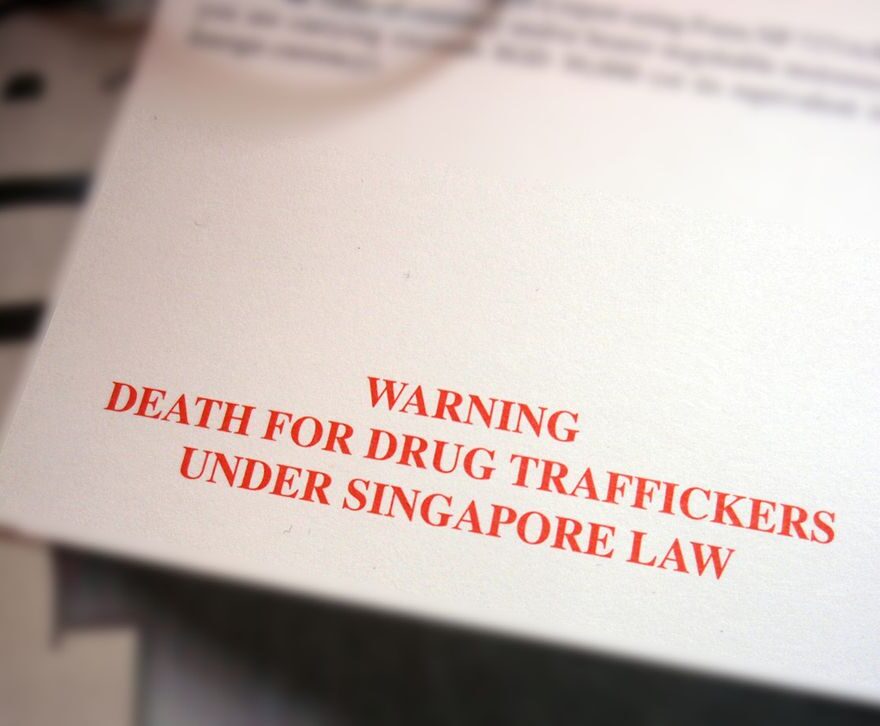
Human rights advocates have sharply condemned Singapore after the city-state carried out the execution of a man convicted over a conspiracy to traffic 1kg of cannabis, despite widespread international calls for clemency.
Tangaraju Suppiah, 46, received a death sentence in 2018 after a judge determined he was the owner of a phone number used to coordinate the drug trafficking attempt.
He was hanged at Changi prison on Wednesday morning, Singapore Prisons Service told Agence France-Presse.
The United Nations Human Rights Office had previously urged Singapore to "urgently reconsider" the hanging, and Suppiah's family, along with British business tycoon Richard Branson, had also appealed for the execution to be halted.
Campaigners raised serious concerns that Suppiah had been questioned by police without access to legal counsel or an interpreter. While he was never found in possession of the cannabis, prosecutors argued that phone numbers linked him to the coordination of the drug delivery.
He maintained that he was not the individual who had been communicating with others connected to the case.
The Anti-Death Penalty Asia Network described the execution as "reprehensible", stating: "The continued use of the death penalty by the Singaporean government is an act of flagrant disregard for international human rights norms and casts aspersion on the legitimacy of [its] criminal justice system."
Phil Robertson from Human Rights Watch called it a “human rights outrage that makes much of the world recoil, and wonder whether the image of modern, civilised Singapore is just a mirage”.
Amnesty International also issued a condemnation, citing what it described as "many flaws in the case".
Critics have long argued that Singapore's application of the death penalty has predominantly ensnared low-level couriers while doing little to disrupt major drug trafficking networks and organised crime groups.
The government, for its part, maintains that capital punishment is an effective deterrent against drug-related crime and enjoys broad public support.
In the previous year, Singapore put 11 people to death for drug-related offences, among them a Malaysian man with learning difficulties.