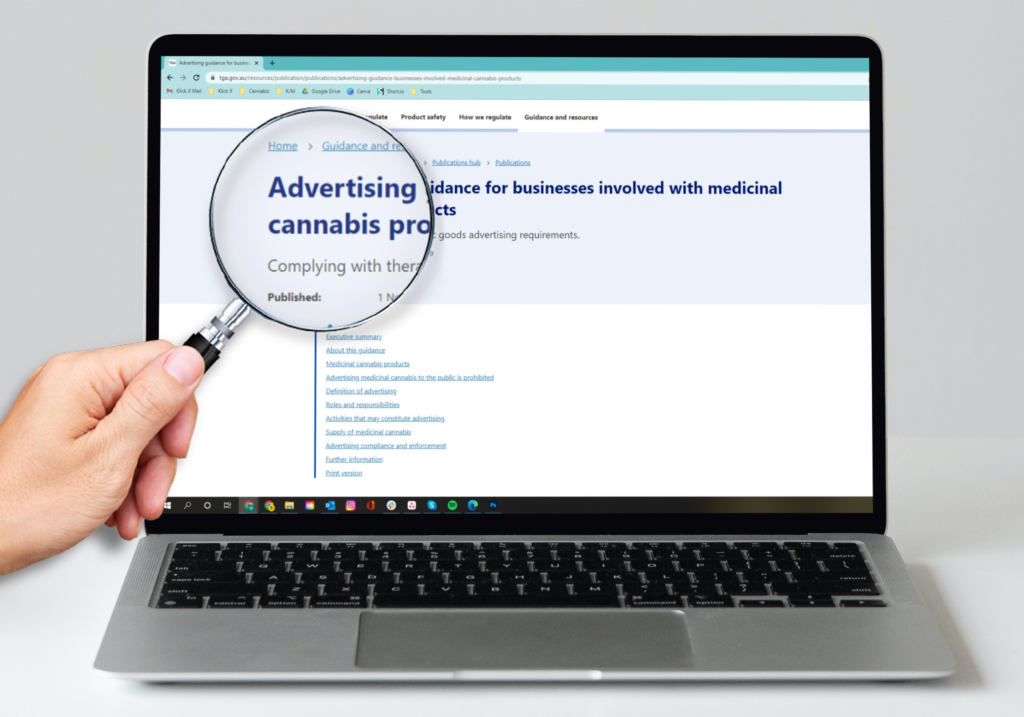
A team of researchers from the University of Queensland examined 54 Australian medicinal cannabis clinic websites and found that nearly half appear to be seriously violating advertising regulations set by the Therapeutic Goods Administration.
The clinics were identified through Google searches using terms such as 'plant medicine' and 'green medicine', after which their websites were assessed for potential violations.
Researchers measured website content against six TGA guidelines on medicinal cannabis advertising and found that 47% fell into a "high breach" category by violating two or more of those rules.
Publishing their findings in the Australian & New Zealand Journal of Psychiatry, the researchers described "significant non-compliance" stemming from direct references to medicinal cannabis in promotional content and the listing of health conditions the medicine can treat.
At the same time, the team observed "partial compliance" when it came to guidance around promoting cannabis-related health services without explicitly naming the drug.
Writing in The Conversation, study authors Carmen Lim and Wayne Hall said their findings exposed "widespread" breaches, including the use of cannabis imagery and the phrase 'plant-based medicine', despite the regulator cautioning against such practices in updated guidance released in December 2023.
The researchers also flagged clinics that were making health claims without adequate evidence and enabling patients to evaluate their own eligibility for treatment.
"Self-assessment may mislead people into believing they would benefit from it [medicinal cannabis], inadvertently 'coaching' them on which medical conditions might warrant a prescription," they said.
"Self-assessment might also lead people to believe they require more medicinal cannabis than is medically necessary."
Additional "marketing tactics" the study identified included same-day or after-hours delivery, no GP referral requirements, discounted consultation fees, discreet delivery options, and targeted advertising across social media platforms.
The authors added: "These practices challenge the intent of the TGA guidelines to ensure responsible prescribing, and push the boundaries of permissible prescribing."