Oz Medicann Group (OMG) has set its sights on three medical research trials throughout 2024, fulfilling its commitment to place patients at the core of its product development efforts.
The company will work alongside the NICM Health Research Institute at Western Sydney University to evaluate the effectiveness of three CBD formulations, with one project running in partnership with the Medical Research Institute of New Zealand in Wellington.
Each of the three research projects is at a different stage of development, though all share a common goal: delivering cannabinoid-based treatments for sleep disorders, anxiety, and pain conditions.
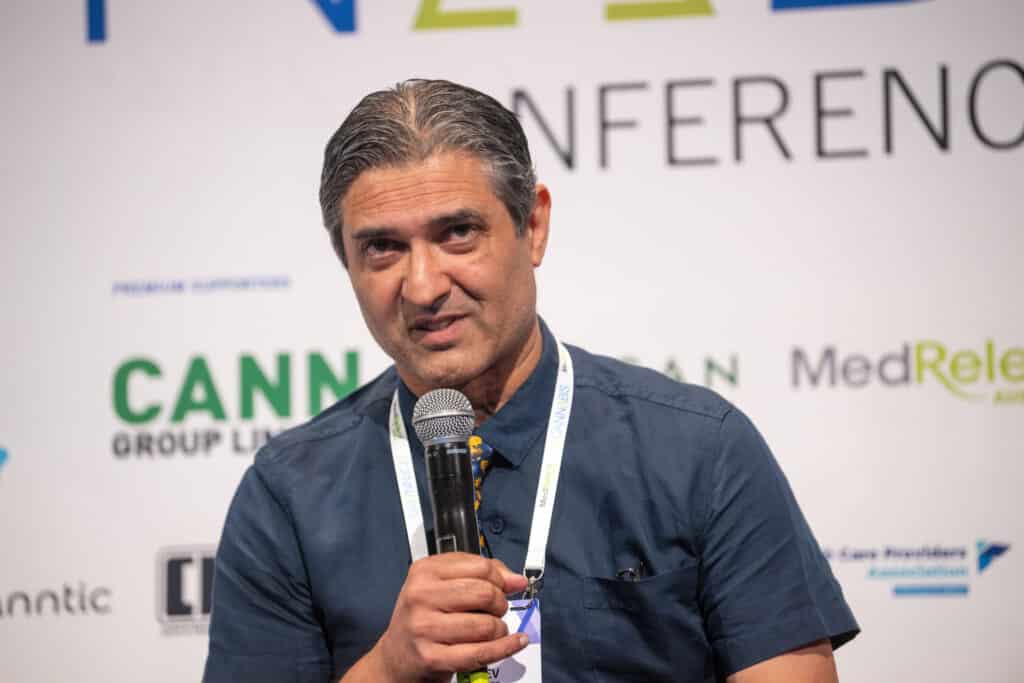
The studies are being managed on OMG's behalf by Emeritus Professor Alan Bensoussan, a former director of NICM, who said he was drawn to working with OMG by the principals of its founder, John Leith.
"I've known John for about five years and his company is dedicated to high-quality research in the pharmaceutical application of medicinal cannabis," he said. "OMG is focused on drug development and production innovation."
The first of the trials, previously flagged by Leith, will put the company's schedule 3 over-the-counter sublingual CBD tablet through formal clinical evaluation.
Ethics approval has already been secured, with a phase IIb/III clinical trial set to run simultaneously at NICM's Western Sydney University site and at the Medical Research Institute of New Zealand.
The double blind, randomised, placebo-controlled trial will involve 300 patients receiving either a 75mg dose of CBD, 150mg — the maximum permitted under the Therapeutic Goods Administration down scheduling — or a placebo.
Bensoussan said the month-long intervention will be powered to "get a definitive answer for one or both of the dosages".
Considerable work has already gone into refining the sublingual tablet, with the seasoned researcher describing the company's "excitement" at its potential.
"We are now in the throes of refining the tablet," he said. "One of the exciting aspects of this tablet is the more rapid absorption in a dosage form that's easier to take.
"A large number of consumers, particularly older consumers, have difficulty swallowing tablets. A sublingual tablet is a way of addressing that issue.
"It's also a way of achieving more rapid absorption through the oral mucosa. The CBD enters straight into the bloodstream, bypassing liver metabolism. For the purposes of sleep, that's a big positive."
Before the main trial begins — expected in the second half of the year, using the insomnia severity index to measure outcomes — a pharmacokinetic (PK) study will be conducted to assess the relative bioavailability of the over-the-counter candidate.
Bensoussan confirmed that preliminary research in this area has already produced encouraging findings.
"We're working with a major international ingredient supplier who has done developmental work on this and demonstrated improved bioavailability," he explained. "The PK study will compare the bioavailability of CBD in the sublingual tablet with CBD isolate in a tablet that's absorbed in the gut."
Acknowledging earlier CBD sleep studies and ongoing, early-phase observational work in clinical settings, Bensoussan said: "Companies have tried different dosages, different forms of absorption, different frequencies or intensities of treatment. These are all aspects of the intervention that, as scientists, you look at, learn from and try to improve.
"So I'm reasonably confident we've got a good trial design and a good intervention."
He added: "OMG is focused on developing research-backed, science-led solutions that address unmet medical needs and lead to better health outcomes for patients. That's what is important rather than simply saying 'here's another trial'."
CBD salve
Alongside the over-the-counter trial, OMG is directing resources toward a trial of its CBD salve — a roll-on product already accessible under the Special Access Scheme.
Bensoussan said some of the spontaneous reported benefits of the treatment for inflammatory arthritis left him "amazed". The apparent therapeutic value has caught the attention of specialists in the field, not just patients reporting "phenomenal" results, with one rheumatologist treating a patient with entrenched rheumatoid arthritis acknowledging its positive impact.
These outcomes prompted OMG to initiate an open-label investigative study, to be conducted in April in conjunction with rheumatology experts at Westmead Hospital.
"This will be a one-month observational study to get a sense in a controlled fashion of how the salve might be helping patients. Once we have that data, I expect we will progress to a major clinical trial," Bensoussan said.
"The 2,600mg CBD roll-on is used as you need to, so it's hard to know the exact CBD dosage being absorbed and delivered to the local tissues. But it's still safe. The challenge, in fact, is ensuring the formula provides good dermal absorption of CBD.
"It's a really clever formula, and from what we've heard from patients, they're responding positively. We want a controlled observation of those patients and potentially take it into a clinical trial if the results are as positive as we think they could be."
Anxiety tablet
The third element of OMG's research program centres on a separate sublingual CBD tablet the company is developing to treat anxiety.
Ethics approval will be sought for an open-label study likely to begin later in 2024.
Bensoussan said the active pharmaceutical ingredient (API) in this tablet will differ from that used in the sleep tablet, as it does not require the same speed of absorption.

"When you turn the lights out at night you want the quickest effects," he said in reference to the millions of Australians suffering from sleep-related conditions. "But when there's not that same need for a rapid onset, we can create something that's still rapidly absorbed but uses a different form of the API.
"We're using different approaches to improving the bioavailability in our sleep and anxiety tablets. The sleep tablet uses a new API that improves oral absorption, whilst the anxiety tablet adopts different permeability enhancers to enhance overall effectiveness.
"The bioavailability of both tablets will be assessed in our PK study.
Bensoussan noted that a number of companies across both the pharmaceutical and food industries have developed products aimed at improving bioavailability.
"There's some experience around delivering CBD this way," he said. "The biggest challenge has been getting an adequate dose of CBD absorbed because there's a cap on how much can be absorbed in the mouth at any one time.
"The challenge is the speed of absorption and the volume that gets absorbed and this has been the focus of ongoing research. OMG will be one of the key contributors to this global research."
Despite internal optimism and promising early indicators, Bensoussan is clear-eyed about the fact that trials can confound researchers, particularly once a placebo is introduced.
"There's no guarantee," he said. "I've run trials since 1995 and at our institute we've had anything between 10 and 20 trials running at any one time.
"Sometimes you'd give the shirt off your back believing you were going to get a positive result. But sometimes it doesn't come through. You've just got to run with what the data tells you.
"Having said that, we are quietly confident that we are moving in the right direction and believe OMG will have the world's first regulatory approved over-the-counter CBD sleep tablet."