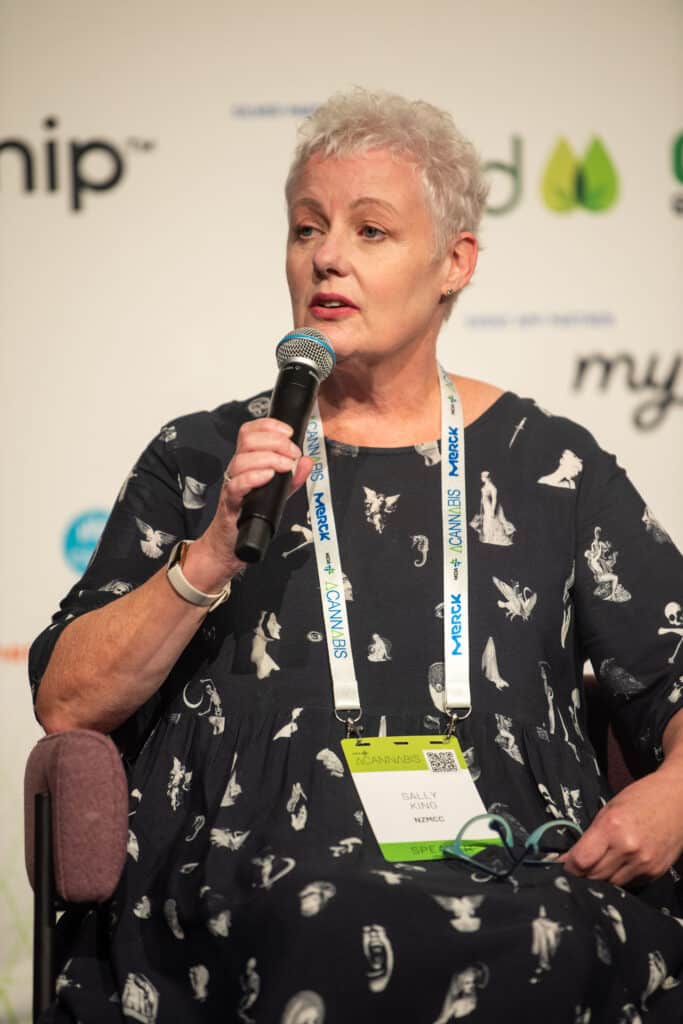
The New Zealand Medical Cannabis Council (NZMCC) is urging the government to create exemptions for medicinal cannabis patients under proposed drug-driving legislation that could impose an automatic 12-hour driving ban, even where no impairment is present.
The Land Transport (Drug Driving) Amendment Bill would introduce a random roadside drug-screening program using oral fluid tests to detect 25 specified substances, cannabis among them.
Under the bill, a driver who fails two consecutive roadside screenings would have their second sample forwarded to a laboratory for confirmation. If blood THC levels come back above 1ng/ml but under 3ng/ml, the driver faces an infringement notice, a fine, and demerit points.
Medicinal cannabis patients would have access to a legal defence against those penalties, but would still be required to surrender their keys at the roadside while awaiting laboratory results.
That defence disappears entirely if a patient's blood THC level reaches 3ng/ml or higher.
Transport Minister Simeon Brown has set police a target of conducting 50,000 roadside drug tests annually.
In a submission to the Transport and Infrastructure Committee, which is currently reviewing the bill, the NZMCC argued the legislation "does not adequately address significant uncertainty about impairment levels when using cannabis-derived medicines."
The organisation also raised concern that the medical defence does not extend to the "punitive" 12-hour ban, which it described as "hugely disruptive" for patients — particularly those living in rural areas.
The NZMCC characterised such a measure as "an arbitrary loss of freedom of movement" and argued that unimpaired patients taking cannabis medicines as directed by their prescriber "should explicitly be protected in law."
The submission continues: "We are also concerned about the suitability of the oral fluids test (OFT) screening. No technology is yet able to reliably detect impairment from drugs based on body fluids analysis, and OFT results in false positives and, worryingly, false negatives.
"The impact of the OFT inaccuracy, in addition to 12-hour driving bans, demerit points and infringement fines where there is no evidence of impairment… has not been properly taken into account.
"This bill is premised on the basis that even the smallest amount of the proposed tested substances will impair driving, without clear supporting scientific or empirical analysis.
"The facts, however, are very straightforward. Evidence of use is not evidence of impairment."
The NZMCC also raised concerns that the new regime could disproportionately affect Māori drivers due to "unconscious bias" among officers administering the tests.
The Cannabis Clinic added a further dimension to the debate, pointing out that with more than 250,000 New Zealanders still obtaining medicinal cannabis through the illicit market, those without a valid prescription face a substantially greater risk of fines, demerit points, or licence suspension should the bill become law.
CEO Dr Waseem Alzaher said: "We already know that a significant number of Kiwis are using medicinal cannabis outside of the legal prescribing route.
"It's scary to think how many people this roadside testing will impact, especially those who haven't taken the steps to ensure they're using cannabis legally and safely."