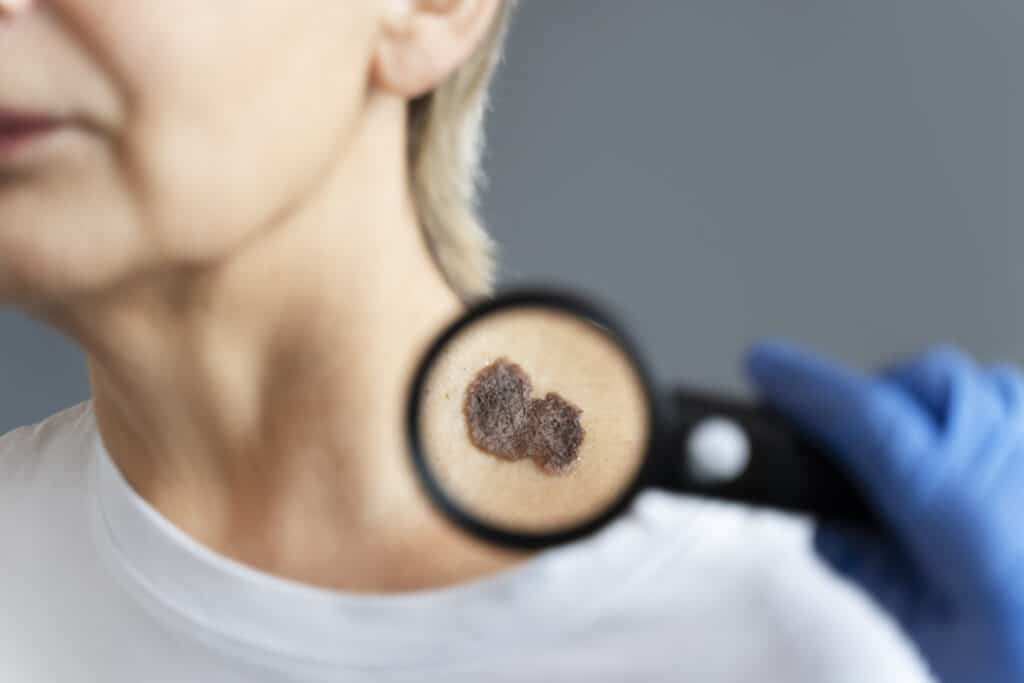
A new study has identified cannabinoid-derived compounds as potential anti-cancer agents against melanoma, offering fresh hope to those diagnosed with one of the deadliest forms of skin cancer.
Researchers from the Royal Melbourne Institute of Technology, Charles Darwin University, and the University of Western Australia demonstrated that a specific cannabis sativa extract — PHEC-66 — triggered apoptosis, or programmed cell death, in melanoma cells through in-vitro testing.
Biotechnologist and co-author of the study Dr Nazim Nassar told the ABC: “We know today how this extract attaches to the receptor on the cell surface, and changes the messages to the inside of the cell to manipulate the normal growth… to force it to go into [a] death progress.”
The study noted that treatment options for advanced melanoma remain scarce, with fewer than 15% of patients surviving past the three-year mark. Although melanoma accounts for roughly six per cent of all skin cancers, it is responsible for more than 80% of skin cancer-related deaths.
Despite the encouraging findings, Dr Nassar cautioned that a cannabis-based treatment is still a long way from reaching patients.
He said: “Before we take this to human trials, we have to go through animal trials, we have to make sure that these products are safe and effective.
“And more importantly, we need to find the way to deliver [PHEC-66] directly to the cell. Probably here we’re looking at something topical or subcutaneous under the skin that will deliver the medicine directly to the target cells.”
The research, published in the journal Cells, received partial funding from MGC Pharmaceuticals.