New Zealanders who use cannabis primarily for medical reasons are increasingly accessing it through legal healthcare channels, driven in part by reduced stigma and greater awareness among doctors, according to new research.
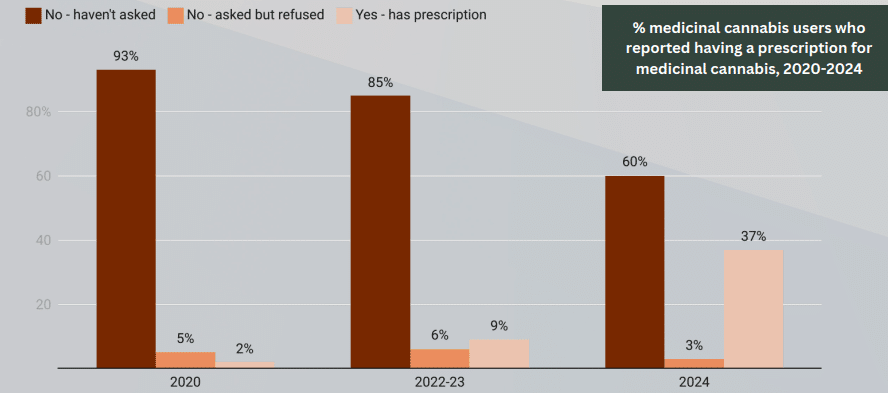
In 2022/23, fewer than one in 10 medical users had obtained a prescription for their cannabis. By 2024, that figure had risen to 37%, based on findings from the annual New Zealand Drug Trends Survey (NZDTS), carried out by the Shore and Whariki Research Centre at Massey University's College of Health.
While obstacles remain, researchers found that users are showing greater willingness to consult a health professional.
Among 1,742 respondents who reported using cannabis wholly or mostly for medical purposes, 60% said they had not approached a health professional — a significant drop from 85% in 2022/23 and 93% in 2020, the year the Medicinal Cannabis Scheme launched in New Zealand.
The authors of the NZDTS report described the figures as encouraging.
"The increase in access to prescriptions may reflect GP familiarity with the Medicinal Cannabis Scheme and the establishment of private cannabis clinics," they said, adding that one in five respondents now source their medicine mainly through clinics.
Even so, the researchers noted that the majority of medicinal users still obtain cannabis through illegal channels, including personal networks such as friends and family (25%) and drug dealers (24%), while 9% prefer to grow their own.
"Many medicinal cannabis users in the NZDTS didn't ask their doctor for a prescription because they were happy with these alternative sources, and because they perceived legal products as too expensive," the report added.
Despite this, the data indicated that the barriers — whether real or perceived — to consulting a doctor are diminishing.
When asked why they had not approached a health professional about medicinal cannabis, 42% said they expected the doctor would not take it seriously, 40% cited embarrassment linked to stigma, and 16% felt the available product range was too narrow — down from 56%, 44% and 25% respectively the year before.
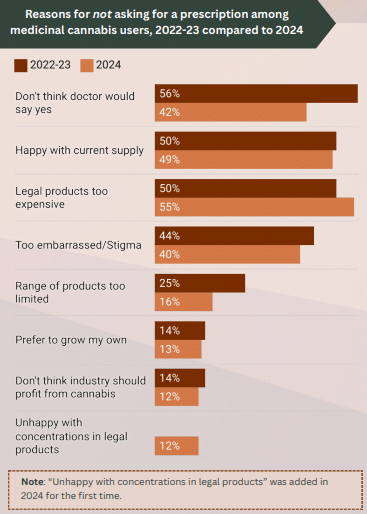
The one concern that grew more pronounced was the cost of legal cannabis, with 55% describing it as too expensive, up from 50% in the 2022/23 survey.
Across all respondents, 19% felt access to medical cannabis had improved — up from 15% — while fewer than one in 10 thought it had become more difficult, compared with one in five in the prior survey.
The most common conditions being treated with medicinal cannabis included anxiety and depression (74%), sleep disorders (72%) and pain (59%).
More than four in 10 women using medicinal cannabis were doing so for women's health conditions, including endometriosis and pre-menstrual tension.
The Massey University survey, which targeted people with recent experience and knowledge of drug use and drew close to 10,800 respondents, also examined attitudes toward policy reform for recreational cannabis use.
As in 2022/23, 28% favoured a "strictly" regulated legal market, 25% preferred a "lightly" regulated approach — down from 29% — and 27% supported decriminalisation only, up from 22%.
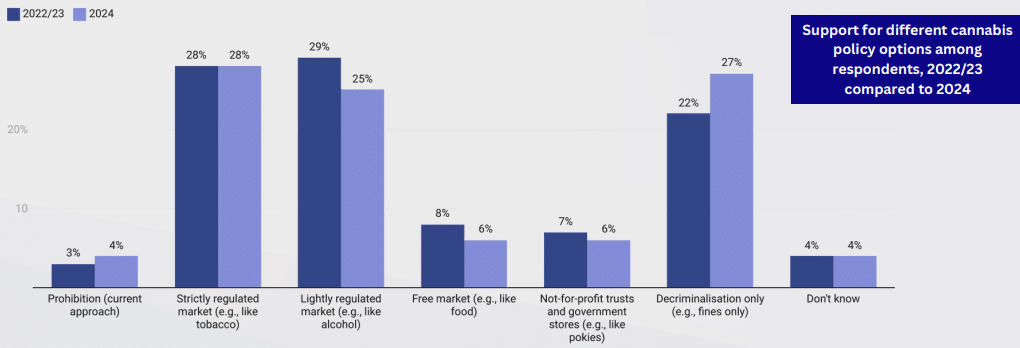
Just 4% wanted prohibition to remain in place, a slight increase from 3%.
When examining the political affiliations of respondents, researchers found that significant proportions of conservative voters supported both a strictly regulated market and decriminalisation, with only a small minority backing continued prohibition.
Similarly, large proportions of more left-leaning voters supported a strictly regulated market and decriminalisation, while few favoured a free market approach.
"This shows that preferences for cannabis law reform are more nuanced than a simple binary question about supporting cannabis legalisation, and people with different ideological views can still support the same reform options and share common concerns," the authors said.