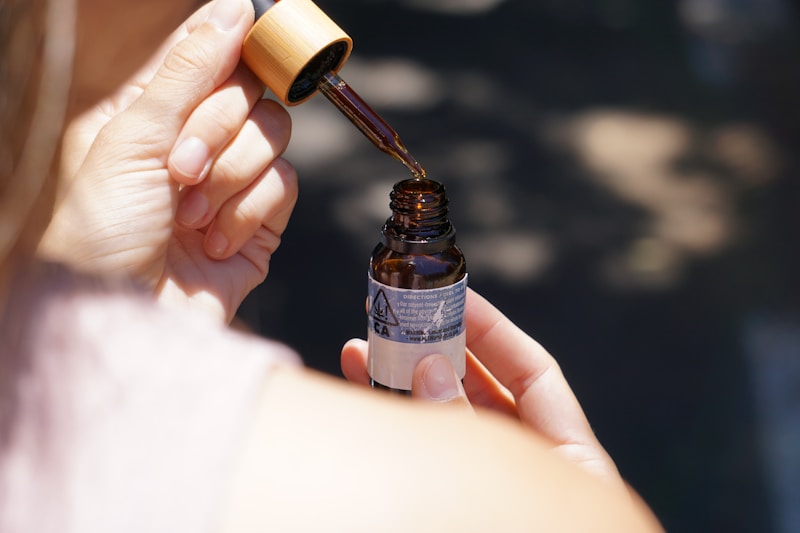
Nebraska's medical cannabis rules become permanent law on Monday, five days after Gov. Jim Pillen (R) gave his final sign-off.
Pillen announced Wednesday that he had approved the regulatory package submitted by the Nebraska Medical Cannabis Commission. State law requires a five-day waiting period after gubernatorial signature and filing with the Secretary of State's Office before rules take effect. A temporary, identical version of the regulations had been due to expire July 15 and will now be replaced.
Attorney General Mike Hilgers (R), who is statutorily required to review such rules for legal and constitutional soundness, signed off Tuesday, stating the regulations "do not clearly violate the state or federal Constitutions on their face." Pillen issued no separate statement on his approval.
In September, Pillen had rejected an earlier draft because it lacked a plant limit for licensed cultivators. In a September 4 letter, he wrote: "If an inclusion of plant population limits for permitted cultivators can be included, I will support the remainder of the proposed emergency regulations to go into effect. Again, thank you for your work on this matter and answering the call to public service." Commissioners responded at a September 8 meeting, capping each of the state's four licensed cultivators — the maximum allowed under the rules — at 1,250 flowering plants at a time. One cultivator has since passed inspection and been cleared to begin growing.
Other provisions: patients must obtain a referral through a new "Recommending Health Care Practitioner" directory to use licensed dispensaries; purchases are capped at 5 ounces per 30-day period, with no more than 5 grams of delta-9 THC from a single dispensary; up to 12 dispensaries are allowed statewide, one per judicial district covering Douglas County (584,526 residents), Lancaster County (322,608), Sarpy/Cass Counties (217,202), and Buffalo/Hall Counties (112,979), per 2020 census figures; and smoking, vaping and edible products are banned, though thinly flavored oral tablets are permitted.
When the voter-approved medical cannabis law took effect in December 2024, Pillen and Hilgers jointly said "serious issues remain regarding the validity of these [ballot measure] petitions under federal law and the Nebraska Constitution." Pillen has since softened his stance more than Hilgers, who still opposes federal rescheduling and once threatened legal action if the commission issued licenses. It did so shortly after an October 1 voter-mandated deadline last year, without any lawsuit following.
The Medical Cannabis Commission next meets July 20.