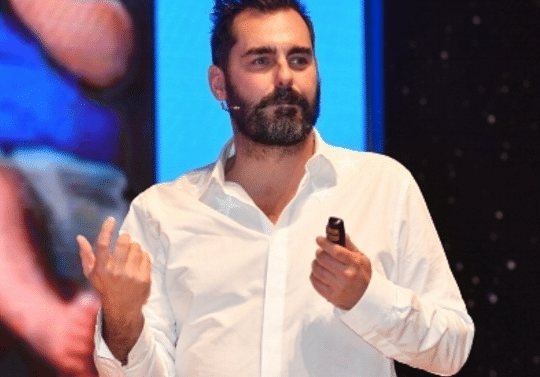
Humacology chief creation officer and co-founder Sam Saunders argues the medicinal cannabis industry has a narrow window to win over new patients — and it's routinely squandering the opportunity.
Before co-founding Humacology, I spent more than 20 years working as an advertising creative in New York. The irony of that background and where I've ended up is not exactly subtle — it's a bit like being a Michelin-starred sushi chef who's been told knives are off the table.
Restrictions aside, I still approach every challenge in this industry the same way I always did: by respecting what I'd call the 'consumer mindset'. In our world, of course, that becomes the 'patient mindset'.
Mindset is a complex but powerful force in commerce.
At its most basic level, a food brand heading into Superbowl season might assume the consumer's headspace runs something like: "I want to throw a great party," or "I want to show up to a party with something people will love," and pitch their snacks and deals accordingly.
Dig further into mindset, and a sharp marketer starts to find the emotional and rational triggers underneath. Hosts, for instance, often want their food to look and taste homemade. The emotional payoff is the quiet satisfaction when guests assume they put in real effort — the little secret. The rational payoff is that the food genuinely tastes good.
Every company, from a budget frozen food label to an upscale catering outfit, stands to benefit from understanding those triggers as the big game approaches — using them in their messaging and product range to give consumers something better than they expected.
I raise this straightforward example because I believe medicinal cannabis is facing something of a crisis. We have thoroughly ignored the patient mindset in favour of pure greed. I realise that sounds alarmist, so let me unpack it.
For this category to genuinely succeed — to become resilient enough to withstand pharma lobbyists who are sharpening their arguments and preparing to strike — we need to bring in new patients.
We need that growth to reach the point of being mainstream rather than remaining an unverified alternative treatment. As an industry, the priority right now isn't just growth. It's acquisition. Growth will follow.
Back in the Mad Men world of New York, customer acquisition was the brief no ad agency wanted to receive — and that we all complained about endlessly. Why not craft a brilliant idea, cross your fingers, and hope it resonates so deeply that people become genuine participants in the brand?
If you own a Nike t-shirt with a visible swoosh on it, then you're a participant in Nike. It's part of your DNA. Think about how incredible that is. A brand's values align with yours so powerfully you'll wear it. Pay to wear it. Apple sticker on your car? Same. Gucci handbag? Same.
We are all but a collection of highly curated (by us) brands that help to say something about us that we probably couldn't articulate otherwise.
The brands we participate in are the brands who have won us. Have seduced us. As an ad man, this is the moment when you tell the client: job done. And then go out for martinis.
Now replace brand with industry.
Like anything new, seduction takes time. New Balance might not feel right for me today — but ask me again when I'm 80 and their shoes are the only ones that actually accommodate my feet and keep me walking without pain. At that point, I'll tell everyone within earshot, or through whatever digital megaphone exists by then.
People are aware of medicinal cannabis now, but many aren't ready to take the step — at least not enough to dip their toes into the proverbial pool. We operate in a strange world. Medicinal cannabis is still seen as alternative. Special access. Naughty. Even illegal, in the minds of many potential patients.
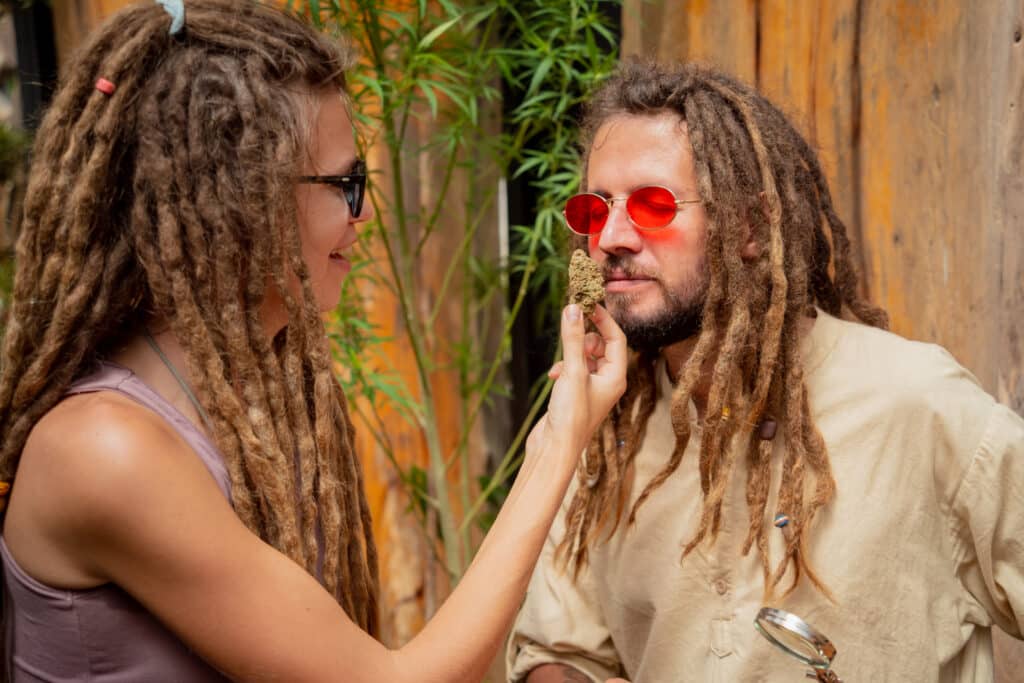
They often arrive reluctantly. Their preconceptions — dreadlocks and joints, reinforced by the absurd, cliché-laden names given to flower varieties (forbidden ghost kush haze, anyone?) — combined with the out-of-pocket costs for both the consultation and the medicine, all stack up into a wall that has them already leaning toward a firm 'No'.
“We operate in a weird world. Medicinal cannabis is seen as alternative. Special access. Naughty. Even illegal to many potential patients.”
Their attitude toward medicinal cannabis and the idea of trying it is fragile. They've already half-decided it probably won't work.
And that mindset is their reality. There's no use fighting it — we need to meet patients where they are. Accept that we're not going to shift that attitude overnight.
The emotional and rational triggers here aren't hard to identify. Rational ones involve cost and the ingrained scepticism around the effectiveness of a natural medicine — particularly non-THC or low-THC options like those Humacology produces.
Emotional triggers include the shame or embarrassment of crossing over to the 'dark side'. How do you tell your family — let alone your GP — that you're now a 'stoner'?
When you layer doubt on top of shame and then add cost, you're facing a serious climb. At any point in the acquisition process, a patient can walk away. Too hard, too dodgy, too expensive, won't work.
And if it doesn't work, they're furious. Angry that they compromised their own values — and their money — to try this alternative. They'll tell everyone they know that medicinal cannabis is exactly as useless as they'd expected. (Spend five minutes on Reddit and you'll find plenty of evidence of this.)
Getting that first date is something, but we need to follow it with the best second, third, fourth, and fifth dates of their lives.
This is where we come in as an industry. I'm genuinely concerned that many new patients are being prescribed CBD isolate — which is, in theory, a reasonable way to ease them in.
This is their first real contact with medicinal cannabis — we won them over. That's genuinely remarkable. A fragile new relationship has begun. And first impressions here are everything if we want to turn that patient into an advocate.
So what do we do? We have to deliver — with a medicine that genuinely impresses them and breaks down their doubts.
The problem starts with CBD isolate. We need to have an honest conversation about the quality of medicine being handed to these cautious newcomers. We need to hook them properly, not just wave the bait.
And many in this industry are doing it a serious disservice. Like flower — which comes with almost as many exceptional variants as it does ridiculous names, and the wide range of benefits each offers — not all CBD medicine is created equal.
Many labels read 0:100 CBD isolate. And honestly, 95% of those products are interchangeable — because most come from the same three or four profit-driven companies that seem constitutionally opposed to terpenes.
My phytochemist refers to a CBD isolate without terpenes as 'salad dressing'. I think that's unfair to salad dressing. At Humacology, we believe terpenes replicate the entourage effect and are what actually make our CBD isolates work for patients.
Step back and think about what's at stake. Consider the fragility of that new acquisition process. All the hard work done across this industry to dismantle stereotypes. To change driving laws. To push medicinal cannabis toward mainstream acceptance — chipping away at the barriers of cost, stigma, and inconvenience — only to prescribe an oil that will do nothing to help the patient and a great deal to empty their wallet.
It's the equivalent of reaching the 98-metre mark of a 100-metre race and tripping on your own shoelaces. If we're extraordinarily lucky, they might give it another shot.
But most patients we do manage to win over — who are then handed 'salad dressing' — will disappear and write off medicinal cannabis entirely, given where their head was at to begin with.
Many of you will recall 'subgate', where a pharmacy swapped out a Humacology 0:100 for a different brand and was called out by a prescriber who understood exactly what difference terpenes make. That kind of vigilance is what this industry needs more of.
It is our responsibility to lead with the best we have and show patients what this plant is genuinely capable of as a medicine.
Do that, and patients will become the loudest advocates we could ask for.