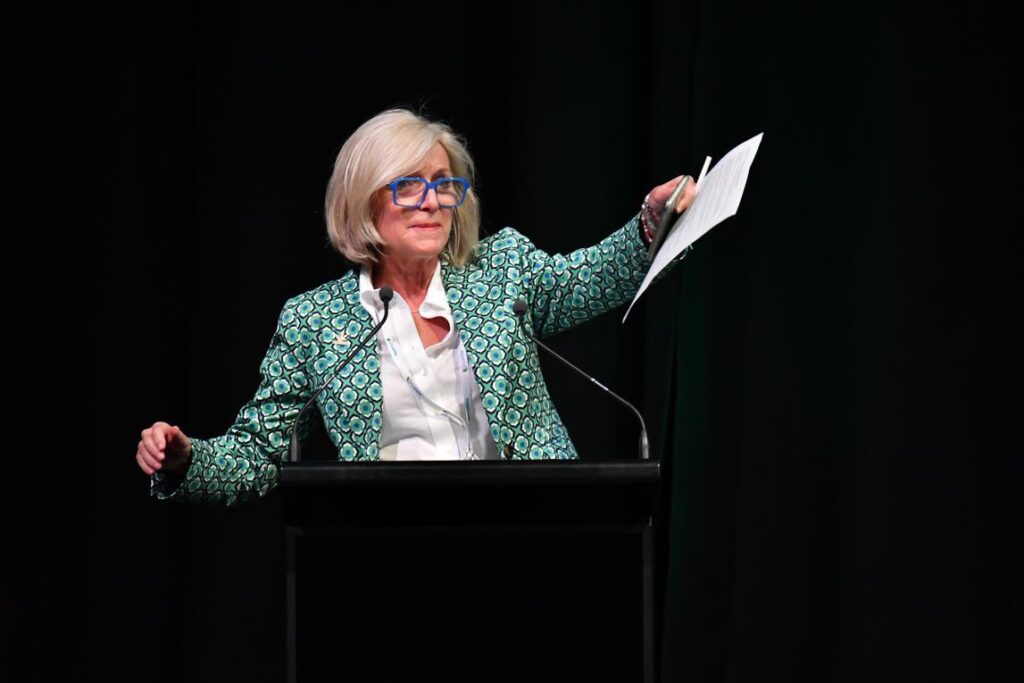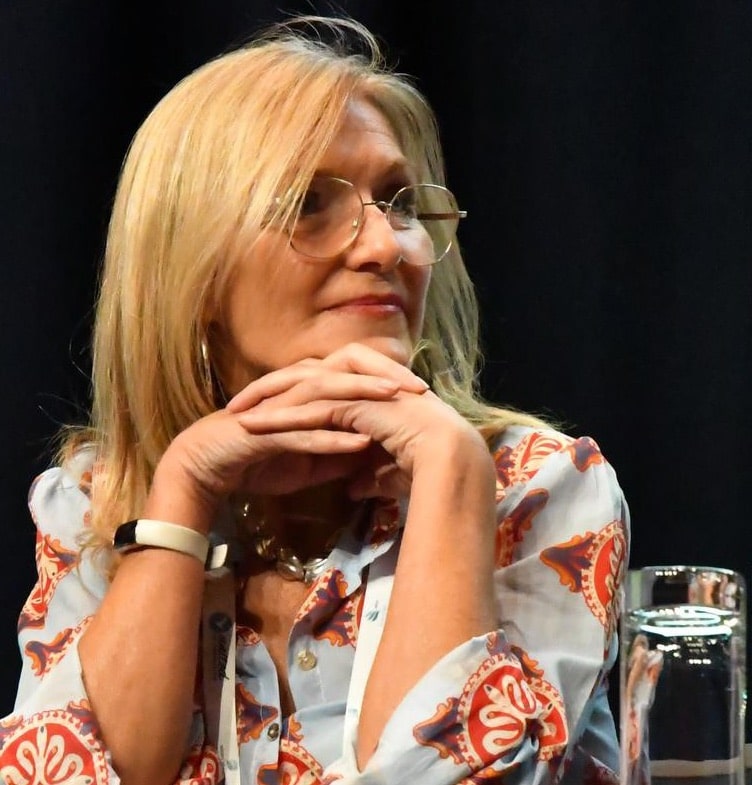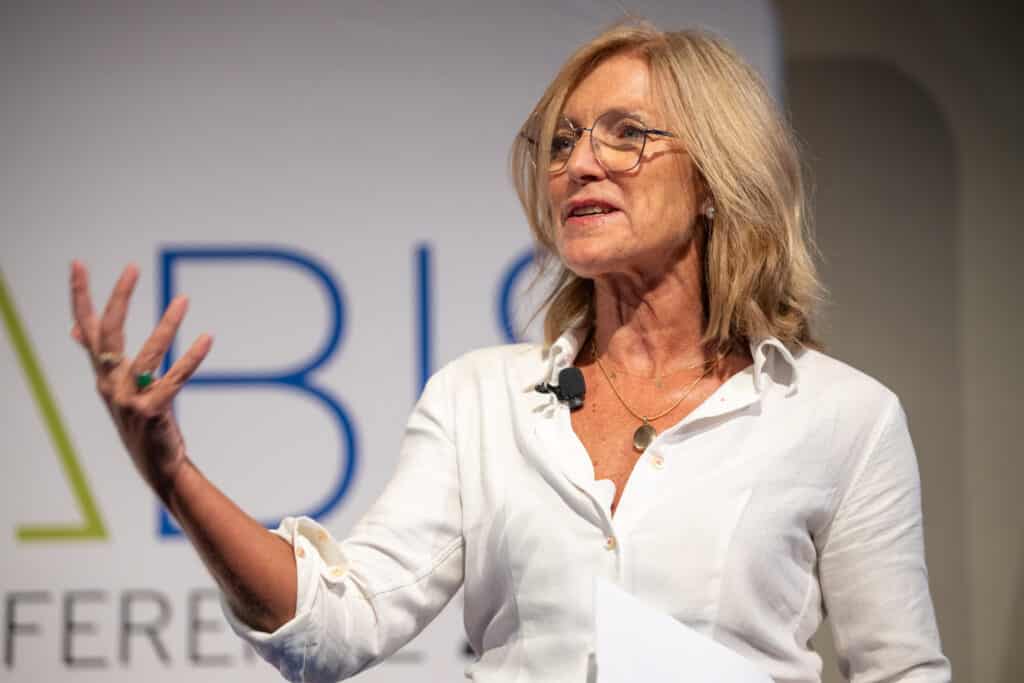
The Legalise Cannabis Party is a genuine contender for the last available Senate seat in Victoria, with Fiona Patten chasing what would be a landmark win at this Saturday's federal election.
The party has fielded 16 Senate candidates and is contesting 41 lower house seats — a record by a considerable margin — but it is Victoria where its prospects of reaching Canberra for the first time appear strongest.
A late development gave the campaign a lift when Labor placed the party above the Greens as its first preference in Victoria, a decision that could work in Patten's favour when votes are tallied.
Analysts believe the party will need around 5% of Saturday's vote to secure the sixth and final Victorian Senate seat, in what is shaping up as a three-way race involving Legalise Cannabis, One Nation, and Trumpet of Patriots.
Absent any major surprises, Labor and the Liberals are expected to take two seats each, with the Greens accounting for a fifth.
Patten said the campaign has gone well, with the party's cannabis policies connecting with voters, particularly in inner-city communities.
"Certainly the support is out there, the recognition is out there. The cannabis leaf is definitely not turning people away," Patten said. "In fact, I have been surprised by the high level of support."
The campaign has not been narrowly focused on legalising adult-use cannabis, with candidates taking a broader approach that brings medicinal cannabis into the conversation as well.
For Patten, her record as a state politician has been central to the message that campaigners have delivered while door-knocking across Victoria.
"For me personally, campaigning has been about the fact that I have a track record as a thoughtful legislator, that I've got a track record of working with major parties to achieve change, and I think people are supportive of the work I did," she said.
"And on the cannabis side, we have had many positive conversations. Everyone has a story to tell. People want to tell us about their grandmother who is receiving medicinal cannabis for pain, or the fact they're using it for sleep.
"There have been lots of stories, plenty of 'hell yeahs!' from people. We've been able to talk about the black market and the growth of medicinal cannabis and how we can do that better."
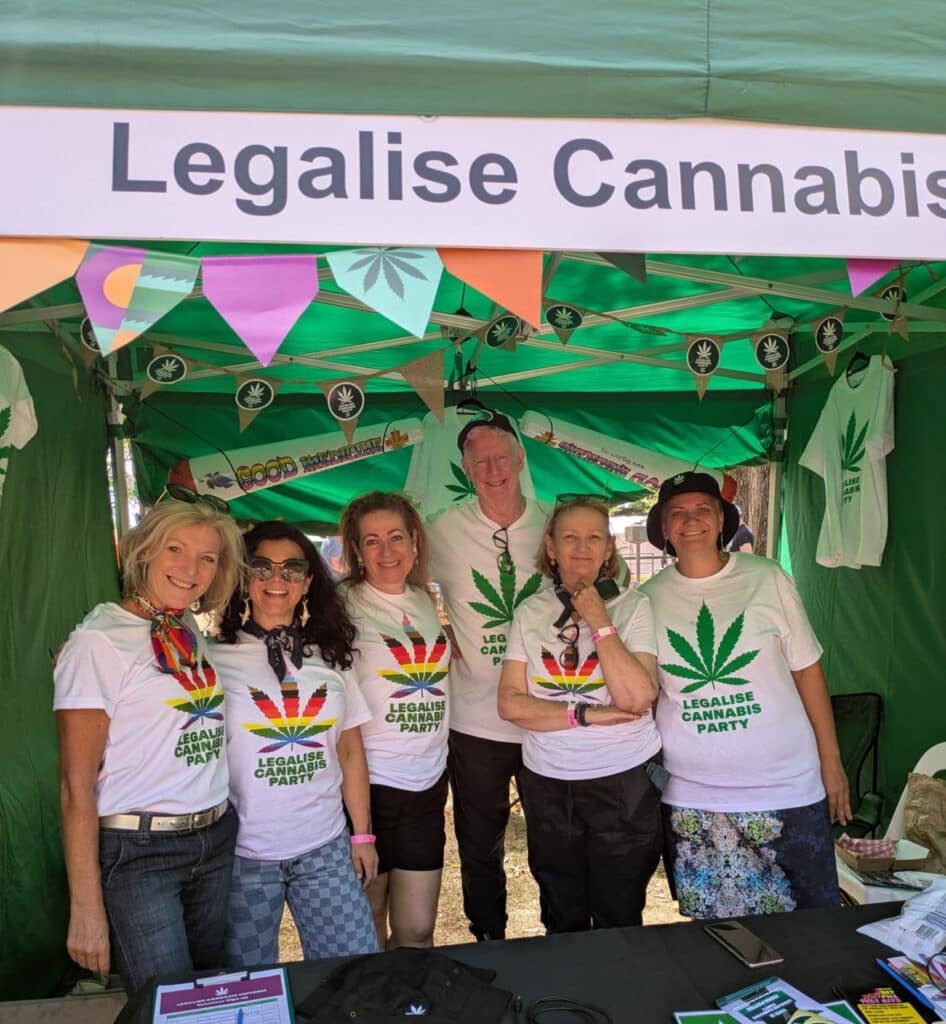
The Legalise Cannabis campaign raised more than A$250,000, allowing the party to run radio advertisements and put up billboards around the country. Volunteers have also been manning polling booths in the final stretch of the campaign.
"That's the name of the game in these last few days," Patten said. "It's getting out there and being face-to-face with voters. It really does make a difference."
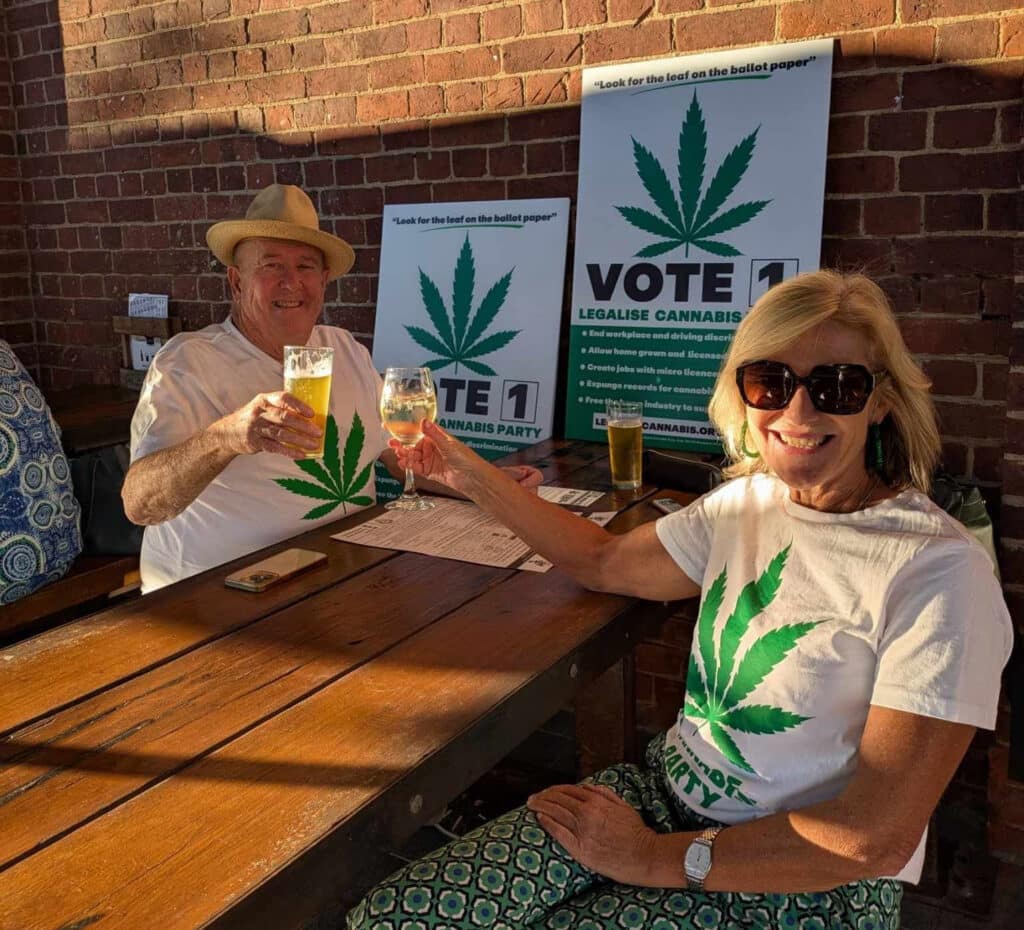
Whether that effort will prove sufficient to edge out Clive Palmer's anti-immigration Trumpet of Patriots or Pauline Hanson's One Nation is still an open question.
Patten said she remained hopeful of winning a seat to represent the broader cannabis sector in Canberra, particularly given Labor's decision to preference Legalise Cannabis ahead of the Greens.
"It's a complicated system, but it could be worth up to 1% to 2% of the vote, which could mean getting elected or not," she said. "That's assuming people who vote Labor follow their 'how to vote' card and put us second. We'd prefer it, of course, if they put us first, and that's certainly what we've been suggesting to Labor voters.
"Look, I think we've got a good chance. I'm not saying I'm super confident because there's still a lot of unknowns, and I really don't know what to expect from the One Nation vote.
"They are on the Liberal Party's vote card for the first time ever, so we're not sure how that's going to play out.
"I'd like to thank all those who have donated to the cause, and we have had good industry support, but we don't have the resources of Clive Palmer or even Pauline Hanson, so we're just hoping our name gets ahead of theirs.
"We have been asking people to carefully consider their vote. If you don't want One Nation, or Trumpet of Patriots, then vote Legalise Cannabis, and then vote for the larger parties you'd like to see in there."
Patten put the required threshold at 5% of the vote to claim the final seat.
"In 2022, when the party had been registered for only a few months, we got 3% of the vote so 5% is not beyond the realms of possibility," she said. "We are definitely in the mix and our vote will undoubtedly increase, but whether it will be enough for us to win that last seat, we'll have to see."
While Patten is considered to have the strongest shot at victory, she is far from alone in carrying the Legalise Cannabis banner this election cycle.
The party has candidates across 41 lower house seats — compared to just one seat contested in 2022 — and is running in every Senate race outside the ACT.
"This is the largest federal election campaign we have ever run," Legalise Cannabis Australia national secretary Craig Ellis said. "We are hopeful, but getting someone elected at the federal level is a major challenge for a small party like ours – the quota required to elect a senator is much higher than in state elections.
"The final Senate seat in each state is likely to come down to preferences, so it's great to see more parties – including Labor — putting Legalise Cannabis on their 'how to vote' cards. It not only strengthens our chances of electing a senator, but also shows that supporting Legalise Cannabis is no longer seen as a political risk."
Attitudes toward cannabis legalisation differ considerably across the political spectrum. Labor and the Liberals are broadly opposed, while the Greens and several minor parties support ending prohibition or at minimum decriminalising adult use.
The Greens take the position that the "war on drugs has failed" and has only served to bolster organised crime while pushing people into the criminal justice system for minor cannabis offences.
"The Greens are working to legalise cannabis with a well-regulated market that prioritises public health, creates significant government revenue, and ends the criminalisation of cannabis users," a spokesperson said.
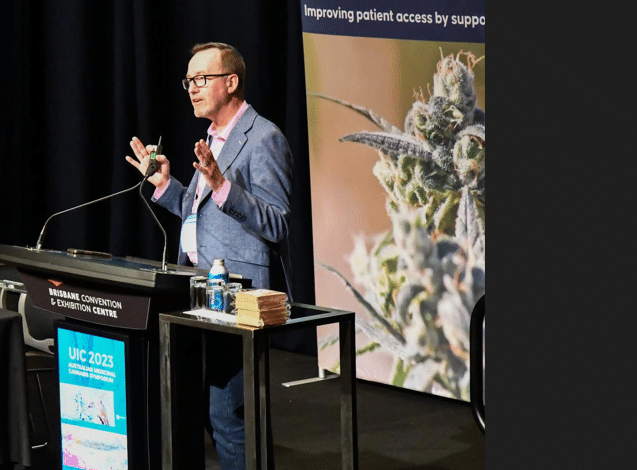
Their proposal is to build a single national cannabis market through a new body called the Cannabis Australia National Agency (CANA), which would regulate and licence growers and retailers.
The party said such an approach would improve health outcomes through accurate labelling, safe production conditions, and public health information.
The spokesperson added: "It will generate A$700 million a year in new federal revenue and hundreds of millions more for the states and territories — funding that could go straight to schools, hospitals, and climate action."
Under the Greens' plan, households would be permitted to grow up to six plants for personal use without a licence or tax obligation, and specialty cafes and dispensaries would be allowed to sell cannabis products.
On medicinal cannabis, the Greens acknowledged that "great progress" had been made but said "the cost barrier is too great".
"This results in an access gap where some people who require medicinal cannabis for chronic pain, mental health disorders, or several other health issues are not able to access it. The Greens' plan would be to increase access to medicinal cannabis by allocating $10m over two years to fund a working group to investigate listing [it] on the PBS."
The Socialist Alliance Party said its "basic policy" is for cannabis to be legalised.
"We generally support the delivery of medical cannabis, and think it's a positive step forward," the party's national co-convenor Jacob Andrewartha said. "However, the ideal policy would be one that completely decriminalises possession and allows recreational use of cannabis.
"We also go further and argue that all recreational drugs should be decriminalised and think that drug addiction should be viewed as a health issue.
"Socialist Alliance are very critical of law and order policies by governments that target drug users because they disproportionately impact on marginalised and working class people."
The Animal Justice Party (AJP) also came out in favour of decriminalising cannabis use and called for "lawful and safe supply".
"The AJP acknowledges the evidence of adverse side effects and believes education, health care access and safe regulation are essential tools in addressing this," its cannabis policy states.
"But on balance, we believe that the harm caused by criminalising cannabis is worse than the side effects of consuming it.
"We also support further efforts into investigating the medicinal properties of cannabis and making it available to those who may benefit, both human and non-human."
The Libertarian Party, previously known as the Liberal Democrats, said it has supported the legalisation of adult cannabis use for more than 20 years, pointing to former Senator David Leyonhjelm's bill introduced at the federal level in 2018.
"Libertarians believe in maximising freedom for individuals and eliminating unnecessary interference from the state in the personal lives and decisions of adults. As such, our preferred model would be to allow adults to grow, share, trade, or establish commercial businesses producing and providing cannabis products desired by members of the community," the party told an inquiry in 2024.
"We would caution against any additional or excessive taxation, however, as this would stifle the development of legitimate business and diminish the ability of a legal market to undermine organised crime."
On medicinal cannabis, the Libertarian party said: "Providing an effective legal pathway for non-medical adult use would allow resources in the health sector to focus on specialist medical cannabis services and ensure that the industry wasn't unnecessarily pulling resources from the health sector."
Regardless of how the results unfold on Saturday — or whenever final counts are confirmed — Patten said she and her team plan to gather at Melbourne's Kelvin Club on election night to toast the effort they have put in.
"We'll have a few drinks for sure – and maybe something else. We are the Legalise Cannabis Party after all!" she said.
Patten's campaign team will not be the only ones marking the occasion. MardiGrass, the annual cannabis community festival in Nimbin, is also taking place this weekend.

Given the overlap, president of the MardiGrass organising committee Michael Balderstone encouraged attendees to cast their ballots before heading to Plantem Park.
"Albo's called the election for the same weekend and we recommended voters use a prepoll before they come to Nimbin rather than crushing the polling booth at Nimbin on the Saturday," he said.
"The Plantem Park stages are ready with Indica Arena and Sativa Stadium looking like the MCG and prepared for a big crowd.
"We just ask that wherever possible people vote before they come, and of course vote for Legalise Cannabis, at least in the Senate."