A new Lambert Initiative study has concluded there is "scant evidence" that cannabis use produces a hangover effect the following day.
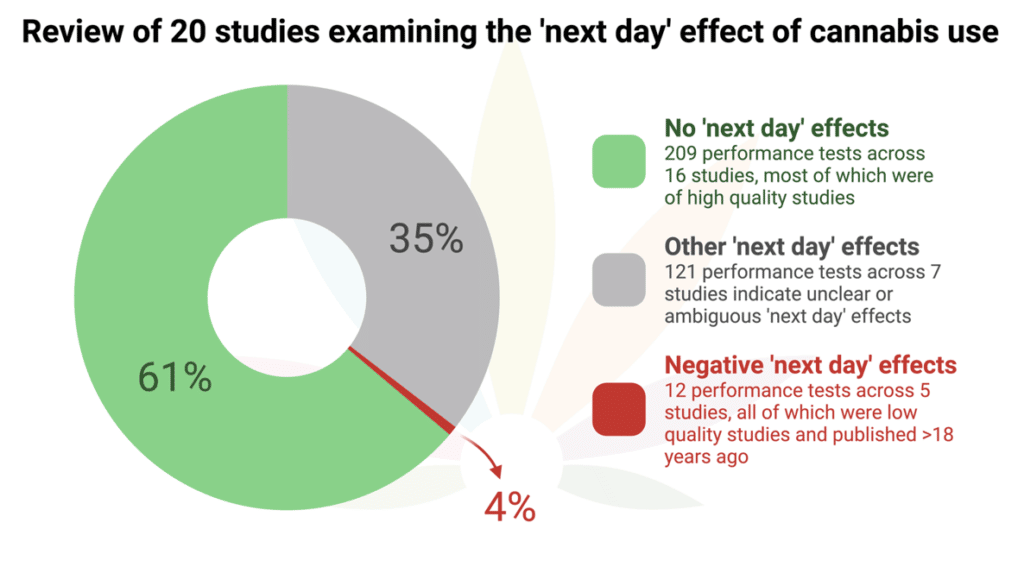
The research team reviewed 20 published studies examining the residual effects of THC on users — including cognitive function and performance on safety-sensitive tasks — at points more than eight hours after consumption.
Although cannabis is well established as a cause of impairment shortly after use, its effects at longer intervals have remained poorly understood.
Study lead and Lambert research fellow Dr Danielle McCartney said: "Most studies didn't detect 'next-day' effects of cannabis use, and the few that did had significant limitations.
"Overall, it appears there is limited scientific evidence to support the assertion that cannabis use impairs next-day performance, [although] further research is required to fully address this issue."
Of the 345 performance tests administered across the reviewed studies, only 12 — accounting for 3.5% — across five papers showed significant next-day deterioration following THC consumption.
Not one of those five studies employed a randomised, double-blind, placebo-controlled design, and all were conducted more than 18 years ago.
"We can't really comment on the magnitude of these effects because they weren't all that well reported," Dr McCartney said.
"They didn't appear to be associated with a specific dose of THC, route of administration or type of assessment."
Lambert noted that the findings carry particular weight for drug-driving legislation and safety-sensitive work environments, where the detection of THC biomarkers alone is sufficient grounds to fail a drug test.
"THC can persist in blood and oral fluid for an extended period of time," Dr McCartney said.
"So it is important to find out whether impairment can persist, too.
"People are being advised not to drive or perform other safety-sensitive tasks for 24 hours after cannabis use. However, we found little evidence to support this recommendation."
The study's authors concluded that any next-day effects attributable to THC are unlikely to exceed the level of impairment associated with an alcohol hangover.
"Policy makers should bear in mind that the implementation of very conservative workplace regulations can have serious consequences, such as termination of employment with a positive drug test," they said.
"They can also impact the quality of life of individuals who are required to abstain from medicinal cannabis used to treat conditions such as insomnia or chronic pain for fear of a positive workplace or roadside drug test.
"Studies involving medicinal cannabis users are strongly recommended."
The research, due to be published in an upcoming issue of Cannabis and Cannabinoid Research, is available online here.