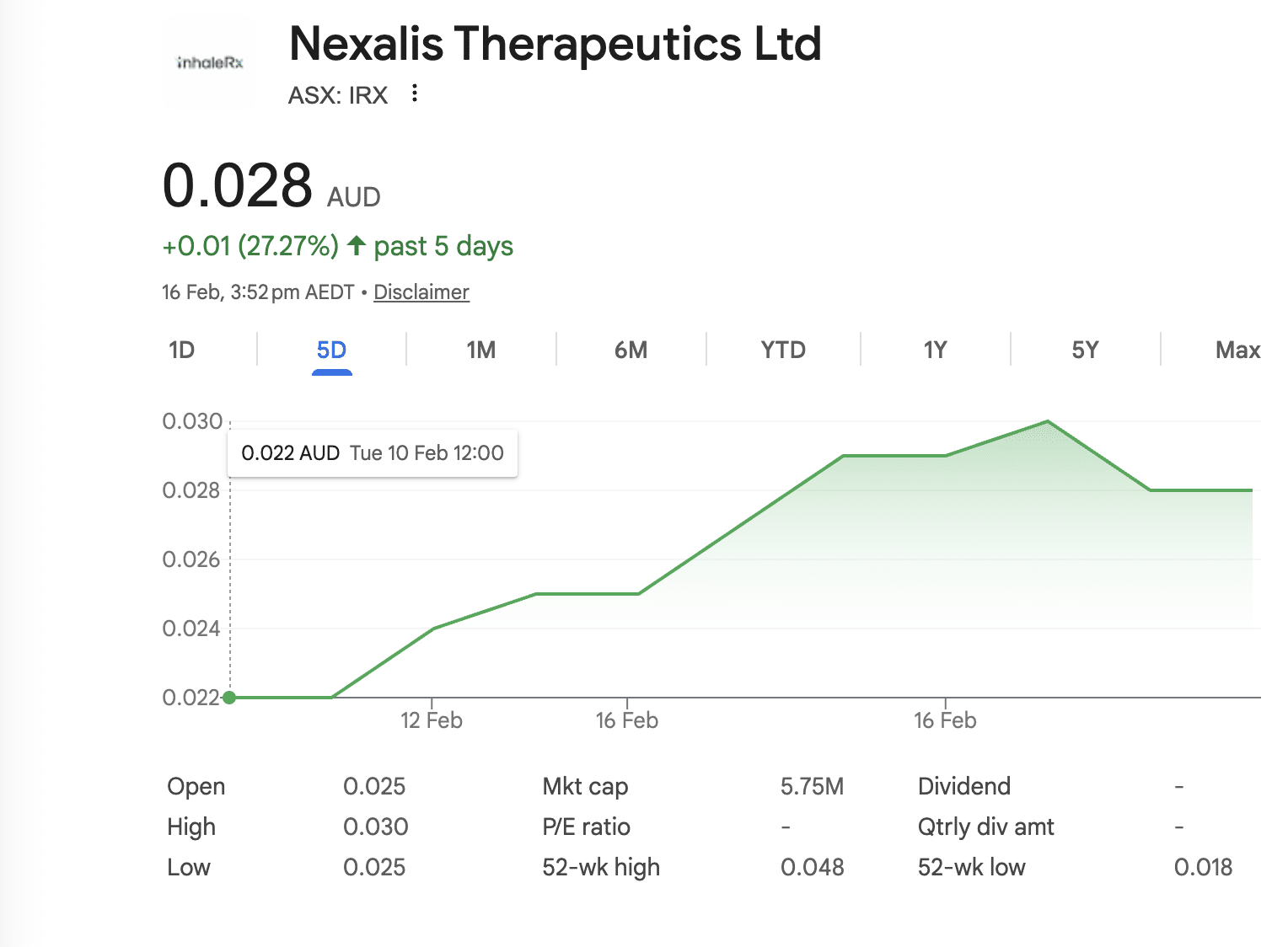
An upcoming Phase 2 trial could prove decisive in establishing whether InhaleRx's inhaled synthetic THC formulation can step in where fentanyl drugs left off, with early data already pointing in a positive direction.
ASX-listed InhaleRx is working to "redefine" how breakthrough cancer pain (BTcP) is treated, aiming to fill the gap created by the withdrawal of fentanyl-based medicines from the US market.
The company is preparing to launch a Phase II trial in early 2025 to assess the therapeutic value of IRX211, an inhaled synthetic THC formulation that its management believes could deliver fast-acting, predictable pain relief to BTcP patients.
InhaleRx's technology centres on a cold-delivery pMDI — a non-heated, non-vaped, pressurised metered-dose inhaler — and the Phase I pharmacokinetics data gathered so far has produced encouraging results.
BTcP is characterised by sudden, severe pain flares that break through the relief provided by long-acting analgesics. These episodes typically arrive without warning, peak within minutes, and can persist for up to an hour, sometimes with no identifiable trigger.
For years, the standard treatment options included immediate-acting fentanyl products such as Abstral and Fentora (fentanyl buccal tablets) and Actiq (fentanyl lozenges), which were widely prescribed to manage the condition.
Those therapies delivered meaningful relief over the past two decades, but their withdrawal last year due to safety concerns and misuse potential — covering the full class of transmucosal immediate-release fentanyls (TIRFs) — has left BTcP patients without any approved, condition-specific treatment.
The withdrawal came largely as a result of FDA-mandated Risk Evaluation and Mitigation (REMs) programs applied to all rapid-onset fentanyl therapies, which caused prescription volumes to fall sharply and made the drugs commercially unviable.
InhaleRx chief executive Darryl Davies said the demand for new treatment options was beyond dispute.

"In short, there are no current FDA-approved products making a label claim for BTcP on the US market today," he said: "Breakthrough cancer pain remains one of the biggest unmet needs in the cancer world and it is devastating to think that so many patients can suffer through it without there being any reasonable pharmaceutical solutions."
Despite concerns about their contribution to the global opioid epidemic, TIRFs are understood to have established a clear efficacy benchmark that newer therapies targeting BTcP — including IRX211 — must meet to gain FDA approval.
Dr Sud Agarwal, chief executive of iNGENū, a contract research organisation with close ties to InhaleRx, said the most common endpoints the FDA used to approve earlier drugs were Pain Intensity Reduction at 30 minutes and the Sum of Pain Intensity Differences at 30 minutes (SPID₃₀).
For Fentora, the fentanyl buccal tablet, SPID₃₀ came in at 3.0 versus 1.8 for placebo — a 1.2-point improvement over the control group.
Actiq, the fentanyl lozenge, recorded a mean pain relief score of 2.5 at 30 minutes compared to 1.0 for placebo, translating to a 1.5-point improvement above placebo.
"These efficacy results highlight the substantial pain relief these drugs provided," Dr Agarwal said. "For IRX211 to establish itself as a viable alternative, its pivotal trials should demonstrate similar or greater improvements in pain intensity and relief.

"The trial is designed to rigorously evaluate its efficacy and safety profile, with the hope of providing a much-needed solution for this highly challenging condition."
Dr Agarwal said the Phase I pharmacokinetics data was encouraging, with IRX211 reaching comparable plasma THC concentrations without heating, vaping, or smoking, and with no significant adverse events recorded.
On the strength of those THC results via pMDI, there is potential for the treatment to achieve comparable or superior efficacy to fentanyl-based drugs, he added.
The dependency and abuse risk is also considerably lower given that IRX211 operates through a non-opioid mechanism, using synthetic THC.
While researchers stop short of predicting clinical trial outcomes, Dr Agarwal said IRX211 is a "promising solution for BTcP" with the potential to deliver rapid-onset, personalised pain relief with a safer profile than the fentanyl therapies it could replace.
BTcP remains one of the "biggest unmet needs in the cancer world", he added.
"Breakthrough cancer pain significantly limits patients' physical abilities, disrupts sleep, and diminishes overall strength, leaving many dependent on caregivers for daily tasks," Dr Agarwal said. "And beyond its physical toll, it causes severe emotional distress, contributing to anxiety, fear of future episodes, and depression, which can lead to social isolation and a reduced quality of life.
"By aiming to achieve similar or superior efficacy to Abstral, Fentora and Actiq in the pivotal trials, IRX211 has the potential to fill the void left by these withdrawn drugs and provide a much-needed option for cancer patients experiencing breakthrough pain."