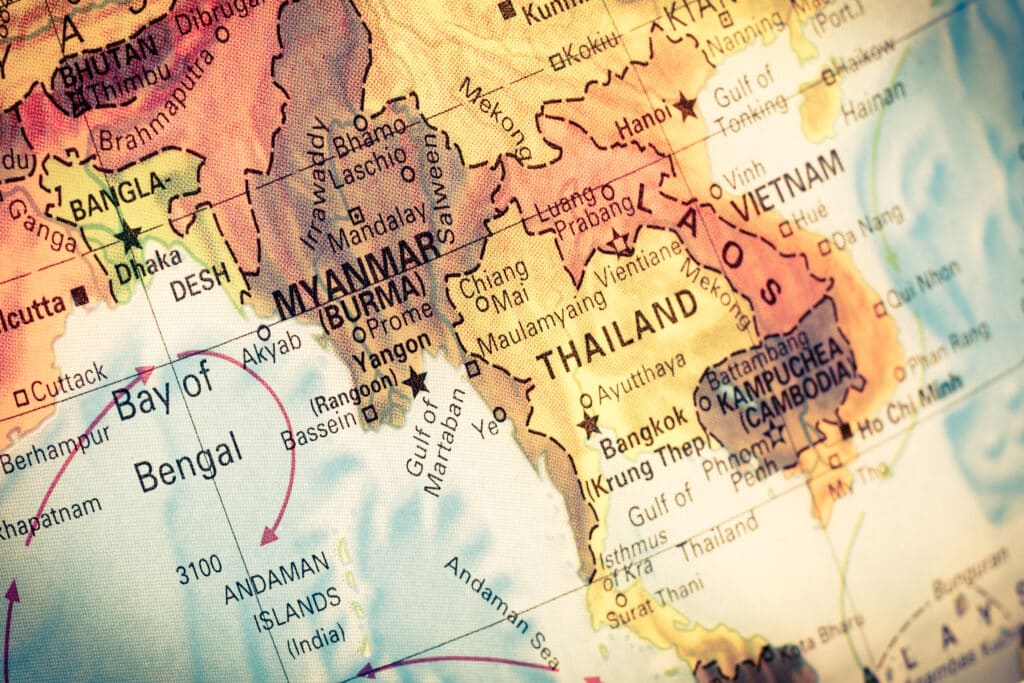
Tonnes of cannabis flower arriving from Thailand has become the newest threat facing domestic growers, as pressure on the government to step in continues to mount without response.
From a mere 11kg in 2023 — the most recent figures available — the volume of Thai-grown flower being shipped into Australia has surged dramatically this year.
In just the next seven days, approximately 600kg of cannabis is expected to enter the country for distribution through the Special Access and Authorised Prescriber schemes, supplied by several Australian brands.
The surge has deepened anxiety that the local industry is being abandoned by a government indifferent to its difficulties in going up against overseas producers and cheaper imports.
Thai flower is being grown at a fraction of the cost of Australian-cultivated product, leaving domestic operators with little room to compete on price.
At least one Queensland grower is understood to be weighing up whether to shut down its cultivation arm and pivot to packaging and post-harvest processing services for material shipped in from Thailand.
"They just can't make it work as a cultivator," a source said, declining to identify the grower by name.
Among the companies shipping Thai-grown flower to Australia — at roughly 500kg per week — is Ardezen, a business founded by former MediPharm Labs Asia Pacific chief executive Warren Everitt.
Its Thailand-based division runs a facility in Bangkok and holds contracts with around a dozen mostly indoor Thai farms to supplement its own production. With no GMP facilities currently operating in Thailand — though that is expected to change soon — Ardezen exports flower to Australia, where it is irradiated through Steritech before being manufactured by its clients.
Everitt acknowledged the cost advantages of growing in Thailand and the strain that places on Australian operators. But he said Ardezen's focus was on "providing the highest quality product to the patient for the lowest cost".
He estimated that the cost of goods for most Australian cultivators is three times higher than their Thai counterparts.
"One of the advantages of a cultivation set up in Thailand is the reduction in set-up and operational costs," Everitt said. "Costs like nutrients and power are generally on a par [with Australia] but there are additional ancillary benefits that help reduce costs significantly. You're growing in a location where human capital is much more cost effective and the resources you need to run the facility are significantly cheaper.
"There's clearly a push to ensure the Australian domestic industry survives and I absolutely get it because I've come from that side of the fence. Ultimately, however, we're here to ensure patients get the best product for the lowest price. That's the lens we look at it from.
"From our perspective it's a global commodity. If you go to Coles or Woolworths for groceries, there's a chunk of fresh produce that's cultivated overseas that we consume every day. But no one bats an eyelid because it's standard practice."
Everitt also argued that rather than displacing Australian domestic product, Thai cannabis is more likely substituting imports that previously arrived from Canada, South Africa and Colombia. He also cautioned against assumptions that Thai-grown cannabis is inherently inferior in quality.
"It's a stretch of an argument to suggest standards are higher elsewhere because ultimately there is a medicinal cannabis regulatory scheme which cultivators in Thailand need to adhere to," he said. "They need to hold a licence and showcase their expertise.
"What people lean into when they try to compare markets is that yes, there are a lot of groups in Thailand who don't have appropriate licences. That's because they have been cultivating for the black market. But the government is clamped down on those growers which is necessary to establish credibility for the groups who are adhering to domestic and global regulations."
Another company with a strong focus on the Thai market is The Australian Cannabis Group (ACG), which holds a 50% stake in The Thailand Cannabis Group.
ACG currently imports more than 500kg into Australia every three weeks. That product is tested by Pharmalytics — a shareholder in ACG — then packed and released under GMP for clients.
Pharmalytics' wholly-owned subsidiary, Pharmalytics Thailand, is also set to open Thailand's first GMP testing and manufacturing facility within the next few weeks.
Pharmalytics and ACG chief executive Russell Kinghorn said the company will import and pack more than 10 tonnes of flower from Thailand across 2025.

"The overall market from Thailand would have to be at least double that," he estimated.
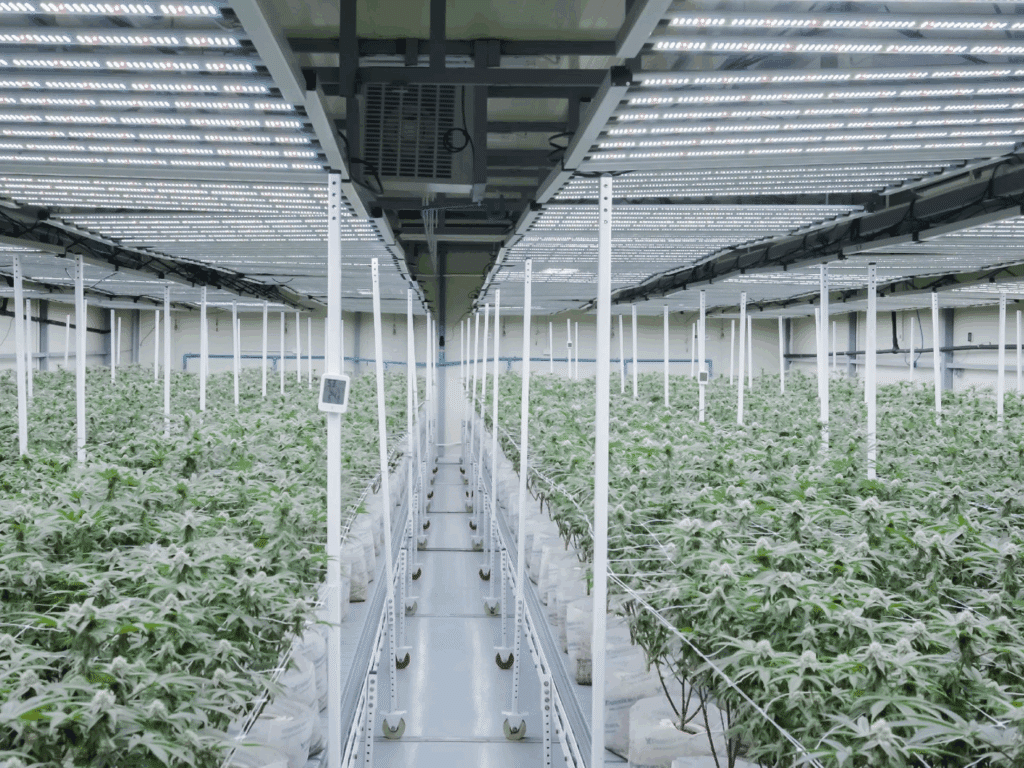
Kinghorn said the Thai growers ACG works with run indoor facilities where plants are cultivated under full LED or HPS (high pressure sodium) grow lights, meeting quality standards at a price point that Australian cultivators cannot match.
"There are a few players in Australia who produce quality cannabis but they can't produce the scale that is needed at the right price," he said. "If you look at the worldwide medical cannabis market, it's a price-driven economy. Society always finds the most economical option and people just need to learn how to compete."
Australian cultivators, however, argue that competing is not a realistic prospect when the financial disadvantages are so pronounced.
To illustrate the gap, Sandy Saetang, a grower in Thailand who works closely with Kinghorn and the Thailand Cannabis Group, said it cost her business, MQ Biotech, just A$2,000 to obtain a licence.
"We're producing about 800kg a month and about 750kg goes directly to Australia in bulk packaging," she said.
Kinghorn acknowledged the difficult position facing Australian growers.
"Absolutely I have sympathy for them," he said. "We should be protecting Australian growers, but without regulatory reform that's not going to happen."
As the pressure on local cultivators intensifies and shows no sign of easing, calls for regulatory change have grown louder in recent months.
The newly formed Australian Cannabis Cultivators Guild, fronted by Hale Farm director Cade Turland and Cymra Life Sciences chief executive Joel Hardy, wrote to federal and state health ministers in May calling for "urgent action" to prevent "catastrophic failures" in the sector.
The letter has not received a reply.
Turland offered a candid reflection of the frustration felt across the industry: "I'm honestly not even expecting a reply for six months. The media has shown more interest than the government."
On a more encouraging note, a number of importers — as many as 20 — have expressed a willingness to "have a discussion" about partnering with domestic cultivators, Turland said.
"I think everyone knows there has to be a point in time when the Australian industry gets some form of preference in servicing Australian patients, and even importers agree," Turland said. "Fundamentally, the reasons [they haven't] is that the Australian quality isn't there and we hear this is a consistent barrier.

"A lot of people are trading off that rather than jumping in with the industry and taking a longer-term view to help Australian businesses develop.
"The import market is slowly going to gut a lot of value for everyone. It's becoming a race to the bottom and that doesn't help anyone."
When it was suggested that Australian growers would push back and argue their quality is at least equal to imported product, Turland agreed that it is — but said the volume is insufficient.
"We have the quality here, but we just don't have it at the volumes to service what the market wants," he said. "What we're looking at here is a price-quality matrix. The issue is people have purchased what they would call mid-grade quality at what they would call premium prices from Australian farms. The price point doesn't match the quality, that's what we're discussing."
Warren Everitt said price will always be a "sensitive issue", claiming Ardezen has captured "significant market share" particularly in the concession price tier which makes up a sizeable chunk of the Australian market. That has been achieved by providing superior indoor quality product at greenhouse prices, he said.
"It's exciting for us a business but more importantly it's exciting for patients," Everitt said.
Not everyone, though, is satisfied that Thai product being shipped to Australia meets the required standard.
Anecdotal reports suggest some crops are given a boost through plant growth regulators (PGR), or hormones, which increase yields and cut the growth cycle from around 12 weeks down to eight.
Kinghorn said there would "absolutely" be medical products on the Australian market containing PGR "because there is no requirement to test for it under TGO93".
"We don't work with growers who use PGR and we test for it at Pharmalytics," he stressed. "PGR makes the plant grow faster and you end up with very hard buds that are easy to recognise. I've seen jars in the market which look loke they're loaded with PGR. I'm not joking when I say you can stand on a bud and it will barely change shape. It's like a bullet."
Austranna chief executive Bryan Ebstyne, who sits on AMCA's cannabis cultivators' sub-group, described cannabis quality out of Thailand as "variable" given how nascent the market still is. He also raised doubts about whether the country can reliably deliver consistent product.
He explained that small cultivation facilities are pooling together to generate enough volume to attract wholesalers — a model he described as a "recipe for disaster".
"If you have four different cultivation centres and they all have slightly different growing techniques and infrastructure they are going to produce four completely different products with the same starter plant," he said. "Mixing those up in medicinal batches is kind of anathema to what doctors want to see."
Altum International chief executive Ean Alexander also questioned whether Thai imports are consistently up to standard, pointing to Australia's "history" of not applying a level playing field.
"We are always looking for new quality products for our patients and note the rapid influx of predominantly Thailand flower," he said. "From what I've gathered, the concern from the industry, and concern for patients, lies in what oversight there really is around the quality and specifications of products coming in, given the limited testing in market and the facilities [the cannabis] is grown and manufactured in. There are limited audits offshore."
Ebstyne did, however, recognise one advantage Thailand holds over most other international markets — a large, highly skilled, and low-cost workforce.
"I have visited several grow facilities in Thailand and in one particular trim room there were 27, 60-year-old ladies who were faster than a 30-year-old pro from the Californian recreational market," he said. "All you could hear was the whir of snipping.

"They were skilled and nimble and paid A$454 a month for 10 hours a day, seven days a week. That labour advantage is one thing Thailand will have for a long time, and cannabis can be labour intensive. In that regard they are competing on the front foot."
This kind of disparity is a source of deep frustration for an Australian industry that pays first-world wages and must navigate a complex and costly regulatory framework that many believe tilts in favour of imported product.
Beyond the ease of obtaining an import licence and a limited testing regime, Australian growers are particularly aggrieved that certain international markets — Canada being the most glaring example — have long barred Australian medicinal cannabis from entry, while freely shipping their own surplus product to Australia.
According to Ebstyne, while foreign growers have been sheltered and supported by their governments, Australian cultivators and manufacturers not only face intense competition from abroad but are also bankrolling the Office of Drug Control through expensive licence fees, with little to show for it.
A tax on imports is long overdue, he said.
"All the regulatory focus is on cultivators who are funding the entire system," Ebstyne said. "The ODC is required to control and enforce quality on these imports, but whenever you have a system that closes its eyes in a certain direction, you're going to end up with tension, and that needs resolving.
"The ODC and the TGA need to be funded to carry out enforcement because regulations without enforcement are meaningless. They should be pulling products from pharmacies and testing them."
That funding should come through a tariff applied to every gram of imported product, Ebstyne said.
"That should be somewhere between 50c and $1 on every gram to fund those two organisations so they can serve this industry and help us grow," he said.
"The idea is not to disrupt the industry so a tax is better than a ban. The question that needs asking is if you put a $1 tax on every gram that's imported how much more would the Australian patient pay? Would that add an extra $10 to the package price? I doubt it as it would be eaten up elsewhere. You'd be taking away some of the margin from the guys who are already getting rich.
"I get that Australia is a pro-trade nation, and every time I speak with business leaders they say it's not realistic, that we're a free trade country. But this is an exceptional environment where you have countries like Canada dumping tons of cannabis into our market yet forbidding any imports and not permitting us to compete against their growers.
"Australia needs to think about that relationship and be willing to do what may appear to be a hard thing to do."
Ebstyne said a tariff could help even up the playing field and "prevent several bankruptcies in the next year".
"Even the good, lean cultivators are struggling right now. It's tough and there is a lot of insecurity among the smaller ones, particularly with Thailand cannabis showing up in Australia."
Emily Rigby, chair of Australian Cannabis Cultivators, said it has become apparent that the government has no real interest in supporting domestic cannabis cultivation.
If it did, "they would have done something about it", she said.
"Back at the start of this journey in 2016 I never thought it was going to be this hard," Rigby said. "We've faced roadblock after roadblock after roadblock. It hasn't got any easier. It's heartbreaking.
"I've been saying it for so many years now that if we don't remove the red tape, Australia's going to be left behind. And guess what? We've been left behind."
On the growing influx of Thai product, Rigby said the south-east Asian nation is "reaching a level of maturity" where producers are able to meet TGO93 requirements at a "much lower cost".
"There is so much of international investment in Thailand," she said. "They've got great people working with them, explaining what the quality standards are, the prices they need to meet.
"They've stepped up to the plate and taken on the challenge, and they didn't have a government getting in their way"