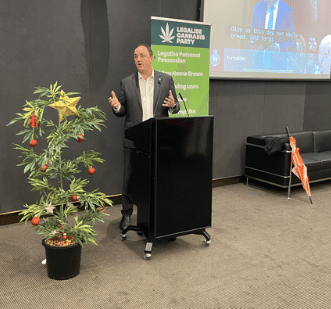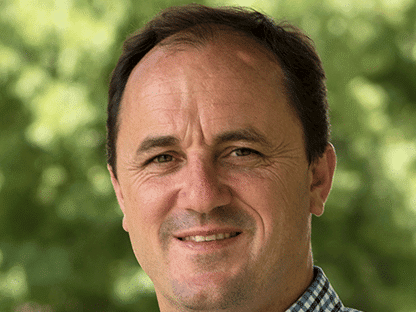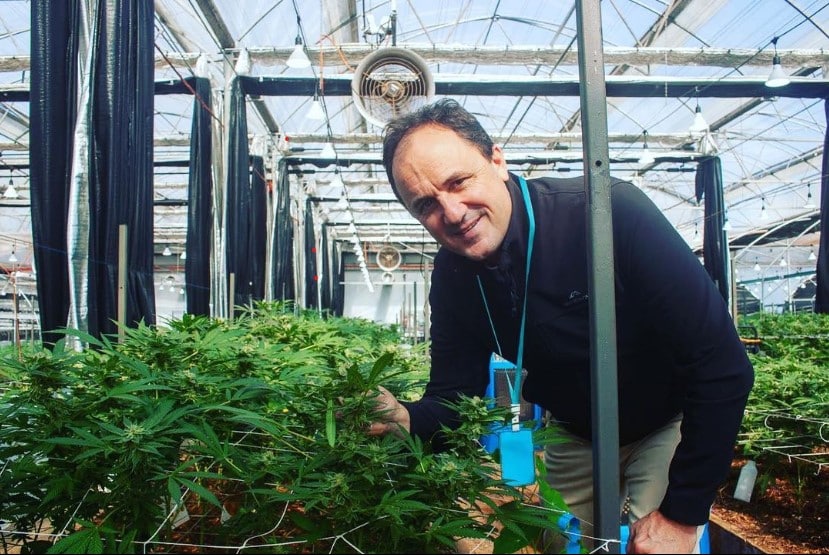
A petition backed by more than 11,000 signatories is pressing NSW to overhaul its drug-driving laws, and Legalise Cannabis NSW MP Jeremy Buckingham says the Government cannot keep putting the issue off.
Consider a single mother raising two young children who attend their local primary school. Three years ago, she received a diagnosis of multiple sclerosis.
Some days are manageable. Others bring pain so severe she can barely get out of bed, and sleep offers little relief.
Her doctor has suggested opiates to manage the pain, but after seeing footage of severe addiction cases in the United States, she wants no part of it.
A friend points her toward two forms of medicinal cannabis — CBD oil for pain and anxiety, and THC before bed to help her sleep.
The treatment changes her life. For many patients, medicinal cannabis is exactly that kind of solution: non-addictive, largely free of side effects, and genuinely effective.
The problem is that she lives in a regional area where the school and shops are a 15-minute drive away. Without a car, her world shrinks to nothing.
Under current NSW law, roadside drug tests check for the presence of THC rather than whether a driver is actually impaired — meaning she could be caught driving unlawfully days or even weeks after her last dose.
She is left with an impossible choice: fulfil her responsibilities as a parent and carer, or continue the treatment that allows her to function.
This is the reality for thousands of medicinal cannabis patients caught under drug-driving rules that have not kept pace with how the law around cannabis has changed.
The origins of this situation trace back to 2006, when Labor MP Matt Brown introduced the relevant legislation into NSW parliament. He specifically named speed, ecstasy, and THC as the three substances to be targeted — partly because all three were illegal at the time.
Medicinal cannabis became legal in 2016, which quietly undermined the entire premise of the law.
Brown was candid about the bill's intent at the time: "There will be no need for police to prove that a person's driving was impaired; it need only be proved that the drug was present in the person's sample," he said.
"This sends a clear message to motorists that driving with any amount of these illegal drugs in the body is not tolerated in New South Wales."
Impairment was never the point. Illegality was.
“This is the equivalent of punishing someone for having three schooners of beer on a Saturday night and then telling them that they can’t drive on the following Tuesday morning.”
The Road Transport Legislation Amendment (Drug Testing) Bill also says nothing about legal prescription medications that genuinely affect driving ability — such as benzodiazepines or opiates — which suggests the law was never designed to catch patients following a doctor's instructions for a legitimate cannabis prescription.
What is being sought here is straightforward: correct the anomaly that treats one prescription medication differently from every other.
Nobody is calling for impaired drivers to be on the road. NSW already has plenty of laws covering dangerous and impaired driving. That is not the question being raised.
Impairment-based testing has been workable in Canada and across the 24 US states where adult cannabis use is legal. There is no reason the same approach could not function here.
The saliva tests currently used by police are far from reliable — one study put the false negative rate at as high as 20 per cent — and because the test detects mere presence rather than impairment, patients have no reliable way to know when it is legally safe to drive.
No home-testing kits exist on the market, so patients are left guessing about their legal status even when they know their driving ability is unaffected.
A reasonable comparison: it would be like penalising someone for drinking three beers on a Saturday night and then telling them they cannot drive the following Tuesday morning.
There are some encouraging signals. Meetings with NSW Premier Chris Minns and Health Minister Ryan Park have produced indications from both that they intend to address the problem.
The Legalise Cannabis Party also holds a meaningful position in the Upper House, giving the party influence over the Government's legislative agenda.
Patients are willing to wait, but not indefinitely. The Government understands it needs to act.
In the first sitting week of parliament, the petition — carrying more than 11,000 signatures — was tabled, calling for the law to be changed.
Data suggests these signatories are concentrated in marginal electorates, which means Government MPs who overlook them do so at their own political risk.