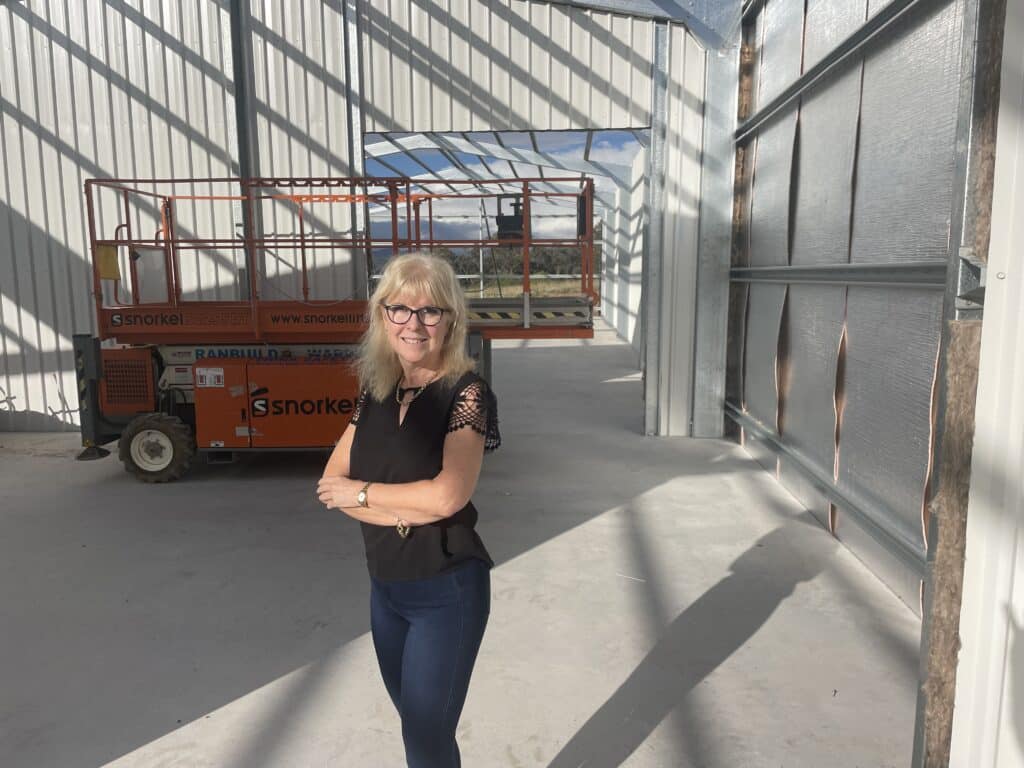
Contract cultivator Medicinal Harvest is expanding its indoor growing area at its South-East Queensland site, a development that will see flower production increase threefold.
Co-founder Tracey Perez said the company, which first planted at the facility in 2021, expects to begin planting in the new space in June this year.
All existing indoor capacity is under contract, and a 100 per cent off-take agreement has been secured with a "second entity" for the newly expanded area.
Perez said: "We are proud to be self-funding the stage two expansion from the profits generated by our current operation. There is no doubt that demand is high for Australian-grown flower bud of a premium, consistent quality."
"From the feedback we receive, the supply chain also values our drive for sustainable production. As we build additional indoor cultivation space, we have plenty of land to keep adding renewable energy sources.
"We will continue with solar energy, but we have begun exploring wind turbines as an option too."
The company has set Q1 2024 as the target to begin phase three of its expansion.
Cannasouth/Eqalis
Cannasouth shareholders have given overwhelming approval to the company's proposed merger with Eqalis, announced in December 2022.
The company told the NZX: "Receiving shareholder approval today gives us the green light to immediately proceed with the next component of the merger and collateral restructure transaction – namely the launch of the capital raising initiative."
When the deal was first announced, the two companies committed to jointly pursuing capital raising aimed at securing around NZ$9 million "to accelerate growth and the advancement of technologies which will bring costs down for patients".
Cann Group
Cann Group has successfully delivered its first dried flower shipment to Germany, which has now been cleared for sale.
The high-THC product emerged from an R&D and breeding program, and the company said it is central to its strategy of establishing itself as a reliable supplier of quality products to international markets.
CEO Peter Koetsier said: "While our short-term priority remains supplying our Australian customers, this successful shipment signals the beginning of our plans in the coming months to increase sales overseas to countries such as Germany as our production capacity increases."
MGC Pharmaceuticals
MGC Pharma's production facility in Malta has received formal EU-Good Manufacturing Practice (GMP) certification.
The facility can produce more than 20,000 units per day — equivalent to six million per year — of the company's medicines, including CannEpil and CimetrA, allowing it to handle all future commercial manufacturing internally. The site will also be well positioned to meet future CannEpil demand from named patient requests by UK clinicians.
The company also said it will offer third-party production services to other pharmaceutical firms, make the most of its manufacturing capacity, and generate a significant additional revenue stream in the process.

Managing director and CEO Roby Zomer described the development as a "major milestone" for the company that "further enhances the MGC production capabilities for its future expansion, guaranteeing its ability to supply large volumes of its products to its customers and distribution partners of high pharma standards, and quality, into the future".
Separately, the company reported that global cumulative sales exceeded A$4.5 million for the year, even though revenue in the March quarter came in below expectations. The company attributed the shortfall to "seasonality issues" and the work required to secure new pharmaceutical regulatory approvals and distribution channels for CannEpil across the UK and Europe.
Following a cost review, administrative, staff, and corporate overheads fell by 3% during the quarter.
By late March, the company held A$315,000 in cash and had access to a further A$7.65m under a convertible securities financing facility with Mercer Street Global Opportunity Fund.
Incannex Healthcare
Incannex has obtained final results from a phase one clinical trial of its CBD/hydroxychloroquine (HCQ) combination drug IHL-675A, clearing the path toward a phase II trial.
The trial evaluated the safety, tolerability, and pharmacokinetic profile of the drug against comparators Epidiolex (CBD) and Plaquenil (HCQ).
Three cohorts of 12 participants each were administered either IHL-675A, Epidiolex, or Plaquenil, then monitored for adverse events and had blood samples taken for pharmacokinetic analysis across a four-week period.
The drug was well-tolerated, with no concerning adverse events and no serious adverse events recorded.
IHL-675A produced the same number of treatment-emergent adverse events (TEAEs) as Epidiolex, with minor TEAEs including abdominal pain, dizziness, fatigue, frequent bowel movements, headache, and somnolence.
When comparing average CBD pharmacokinetics between the IHL-675A cohort and those given Epidiolex, CBD from IHL-675A was absorbed more rapidly and reached a higher peak blood concentration. It was also eliminated from the body more quickly than CBD from Epidiolex.
Incannex chief scientific officer Dr Mark Bleackley said the findings strengthened the company's confidence in moving forward with a 120-patient phase II clinical trial in rheumatoid arthritis patients. Work is also progressing on planning for phase II trials targeting other inflammatory diseases.
CEO and managing director Joel Latham added: "By undertaking pivotal clinical studies of IHL-675A, we intend to disrupt the markets for both CBD and HCQ in treating rheumatoid arthritis."
Neurotech International
Neurotech International has finished enrolling participants for a phase I/II clinical trial of its NTI164 cannabinoid combination drug formulation in children diagnosed with PANDAS and PANS.
Fifteen patients with Paediatric Autoimmune Neuropsychiatric Disorders Associated with Streptococcal Infections (PANDAS) and Paediatric Acute-Onset Neuropsychiatric Syndrome (PANS) have started receiving NTI164.
The trial will evaluate the safety and effectiveness of daily oral treatment across 12 weeks, with results anticipated in the third quarter of this year.