
Cann Global
Despite declining revenues and rising losses, Cann Global characterized its first-half performance as "exciting". The firm, which faced earlier scrutiny over its business dealings, reported a 56% drop in revenues to A$393,500.
The company attributed this decline to reduced sales within its food division owing to an ongoing product and brand overhaul, as well as changes in how it accounted for income from its Thailand subsidiary.
Losses climbed 19% to $2.4m, chiefly due to a $312,000 one-time payment to former executive chair Phina Feldman. Absent this outlay, the loss figure was comparable to the previous corresponding period, according to the company.
Managing director Sholom Feldman cited new revenue sources started during the half, including Instacann offerings developed with joint venture partner Canntab, as drivers of future growth.
"While it will take time for revenue from the new initiatives to build momentum, we are excited by the progress made," he said.
"In the first half of this financial year we have imported two shipments of Instacann products and started our marketing campaigns targeting GPs within the TGA regulations."
Feldman noted that time will be required before the prescription-based products generate meaningful revenue.
"However, the Canntab products are being received positively by GPs and our efforts are focused on building trust which will drive growth in sales," he added.
"There is genuine interest for these products across the medical industry."
Cann Global has also launched its cosmetic brand Fuss Pot, while a new health food range under the brand Grass Roots will begin distribution this quarter.
Operating costs fell 24%, though the company cautioned that outlays will increase as it pursues growth initiatives.
Incannex Healthcare
Incannex, which is listed on the ASX, has commenced trading on Nasdaq. Managing director and CEO Joel Latham and chairman Troy Valentine were invited to close trading at the Nasdaq MarketSite in Times Square, New York, the previous week.
This came after the US Securities and Exchange Commission (SEC) approved the company's registration statement and following Nasdaq's formal confirmation that it satisfied listing standards.
An initial January listing was postponed while the company addressed SEC concerns. Given $19.77 million in cash at December 31, 2021, the firm was able to complete the listing without a parallel US capital raise.
On Nasdaq, under ticker IXHL, each share represents 25 ordinary Incannex shares.
Creso Pharma
Halucenex Life Sciences, Creso Pharma's wholly-owned Canadian psychedelics subsidiary, has obtained Health Canada approval for a phase II clinical trial assessing whether psilocybin can treat therapy-resistant post-traumatic stress disorder (PTSD).
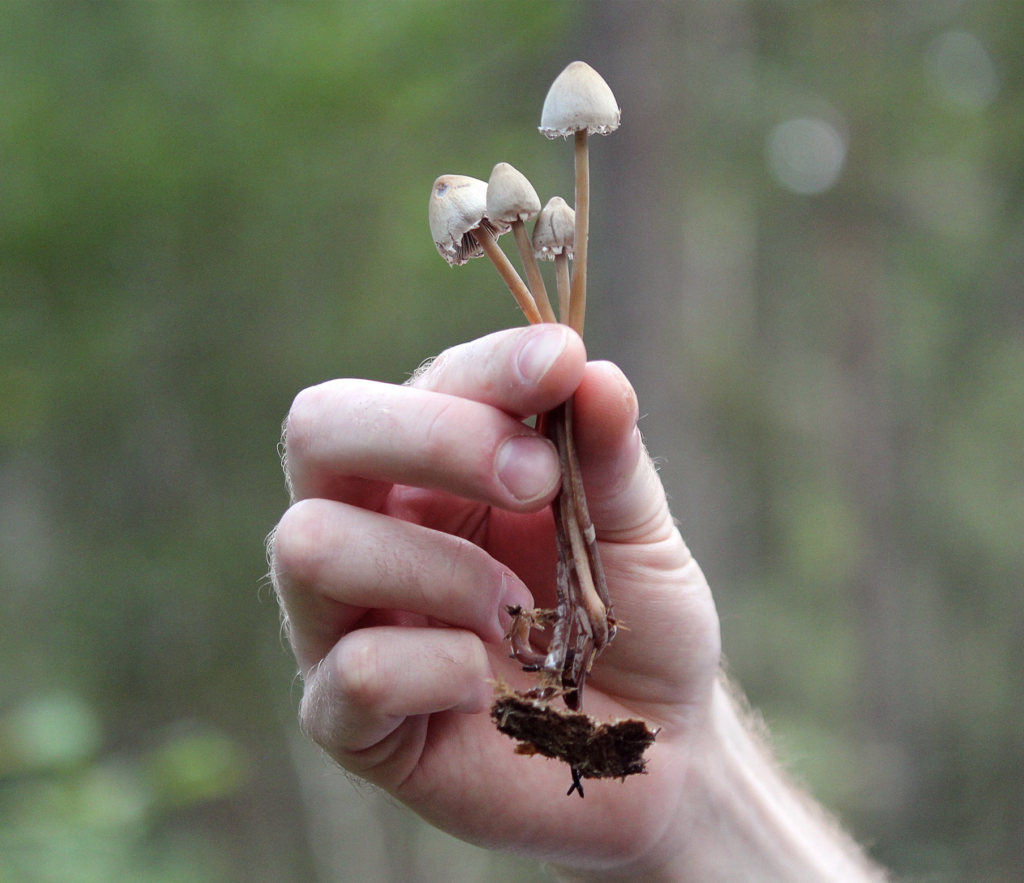
The approval followed Halucenex's submission detailing the trial's goals, design protocols, and backing evidence, which the regulator reviewed and approved within a 30-day window.
Halucenex will move forward with enrolling participants, utilizing its established connections with veterans support networks across Canada. The trial will include up to 20 participants aged 19 and older with treatment-resistant PTSD, expected to start enrollment in Q2 2022.
Halucenex president, CEO and founder Bill Fleming said: "Given our longstanding relationships with a number of veterans affairs groups and the prevalence of treatment-resistant PTSD across North America, we anticipate that this will be a seamless process."
Rua Bioscience
Rua Bioscience, which lists on the NZX, reported a post-tax loss of NZ$2.46m for the six-month period through December 31, 2021, with cash and investments of $12.29m on hand.
Chief financial officer Hamish White stated the result matched the company's expectations.
"The company's investment focus was on those areas that will deliver revenue, investing in new product development and selecting long-term opportunities across the medicinal cannabis value chain," he added.
The company anticipated H2 2022 would prove "transformational" as it pushes to grow domestic and worldwide sales, with its own-branded products projected to become available to New Zealand prescribers in late March or early April.
Avecho Biotechnology
Avecho has begun dosing participants in its Phase IIa trial exploring whether topical CBD can reduce osteoarthritis symptoms.

Using Avecho's proprietary TPM technology, the study delivers a topical CBD gel to affected joints across a four-week treatment period, with 15 patients having finished baseline assessment and started treatment.
Evaluation will incorporate pain and functional assessment, along with grip strength measurement via dynamometer.
Avecho CEO Dr Paul Gavin said: "Osteoarthritis is a chronic and poorly managed pain condition, with limited treatment options available.
"Increasingly, CBD is being prescribed for a range of pain conditions, despite a relative absence of formal human clinical trials demonstrating its effectiveness. Commencement of patient dosing is an important milestone in our ongoing efforts to understand and quantify how it could help."
By age 85, roughly 50% of women and 25% of men are likely to develop hand osteoarthritis.
InhaleRx
According to preliminary financial results, InhaleRx earned A$167,301 in revenue during 2021 from Medihale vaping devices and pods, compared with $12,557 the prior year.
The consolidated loss after income tax and non-controlling interests fell 7.8% year-over-year to $1.11 million.
The company reported that heightened business development activity has attracted interest from prospective white-label partners in Australia and New Zealand.
InhaleRx has sought wholesale and import/export licenses to obtain and distribute medicinal cannabis medications for use in its Medihale products.
Greenfern Industries

New Zealand-based Greenfern Industries is starting to develop clinical trial protocols for a low-dose CBD medicine targeting anxiety, aiming for Schedule 3 registration in Australia.
Managing director Dan Casey indicated the firm could transition to pharmacy channels once low-dose CBD offerings become available as non-prescription products in Australia.
He stated: "Speed to market is important because the first products to hit the pharmacy-only market will take a considerable share.
"We're excited to be continuing on this pathway to get a registered CBD product on the shelves in Australia. We can then look at possible pathways for this product to benefit the patients of New Zealand."
MGC Pharmaceuticals
MGC Pharma's revenue from ordinary operations climbed 246% to nearly A$2.6 million during the six-month period to December 31, 2021, versus the same prior-year period.
Cannabinoid product sales reached $1.25m across the half-year, while sales of its Covid-19 supplement ArtemiC totaled A$1.06m. Losses for the half stood at $7.6m.