
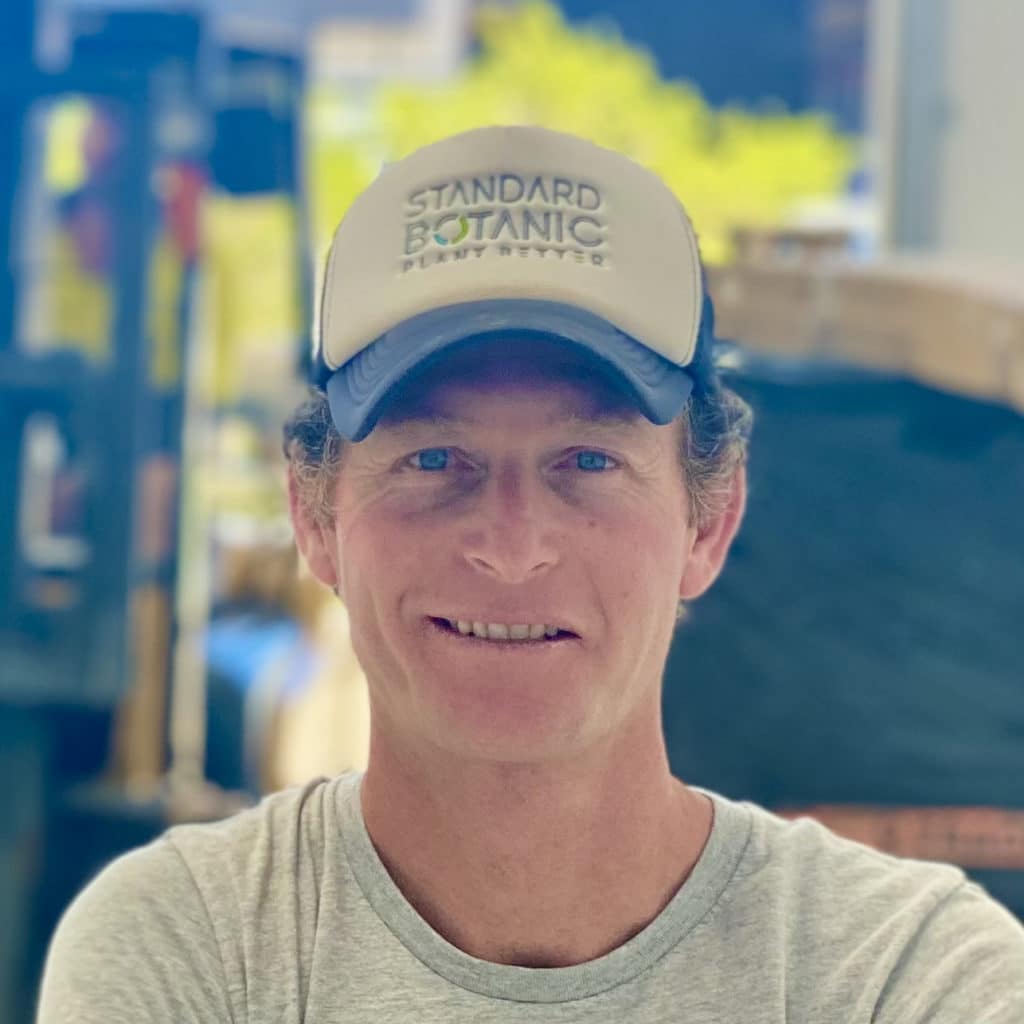
As the founder and CEO of Standard Botanic, Australia's dedicated medicinal cannabis nursery, Adam Benjamin sees his company's fortunes as directly tied to those of his licensed cultivator customers.
Benjamin was among the first entrepreneurs to launch a cultivation business in Australia, and he holds a clear-eyed view of both the opportunity ahead for growers and the financial traps that can catch startups off guard.
He says the approaching regulatory change mandating GMP-compliant manufacture of all cannabis material is set to substantially improve the outlook for Australian-grown product, and he argues that premium flower — across a range of cannabinoid profiles — is the right market segment for domestic growers to target.
"There is an obsession with 'high THC' flower among the uninitiated," he says.
"While anecdotally a part of the patient demand is focused on numbers, what the majority demand is consistency of profile at an efficacious level, and consistency of supply. Get both of these right and a cultivator is well on the road to profitability."
Benjamin points to US clinical research findings showing users in a clinical setting were unable to differentiate between THC levels beyond a threshold in the high teens.
He also says the North American fixation on THC "scores" is driven primarily by marketing, in part because trend-chasing strains are constantly being introduced.
This, he says, reflects a shortage of stable genetics — cannabis companies end up generating demand for what they can actually produce, rather than aligning production with what consumers want.
Benjamin notes that demand and prices reward strains with a variety of cannabinoid profiles — including balanced CBD/THC and higher CBD flower alongside THC-dominant flower.
For the cultivation business, Benjamin is convinced that premium flower is where the profit lies, particularly for growers operating in the typical range of 2,000 to 6,000 square metres of greenhouse or indoor space.
"Our experience is that the appetite in wholesale markets means there is abundant gross margin opportunity for the grower," he says.
He cites wholesale margin expectations of 80% being achievable, against wholesale prices north of $5,000 per kilogram of dried flower.
He says capturing that margin depends on producing premium dried flower — premium meaning the cannabinoid profiles are stable across each harvest, and that the terpene and flavonoid content has the requisite appeal.
Consistency of supply matters as much as product consistency, according to Benjamin, with patients and prescribers frustrated by the variable quality and intermittent availability of much of the flower currently on the market.
Benjamin says genetics is the single most important factor new cultivators need to account for when planning to enter this space.
"So many cultivators think they can go ahead and import a variety of seeds, germinate those, find what the market wants, and start growing. The reality is that's a pipe dream."
The proof, he says, is the market itself.
"If it was as easy as that, Australia wouldn't be importing 95% of product, and companies wouldn't be scrambling to put out products that sit on the shelf, or worse, get recalled".
His advice to new entrants is straightforward.
"There is no substitute for starting with proven genetics," he says.
Standard Botanic's genetics trace back to legendary Dutch breeder Nevil Schoenmakers and have been rigorously tested. Growing protocols covering optimal conditions, fertigation, and harvest timetables are provided to customers.
"While environments vary, we've covered a range to determine an optimal approach, and at the minimum these provide a great starting point compared with a blank sheet of paper or a few obvious parameters," says Benjamin.
Although some growers have moved directly into contract growing arrangements with larger companies, Benjamin considers that a limiting path.
"There's no question that a significant scale is needed to establish a branded presence in the end market. However, premium wholesale prices offer significant margin opportunities."
Benjamin also describes an initiative among Standard Botanic customers to pool flower derived from shared genetics, which effectively gives smaller-scale producers a larger combined footprint in the market.
"We're starting to cement this concept with our customers and prospective customers," he says.
"It provides growers with some of the upside of a branded finished product, without the same expense and capital requirements of building a brand from scratch, while retaining independence."
Conversations with prescribers and patients, Benjamin adds, confirm genuine demand for product through this kind of channel, since an alliance of smaller growers can work together to guarantee continuity and adequacy of supply.
"The smaller grower has the chance to have a bigger market presence, without prohibitive costs," he says.
- Adam Benjamin will present at next week's ACannabis conference in Melbourne.