
In the second part of a two-part interview, Cann Group chief executive Peter Koetsier argues the government needs to do more for the Australian industry, and says companies should be working together rather than against each other.
Medicinal cannabis was legalised in Australia back in October 2016 — nearly seven years ago now — and the industry has changed considerably since those early days.
Prescription approvals have surpassed one million, with the bulk of those coming through in the past four years, and the number of prescribers has grown steadily throughout that period.
What remains unclear, however, is how many of those prescriptions have been filled with products grown and made on Australian soil. No reliable figures exist.
What is clear is that domestic production accounts for a fraction of the medicines reaching patients, with imports filling the vast majority of demand. The gap between local and overseas supply is narrowing, but only slowly.
That imbalance has led Cann Group chief executive Peter Koetsier to throw his support behind calls for Canberra to intervene.
Biortica Agrimed CEO Tom Varga was the first to raise the issue publicly, saying in April that financial backing from the federal government would lift domestic output and create employment. At the time, his was a solitary position — but Koetsier has since emerged as a firm supporter.
Speaking in an interview, Koetsier said he was "very much" aligned with Varga's view, and that the government had not yet recognised "how special this industry could be".
"Clearly the most important role of the industry is providing quality product to patients," Koetsier said. "But that's not all. There's this local industry employing hundreds of people in Australia yet we are a net importer. A country that has great expertise in agriculture and the pharma space shouldn't be net importing a product that we can make to world-class standards.
"I see this huge demand but probably 80% of the product is being imported and that doesn't feel appropriate or right.
"The biggest issue most of us have is the ability to be competitive and to fight overseas companies who have been growing for 20 years. It's not a level playing field."
The two plan to bring other companies on board, develop a coordinated strategy, and take their case directly to government ministers.
Why not us?
At the core of what Koetsier and Varga want to achieve is encouraging relevant ministers — medicinal cannabis falls across several government portfolios — to provide financial support that would allow the industry to reach its potential sooner rather than later.
Other industries receive government assistance to establish themselves and compete internationally, "so why not us?", Koetsier said.
"This seems to me the sort of industry where the government could provide assistance — not forever, because we won't need it forever — so we can catch up with 20-year-old companies from overseas as quickly as possible, in a couple of years maybe, and start producing at rates where we can be competitive.
"Most of us are struggling to constantly put our hand out to investors to help get us to the stage where we are viable and making money.
"There are a numbers of companies who have invested, and continue to invest, in facilities and are trying desperately to make it work. But it will take years. Wouldn't it be great if somehow these facilities received assistance that enabled them to get going quicker? And think of the number of people in all aspects of the industry who would start getting jobs today rather than in three or four years' time."
Manufacturing shut down
Koetsier drew on his own history in the sector, recalling his time during the 1990s working for pharmaceutical company Bristol-Myers Squibb — a period when significant local manufacturing capacity was wound down and moved offshore.
"That global supply chain's gone forever," he lamented. "With medicinal cannabis we have a perfect opportunity to develop a local industry that's profitable, successful, and one that helps patients and uses the expertise that we have in Australia."
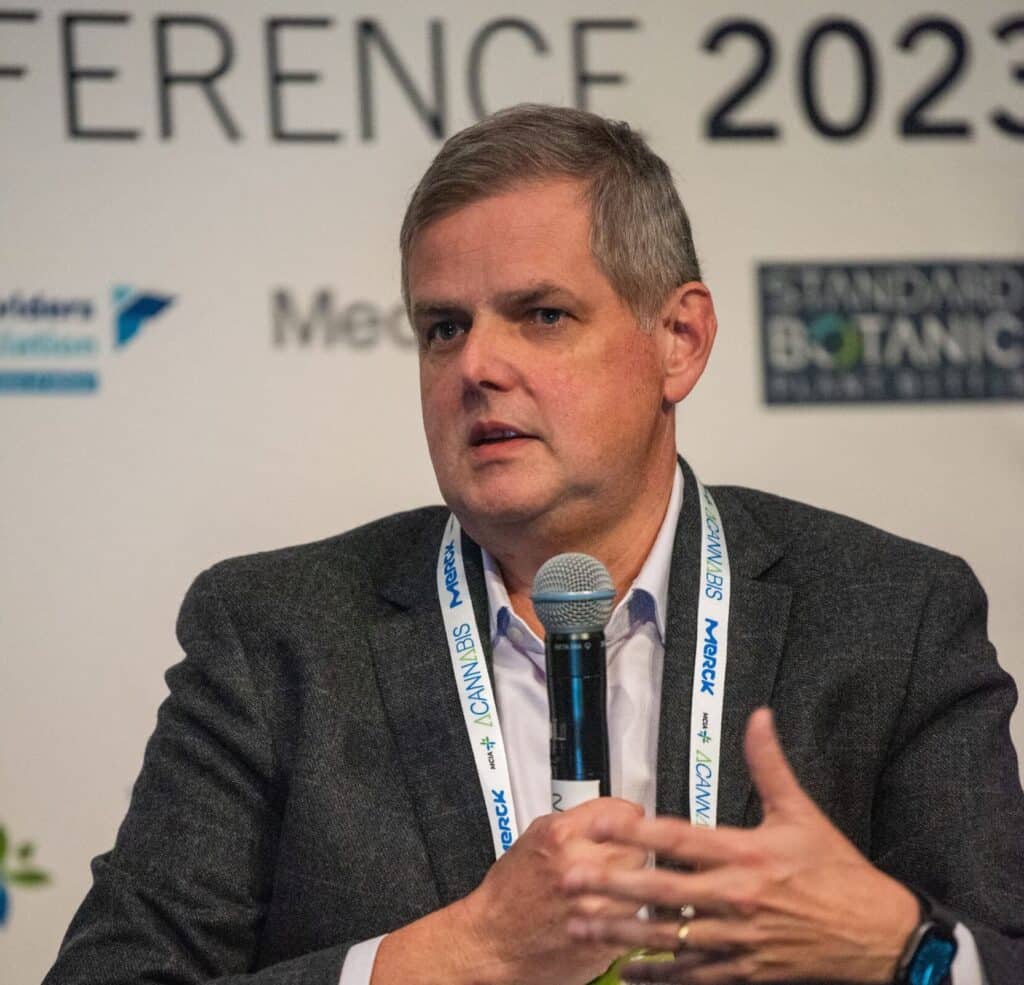
Now six months into his role at Cann Group, Koetsier said companies had been too focused on individual approaches to government. The time had come to unite behind a single, well-constructed case across multiple ministries, he said.
"This is an industry worth supporting. An industry that will create jobs [and] the ability to export," he insisted.
Koetsier was careful to clarify that the push was not about propping up businesses that cannot sustain themselves, nor about closing the door on overseas supply.
Imported product would continue to play a significant role, he acknowledged. The aim was simply to speed up the growth of a local industry capable of generating more jobs and delivering better-quality product to Australian patients.
"For me, that's the goal. If I felt the government would need to continuously give us handouts I wouldn't be advocating this. Of course the industry must stand on its own two feet. We have to be competitive and have a global standard in order to be successful. It's just a question of how long that will take. I'm not advocating anything other than accelerating that success because we were late to start."
Friends, not enemies
In the same spirit that Biortica and Cann Group are working together for the broader benefit of the sector, Koetsier called for greater cooperation across other areas too. Efforts to bring illicit users across to legal channels, and pushing for changes to CBD regulation, would be more effective if companies stopped treating one another as adversaries.
In a market that is still expanding at an early stage of development, there is space for all players — as long as the quality of their product meets the standard, Koetsier said.
"I don't feel like I'm in competition to be honest, certainly not yet," he said. "Ask me in three years' time and it might be different, but at the moment I hope everybody does well.
"If the opportunity facing us all was either dwindling or the number of patients seeking medicinal cannabis was at its peak, I would say, yeah, maybe we have to get down and dirty for market share. But you don't need to beat someone to succeed in this market. You just need to be good.
"Whatever stands in the way of bringing illicit users to the legal pathway, whether it's the type of product, the cost, or if it's just habit, I'm hoping we can work together to get rid of those barriers.
“You don’t need to beat someone to succeed in this market. You just need to be good.”
peter koetsier
"It's not as if the market's not there. We have to convert users over to the legal side, so let's do that first and then worry about competing. Let's make it such an attractive prospect for patients that they will want our products and want them legally. If the quality of the product is great, and the price is close enough [to the illicit market], why wouldn't you seek a legal product?"
On the topic of competitive tensions more broadly, Koetsier said it was "not in his strategic plan to beat anyone". That may change further down the track. For now, the entire focus is on producing quality product in greater volumes.
"My strategic plan is to produce the best possible quality product that I know the market wants. That's all I'm doing. I don't have an eye on anyone else.
"If I make 12-and-a-half tons and I can make quality, consistent product, I don't think that's going to damage anyone else's business. I really don't. Not at the moment. I don't honestly think I'm eating anyone's lunch.
"If there are people worried about us, great. I'd be happy. But I don't think they need to be. Maybe one day when we're a big ugly beast, but not now.
"Somebody said to me the other day, 'what happens if somebody else gets an S3 trial that's successful?' I said that would be great, that would be wonderful. It didn't occur to me for one second to think 'should I be saying that?' I'm really hoping that one of the other guys is successful in their clinical trials because that would be good for everyone."
Schedule 3 plans
On Cann Group's own Schedule 3 ambitions, Koetsier said the company remained committed to getting a pharmacy-only product registered, even after Haleon terminated a sales and marketing agreement earlier in the month.
Conversations with the GSK consumer healthcare division about alternative pathways were continuing, he said, adding that there were "many ways to skin a cat". Haleon, he said, is "not walking away from this".
"We're still aligned on the fact that one day, these products will be S3… so it's about finding a new pathway," Koetsier said. "We sort of thought we had a nice, straightforward way in. Now that has closed off, we have to look at different strategies."
One of those strategies could involve lobbying the TGA for regulatory reform. Koetsier acknowledged that clinical trials remained the only current route to product registration, but said regulatory change was a possible path in the future.
"I'm saying that's one of the options. I'm not saying that's what we're doing," he stressed.
"There's a question of whether, as an industry, we should be better at representing the existing data and patient experience. If you look at the UK for instance, low-dose CBD is a food supplement sitting next to vitamins on the shelf. It's not even scheduled.
"So whether it's based on the overseas experience or just logic, we believe CBD products, particularly lower-dose CBD, will become available more readily for patients. Everything is on the table."